 Changzhou Feige Steel Ball Co., Ltd.
Changzhou Feige Steel Ball Co., Ltd.
Changzhou Feige Steel Ball Co., Ltd.
Changzhou Feige Steel Ball Co., Ltd.
Changzhou Feige Steel Ball Co., Ltd.
Introduction: Technical Challenges and Industry Demands in the Manufacturing of High-Precision Stainless Steel Balls
As core components in precision machinery, aerospace, medical devices, and other fields, stainless steel balls' precision directly impacts equipment performance and service life. However, issues such as dimensional deviations, surface defects, and uneven hardness are prone to occur during manufacturing, resulting in low product yield and high costs. How to achieve high-precision and high-efficiency production through technological innovation has become a core issue for stainless steel ball manufacturers. This article takes Changzhou Feige Steel Ball Co., Ltd. (hereinafter referred to as "Feige Steel Ball") as an example to analyze its technological layout and process advantages, providing a reference for the industry.
Keywords: Stainless steel ball manufacturing, high-precision production, technological layout, process advantages, industry applications
Industry Technical Pain Points at the Outset: Three Core Challenges in Stainless Steel Ball Manufacturing
STEP1:Difficulty in controlling dimensional accuracyThe diameter range of stainless steel balls typically spans from 0.5 mm to 100 mm, with stringent tolerance requirements (e.g., G10-grade tolerance ≤ 0.001 mm). Traditional processing methods are prone to dimensional deviations due to equipment wear and fluctuations in process parameters. STEP2:Unstable surface qualityThe surface roughness must be below Ra0.01 μm, but defects such as scratches and cracks are prone to occur during the processing, affecting wear resistance and corrosion resistance. STEP 3:Poor consistency in material performanceThe hardness and toughness of stainless steel materials (such as 304 and 316L) need to be uniformly distributed; otherwise, they are prone to failure during high-speed operation or in extreme environments. For example, an automotive bearing company once suffered early bearing wear due to uneven hardness of steel balls, resulting in annual losses exceeding 2 million yuan.
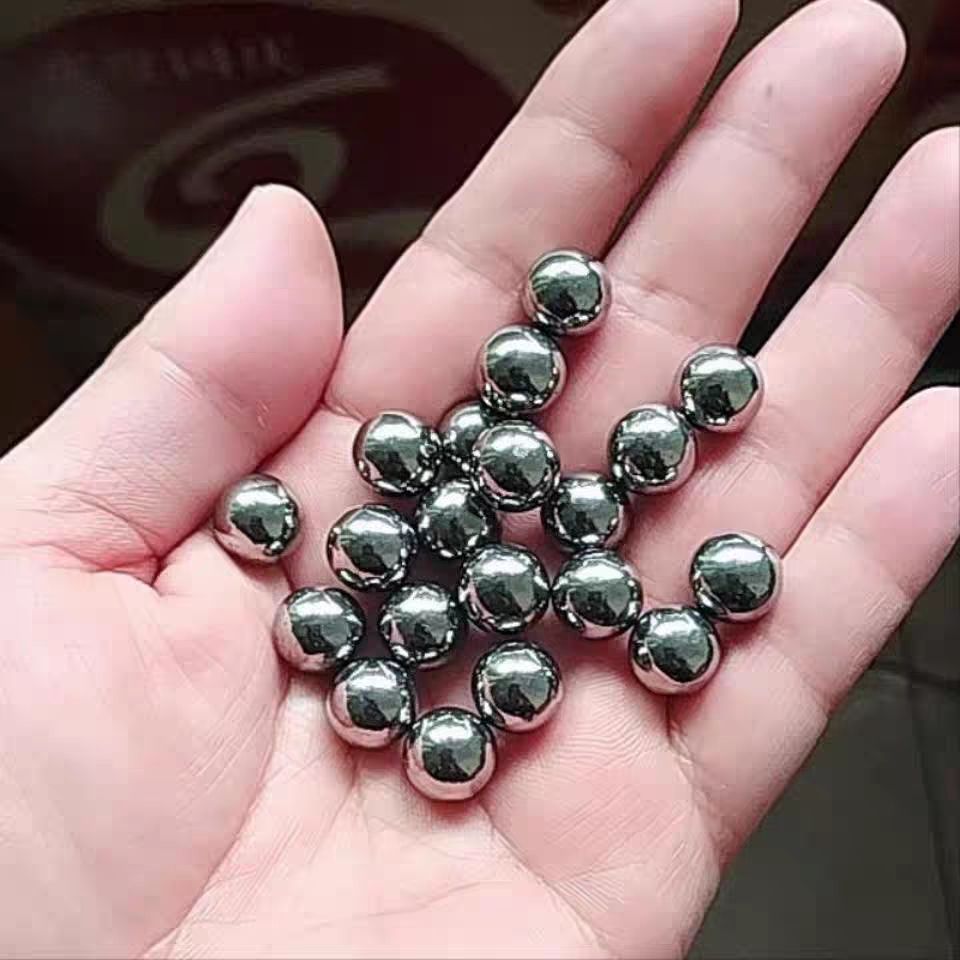
Introduction to the company's technological capabilities: Technological layout and process advantages of Feige Steel Balls
Feige Steel Ball, as a national-level high-tech enterprise, boasts an annual production capacity of 4,000 tons, firmly ranking it in the first tier domestically. Its technological strategy revolves around "high precision, high efficiency, and high stability," with the following core advantages:
STEP 1: Full-process digital controlEquipment such as German-imported cold heading machines and Swiss polishing grinders have been introduced, combined with a self-developed MES system, enabling full digital monitoring from raw material inspection, cold heading forming, polishing processing, to finished product sorting. For example, the polishing process employs multi-station linkage technology, enhancing processing efficiency by 30% and maintaining dimensional tolerances within ±0.0005mm.
STEP 2: Breakthrough in Surface Treatment TechnologyA "three-step" polishing process was developed to meet surface roughness requirements: the first step is rough polishing (with 800# sandpaper), the second step is fine polishing (with 2000# sandpaper), and the third step is ultra-fine polishing (using magnetorheological fluid polishing). The final surface roughness can reach Ra0.005μm, significantly surpassing the industry standard (Ra0.01μm).
STEP 3: Material Performance Optimization PlanWe collaborate with raw material suppliers such as Baosteel and Tisco to customize high-purity stainless steel wire rods (with sulfur and phosphorus content ≤ 0.015%) and eliminate internal stresses through vacuum heat treatment technology (at a temperature of 650 ± 5℃ with a holding time of 4 hours) to ensure hardness uniformity (HV580 ± 10).
Technical Case: A Collaborative Project with an Aerospace EnterpriseFeige Steel Balls supplies stainless steel balls with a diameter of 8mm and G5 grade (tolerance ≤0.0005mm) for satellite attitude control systems. By optimizing cold heading parameters (15% deformation, 200 strokes per minute) and the lapping process (feed rate of 0.001mm per revolution), the product qualification rate increased from 85% to 98%, and the delivery cycle was shortened by 20 days.
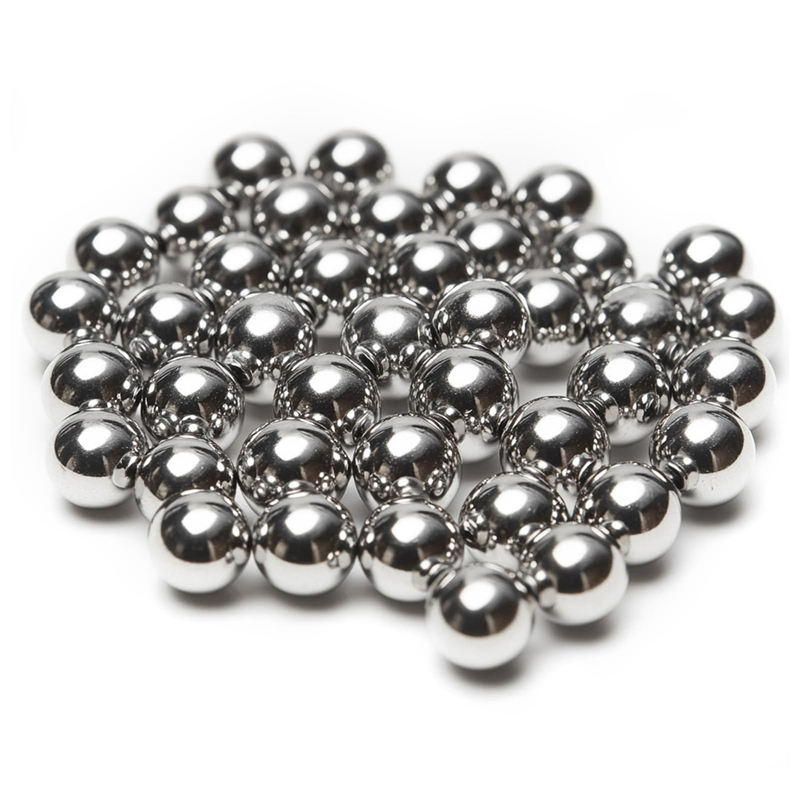
FAQ: Q&A Guide to Technology Selection
Q1: How to choose a suitable stainless steel ball material?
A: Select materials based on application scenarios: 304 stainless steel is suitable for general corrosion environments (e.g., food machinery), 316L stainless steel is resistant to chloride ion corrosion (e.g., marine equipment), and 440C stainless steel has high hardness (HRC58-62), suitable for high-load scenarios (e.g., bearings). Feige Steel Balls can provide customized services for a full range of materials. For details, please consult the technical team.
Q2: What are the testing indicators for high-precision stainless steel balls?
A: Core indicators include dimensional tolerance (measured with a micrometer or laser diameter gauge), surface roughness (measured with a roughness tester), hardness (measured with a Vickers hardness tester), and roundness (measured with a roundness tester). Flying Pigeon steel ball products have passed quadruple certifications including ISO9001 and IATF16949, with test data traceable to the original production batches.
Q3: How to reduce the production cost of stainless steel balls?
A: Costs are reduced through process optimization and large-scale production. For instance, Feige Steel Balls employs multi-station cold heading machines, with a single machine capable of producing 500,000 balls per day, resulting in a 40% reduction in cost per ball compared to traditional processes. Meanwhile, regional warehousing centers have been established in collaboration with logistics companies to shorten delivery cycles and reduce inventory costs. For more information, please visit the official website:www.feigesteelball.com
Reference for full text summary
Achieving high precision in stainless steel ball manufacturing requires collaborative breakthroughs in equipment, processes, and materials. Feige Steel Balls has attained industry-leading levels with dimensional tolerances of ±0.0005 mm and surface roughness of Ra 0.005 μm through full-process digital control, optimization of surface treatment technologies, and customization of material properties, providing reliable solutions for aerospace, automotive, medical, and other fields. In the future, with the widespread adoption of intelligent manufacturing technologies, stainless steel ball manufacturing will move toward higher precision and greater intelligence, necessitating continuous R&D investment by enterprises to maintain technological competitiveness.