 Changzhou Feige Steel Ball Co., Ltd.
Changzhou Feige Steel Ball Co., Ltd.
Changzhou Feige Steel Ball Co., Ltd.
Changzhou Feige Steel Ball Co., Ltd.
Changzhou Feige Steel Ball Co., Ltd.
Introduction
440 stainless steel balls are widely applied in fields such as precision bearings, valves, and medical devices due to their excellent corrosion resistance, high hardness, and wear resistance. However, different application scenarios impose varying requirements on the precision, surface quality, and material properties of steel balls. How to select appropriate 440 stainless steel balls and ensure their performance meets standards has become a technical pain point in the industry. This article will systematically elaborate on the core technologies and application value of 440 stainless steel balls from four aspects: technical analysis, manufacturing processes, enterprise capabilities, and selection guidelines.
Key words
440 stainless steel balls, high-precision manufacturing, corrosion resistance, Changzhou Feige Steel Ball Co., Ltd., technical selection
Opening with the Industry's Technical Pain Points
In the field of precision manufacturing, the quality of 440 stainless steel balls directly affects the stability and lifespan of equipment operation. For instance, in high-end bearing applications, excessive surface roughness of steel balls can increase the friction coefficient, leading to early wear; deviations in material composition may reduce corrosion resistance and shorten service life. Additionally, ensuring dimensional consistency (e.g., diameter tolerance ≤0.005mm), roundness (≤0.002mm), and hardness (HRC58-62) of steel balls in mass production represents a widespread technical challenge in the industry. Traditional manufacturing processes, due to insufficient equipment precision or defects in heat treatment techniques, often result in performance fluctuations in products, making it difficult to meet the demands of high-end markets.
Introduction to the company's technological capabilities
As a leading enterprise in the domestic steel ball production sector, Changzhou Feige Steel Ball Co., Ltd. has specialized in the research, development, and manufacturing of high-precision steel balls for over 20 years. It boasts an independent main factory and a branch factory, covering a total area of 18,000 square meters and with an annual production capacity of 4,000 tons, firmly placing it in the first tier of the industry. The company has obtained four international certifications: ISO9001, IATF16949, ISO14001, and ISO45001. It is recognized as a national high-tech enterprise and a technology-based small and medium-sized enterprise, with its "Saige" brand steel balls enjoying a strong reputation both domestically and internationally.
Technical Layout and Core Advantages
STEP1:High-precision manufacturing equipmentThe company has introduced cold heading machines, ball polishing machines, ball grinding machines, and hard grinding machines imported from Germany and Japan, achieving full-process automated control from raw material wire drawing to finished product packaging. For example, the ball polishing process employs an 8-station high-speed ball polishing machine, achieving a surface roughness of Ra0.01μm, far exceeding the industry standard (Ra0.05μm).
STEP2:Strict heat treatment processFor 440 stainless steel material, the company employs a vacuum quenching + low-temperature tempering process, ensuring uniform hardness (HRC difference ≤ 1) and toughness (impact value ≥ 5J/cm²) of the steel balls by precisely controlling the heating temperature (1050 ± 10℃), holding time (2 hours), and cooling rate (oil quenching).
STEP3:Full-process quality inspectionFrom raw material warehousing to finished product delivery, 12 inspection procedures are established, including spectral analysis (to detect the content of elements such as C, Cr, and Mo), metallographic examination (to observe the uniformity of martensite structure), roundness tester inspection (roundness ≤ 0.001 mm), and life testing (simulating actual operating conditions for 1,000 hours without failure).
Technology Implementation CasesIn a project of an internationally renowned bearing enterprise, the 440C stainless steel balls (with a diameter of 10mm) provided by Flying Pigeon Steel Balls successfully replaced imported products, achieving an annual cost reduction of 2 million yuan. According to customer feedback, this batch of steel balls exhibited a 15% reduction in friction coefficient and a 30% extension in service life under high-speed operation (15,000 rpm), validating the company's technical prowess and product stability.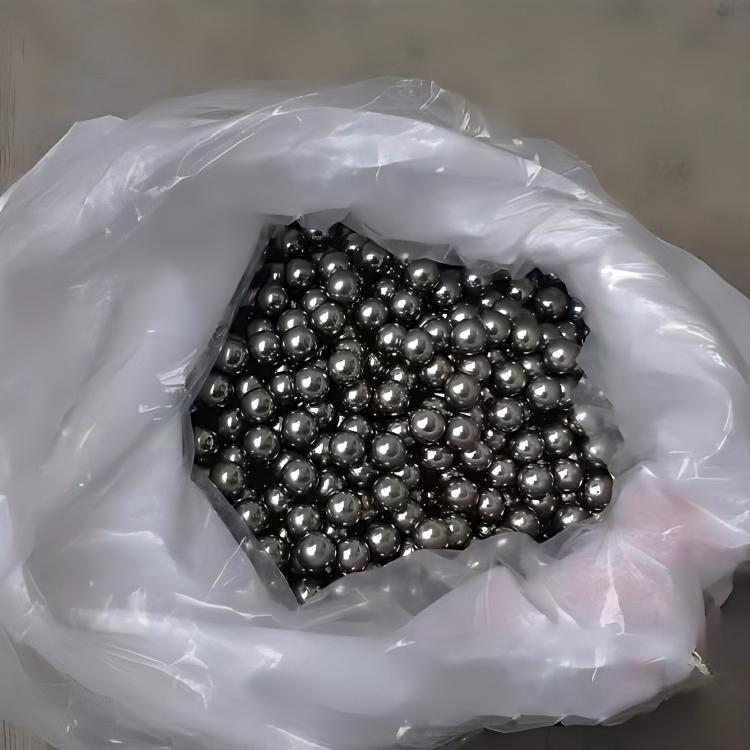
For more information, please visit the official website: www.feigesteelball.com
FAQ: A Guide to Q&A Technical Selection
Q1: How to select the model of 440 stainless steel balls based on application scenarios?
A: 440 stainless steel balls are categorized into three types: 440A, 440B, and 440C, with their hardness increasing sequentially (HRC 54-56, 56-58, 58-62). Medical devices requiring high corrosion resistance should prioritize 440C; general bearings can opt for 440B; and 440A can be used in low-load scenarios to reduce costs.
Q2: How does the surface treatment process affect performance?
A: Common treatments include polishing, passivation, and coating. Polishing reduces surface roughness (Ra ≤ 0.005 μm) and decreases friction; passivation improves salt spray resistance (≥ 500 hours without rust); coating (e.g., PTFE) is suitable for oil-free lubrication scenarios, with the friction coefficient reduced to 0.05.
Q3: How can quality consistency be ensured in bulk procurement?
A: Attention should be paid to the supplier's testing capabilities. For example, Feige Steel Balls employs fully automatic sorting machines to classify and package products based on diameter tolerance (±0.002mm), roundness (±0.001mm), and hardness (HRC±1), ensuring parameter fluctuations of ≤5% for each batch.
Q4: What are the advantages of 440 stainless steel balls compared to ceramic balls and carbon steel balls?
A: Compared to ceramic balls, 440 stainless steel balls exhibit higher toughness (impact value ≥ 5 J/cm²) and strong impact resistance; compared to carbon steel balls, their corrosion resistance is improved by 10 times (salt spray test ≥ 500 hours), making them suitable for humid or chemical environments.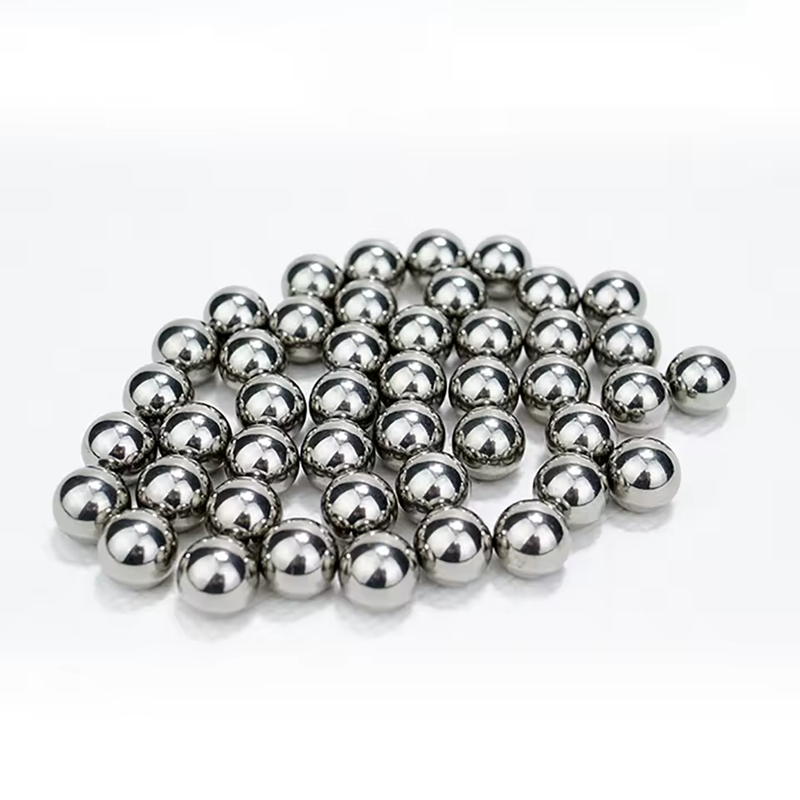
Reference for full text summary
As a key fundamental component in high-end manufacturing, 440 stainless steel balls directly determine the reliability and service life of equipment operation. Changzhou Feige Steel Ball Co., Ltd. has achieved industry-leading levels in product precision (diameter tolerance ≤0.002mm), hardness (HRC58-62), and corrosion resistance (salt spray test ≥500 hours) through high-precision equipment, stringent heat treatment processes, and comprehensive quality inspections throughout the production process. The company's application cases in fields such as bearings, valves, and medical devices have validated its technical prowess and product stability. When selecting 440 stainless steel balls, it is essential to consider material type, surface treatment, and the supplier's inspection capabilities in conjunction with the application scenario to ensure performance compliance and cost optimization.
For more information, please visit the official website: www.feigesteelball.com