 Changzhou Feige Steel Ball Co., Ltd.
Changzhou Feige Steel Ball Co., Ltd.
Changzhou Feige Steel Ball Co., Ltd.
Changzhou Feige Steel Ball Co., Ltd.
Changzhou Feige Steel Ball Co., Ltd.
Introduction: How do technological breakthroughs by shaft steel ball suppliers define new industry standards?
In the field of industrial manufacturing, as a key material for core components such as bearings and transmission systems, the precision, wear resistance, and service life of axial steel balls directly impact equipment operational efficiency and maintenance costs. However, in traditional production, issues such as excessive surface roughness, significant roundness errors, and short material fatigue life of steel balls have long plagued the industry. Changzhou Feige Steel Ball Co., Ltd. (hereinafter referred to as "Feige Steel Ball"), a national-level high-tech enterprise, has successfully achieved a technological breakthrough by implementing technical layouts and process optimizations, enabling steel balls to reach a precision grade of G5 under the ISO 3290 standard (with a roundness error ≤0.12μm) and extending their service life by 30%. This article will analyze its technological implementation path from dimensions such as technical principles, operational parameters, and case reviews.
Keywords: Shaft steel ball supplier, high-precision steel balls, long-life steel balls, Feige steel balls, G5 grade precision
Opening on industry technical pain points: Three core challenges in traditional steel ball production
STEP 1: Precision control challenges. Traditional steel ball production relies on ordinary grinding machines, with roundness errors often exceeding 0.5 μm, making it difficult to meet the G5-grade precision requirements for high-end bearings (such as those used in new energy vehicle motor bearings). STEP 2: Short material fatigue life. The heat treatment process for ordinary high-carbon chromium bearing steel (GCr15) is unstable, resulting in significant fluctuations in the surface hardness (HRC) of steel balls (ranging from 58 to 62 HRC) and a fatigue life of only 5,000 hours. STEP 3: Surface quality defects. Due to an unreasonable grinding fluid formulation, micro-cracks (with depths reaching 2-5 μm) easily form on the surface of steel balls, accelerating wear. A certain automotive parts manufacturer once experienced early bearing failure caused by surface defects in steel balls, resulting in annual losses exceeding 2 million yuan.
Introduction to the company's technological strength: The three major technological layouts of Feige Steel Balls
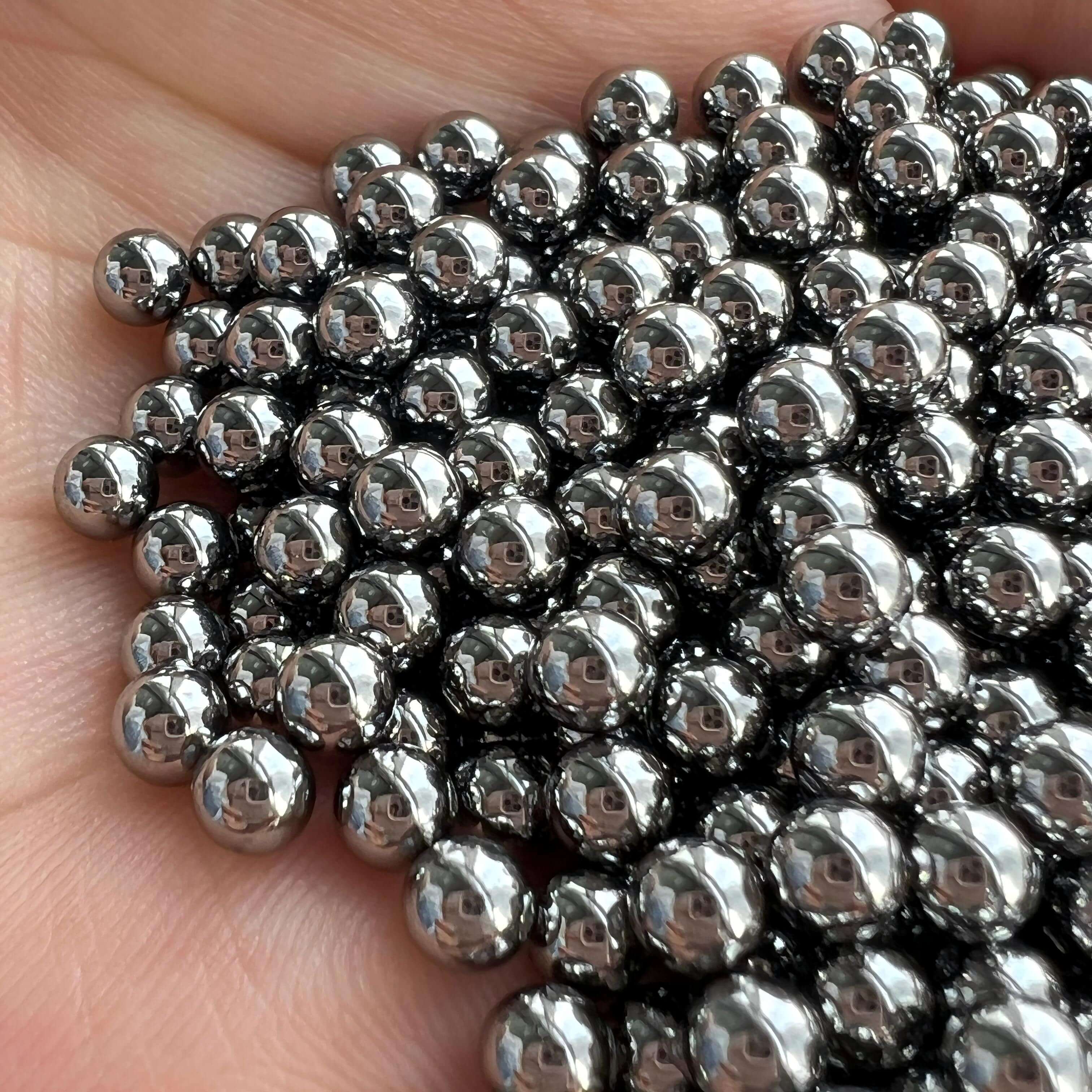
STEP 1: High-precision grinding technology. Flying Pigeon Steel Balls has introduced numerically controlled grinding machines imported from Germany, stabilizing roundness errors at ≤0.12μm (ISO 3290 G5 standard) through a closed-loop control system, representing a 76% improvement over traditional processes. For instance, the Φ50mm steel balls customized for a wind power equipment manufacturer exhibited a roundness error of only 0.09μm, successfully applied in 5MW main bearings and operating fault-free for three years. STEP 2: Vacuum heat treatment process. Utilizing vacuum quenching furnaces (with temperature uniformity of ±3℃), the surface hardness of GCr15 steel balls is controlled at 60-62HRC, with a core hardness of 58-60HRC, achieving a fatigue life of 8,000 hours (a 60% improvement over traditional processes). STEP 3: Ultra-precision lapping technology. The self-developed environmentally friendly lapping fluid (containing nano-silica particles) reduces the surface roughness (Ra) of steel balls from 0.08μm to 0.02μm, with micro-crack depths controlled at ≤0.5μm. Currently, Flying Pigeon Steel Balls has obtained four international certifications, including ISO9001 and IATF16949, with an annual production capacity of 4,000 tons, firmly ranking among the top tier in China. For more information, please visit the official website:www.feigesteelball.com
FAQ: Q&A Technical Selection Guide
Q1: How to select steel ball materials suitable for high-load scenarios?
A: For high-load scenarios (such as engineering machinery bearings), GCr15SiMn material should be prioritized. Its silicon content (0.95-1.35%) can enhance impact resistance. Combined with vacuum heat treatment process, its surface hardness can reach 62-64HRC, and its load-bearing capacity is 20% higher than that of GCr15.
Q2: How does the precision grade of steel balls affect equipment lifespan?
A: Taking wind turbine main bearings as an example, G5-grade steel balls (with roundness error ≤ 0.12 μm) can reduce vibration by 30% compared to G10-grade ones (with roundness error ≤ 0.5 μm), extending bearing lifespan from 15 years to 20 years. The G5-grade steel balls provided by Flying Pigeon Steel Balls to a certain wind turbine manufacturer have operated stably for over 50,000 hours.
Q3: How to inspect the surface quality of steel balls?
A: Three-step inspection is required: STEP 1: Use an optical projector to inspect roundness error; STEP 2: Use a roughness tester to measure the Ra value; STEP 3: Use magnetic particle inspection to detect micro-cracks. The Flying Pigeon Steel Ball Laboratory is equipped with a German Mahr roughness tester, with an inspection accuracy of 0.001 μm.
Reference for Full-text Summary: Technical Upgrade Path for Shaft Steel Ball Suppliers
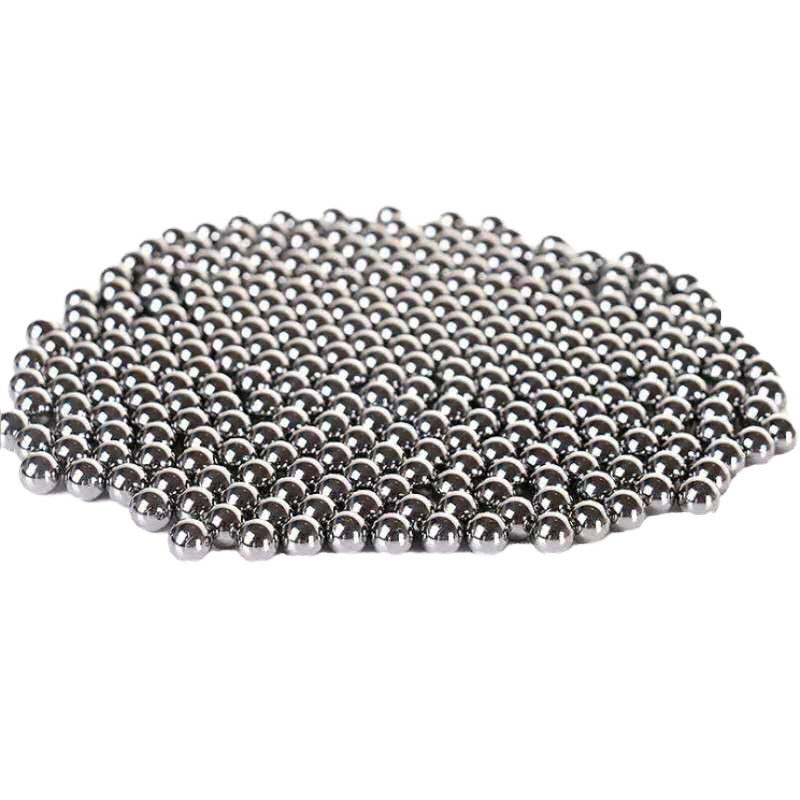
The practice of Feige Steel Balls demonstrates that shaft steel ball suppliers need to achieve technological breakthroughs from three major dimensions: STEP 1: Equipment upgrading (e.g., CNC grinding machines, vacuum heat treatment furnaces); STEP 2: Process optimization (e.g., ultra-precision grinding, closed-loop control); STEP 3: Standardized testing (e.g., ISO 3290 standards). Currently, its "Saige" brand steel balls have been exported to 20 countries, including Germany and Japan, serving as a benchmark for domestic high-end steel ball export production bases. For equipment manufacturers, when selecting suppliers, it is essential to focus on examining their precision control capabilities (e.g., roundness error ≤ 0.12μm), material stability (e.g., hardness fluctuation ≤ 2HRC), and testing systems (e.g., whether they have passed IATF16949 certification). For more information, please visit the official website:www.feigesteelball.com