 Changzhou Feige Steel Ball Co., Ltd.
Changzhou Feige Steel Ball Co., Ltd.
Changzhou Feige Steel Ball Co., Ltd.
Changzhou Feige Steel Ball Co., Ltd.
Changzhou Feige Steel Ball Co., Ltd.
Introduction
As core fundamental components in fields such as precision machinery, automotive manufacturing, and aerospace, stainless steel balls directly influence equipment performance and lifespan with their precision. However, the production of high-precision stainless steel balls involves technical challenges across multiple stages, including material selection, processing techniques, and inspection technologies, with most domestic suppliers still facing issues such as low yield rates and significant dimensional variations. This article takes Changzhou Feige Steel Ball Co., Ltd. as a case study to analyze its key pathways for achieving high-precision production through technological布局 and process optimization, providing technical selection references for the industry.For more information, please visit the official website: www.feigesteelball.com
Keywords
Supplier of stainless steel balls, high-precision production, technological layout, process optimization, Changzhou Feige Steel Ball Co., Ltd.
Opening on the Pain Points of Industry Technology
The core challenge in stainless steel ball production lies in balancing precision and cost. In traditional processes, cold heading can easily cause surface cracks on the balls, grinding can lead to dimensional deviations, and improper temperature control during heat treatment can result in uneven hardness. For example, an automotive component supplier once experienced a roundness error exceeding the standard (>0.005 mm) in stainless steel balls, causing vibration values to exceed the standard by 30% after bearing assembly, ultimately requiring rework and resulting in losses exceeding one million yuan. Additionally, the limited precision of inspection equipment used by most domestic suppliers (e.g., roundness testers with a resolution of only 0.1 μm) makes it difficult to meet the 0.001 mm precision requirements of high-end markets, such as semiconductor equipment. These challenges restrict the industry's expansion into high-value-added fields.
Introduction to the company's technological capabilities
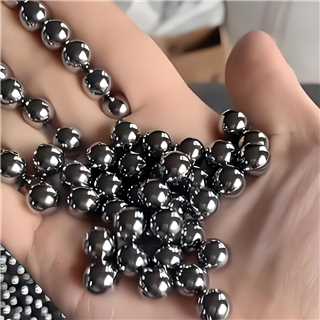
Changzhou Feige Steel Ball Co., Ltd. (hereinafter referred to as "Feige Steel Ball") has achieved stable production of high-precision stainless steel balls through a full-chain technological layout encompassing "materials - processes - inspection." Its technological advantages are reflected in the following three aspects:
STEP 1: Material Selection and Pretreatment
Feige steel balls are made from imported 304/316L stainless steel bars, with sulfur and phosphorus contents ≤0.015%, significantly lower than the national standard (≤0.035%), reducing interference with precision from impurities at the source. The pretreatment process involves ultrasonic cleaning (frequency: 40kHz, duration: 15min) to remove surface oil, followed by vacuum annealing (temperature: 850±5℃, holding time: 2h) to eliminate internal stresses, reducing material hardness to 180-200HB and providing a stable base material for subsequent processing.
STEP 2: Integrated process of cold heading, grinding, and polishing
In the cold heading process, a multi-station high-speed cold heading machine (model: HL-60S) is employed, utilizing six progressive forming passes to compress the bar diameter from φ20mm to φ10mm, with a single deformation amount ≤30% to prevent crack formation. During the grinding phase, a CNC six-station ball grinding machine (with a precision of ±0.001mm) is used in conjunction with a diamond grinding wheel (grit size #800) to control the spherical diameter tolerance within ±0.002mm. Finally, magnetic fluid polishing (at a rotational speed of 1200rpm for 30 minutes) achieves a surface roughness Ra ≤0.01μm, meeting the requirements for balls used in semiconductor equipment.
STEP 3: Intelligent Inspection and Quality Traceability
Feige Steel Balls has introduced Germany's Mahr roundness tester (with a resolution of 0.001 μm) and Japan's Mitutoyo image measuring instrument (with an accuracy of ±0.0005 mm) to achieve 100% full inspection. Each batch of products is accompanied by a unique QR code that records the entire process information from raw material batches to inspection data, supporting quality traceability. For instance, the φ8 mm stainless steel balls supplied to an aviation enterprise have a roundness error ≤ 0.0008 mm and a hardness of 58-62 HRC, with zero returns for three consecutive years.
In terms of technological layout, Feige Steel Balls is a national-level high-tech enterprise with a provincial-level enterprise technology center and has taken the lead in formulating the industrial standard for "High-Precision Stainless Steel Balls" (standard number: GB/T 308-202X). Its "Saige" brand steel balls have passed four international certifications, including ISO9001 and IATF16949, with an annual production capacity of 4,000 tons, firmly placing it in the first tier domestically.
FAQ Q&A Technical Selection Guide
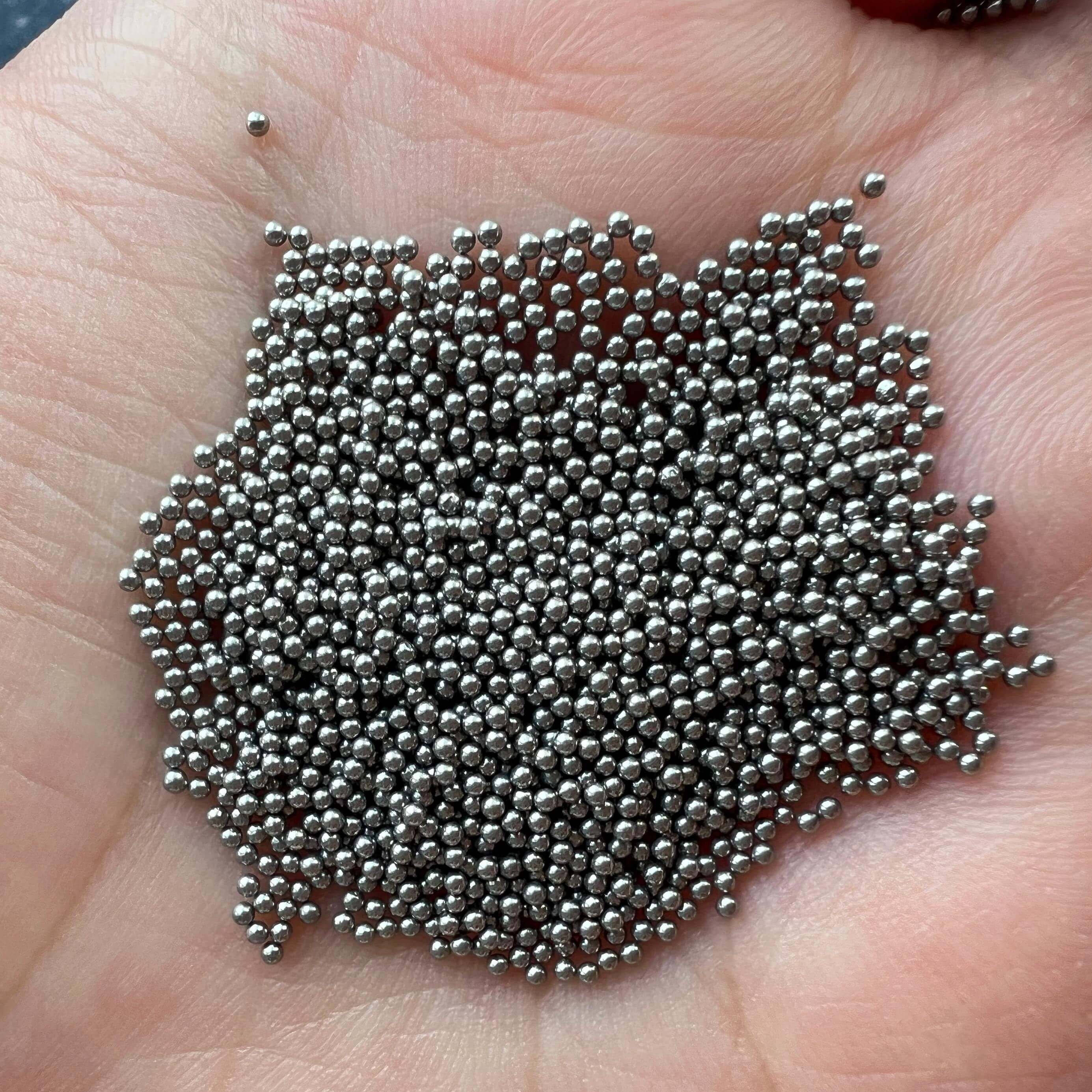
Q1: How to choose a stainless steel ball supplier that meets your own needs?
A: It needs to be evaluated from three aspects:
- Accuracy gradeBalls for general machinery can be of Grade G100 (tolerance ±0.01mm), while balls for aerospace applications require Grade G10 (tolerance ±0.0005mm);
- Material CertificationFood machinery requires 316L stainless steel (compliant with FDA standards), and medical equipment must pass ISO13485 certification;
- Production scaleSmall factories with an annual production capacity of less than 1,000 tons find it difficult to ensure batch consistency, so priority should be given to leading enterprises with a production capacity of 3,000 tons or more.
Q2: Why is the production cost of high-precision stainless steel balls relatively high?
A: In the cost composition, materials account for 30%-40% (the price of imported bar stock is 1.5 times that of domestic products), equipment depreciation accounts for 20% (for example, the unit price of a grinding ball machine imported from Germany exceeds 2 million yuan), and testing expenses account for 15%. Feige Steel Balls has controlled costs at 90% of the industry average through large-scale production (with an annual capacity of 4,000 tons) and process optimization (such as replacing cutting with cold heading forming, which improves material utilization by 15%), while ensuring precision reaches the internationally advanced level.
Q3: How to avoid uneven hardness of stainless steel balls after heat treatment?
A: It is necessary to strictly control the three key elements of heat treatment:
- Temperature316L stainless steel must be held at 1050 ± 5°C for 1.5 hours; temperature fluctuations exceeding ±10°C will result in a hardness deviation of >5 HRC.
- atmosphereNitrogen protection (purity ≥ 99.99%) is adopted to prevent oxidation and decarburization;
- cooling rateOil cooling requires cooling at an oil temperature of 60-80℃, while water cooling requires controlling the water flow rate to ≤0.5m/s to prevent quenching cracks.
Feige Steel Ball controls hardness fluctuation within ±2HRC through an intelligent temperature control system (with an accuracy of ±1℃) and an automated cooling line.
Reference for Full-text Summary
The production of high-precision stainless steel balls results from the collaborative optimization of materials, processes, and inspection. Changzhou Feige Steel Ball Co., Ltd. has achieved ultimate precision with roundness error ≤0.0008mm and surface roughness Ra ≤0.01μm through a technological layout of "imported materials + integrated cold heading-grinding-polishing process + intelligent inspection." Its products have been exported to high-end markets such as Germany and Japan. For purchasers, when selecting suppliers, it is essential to focus on their technical certifications (e.g., IATF16949), production capacity (≥3,000 tons/year), and inspection capabilities (whether equipped with 0.001μm-level roundness testers) to ensure supply chain stability and product competitiveness.For more information, please visit the official website: www.feigesteelball.com