 Changzhou Feige Steel Ball Co., Ltd.
Changzhou Feige Steel Ball Co., Ltd.
Changzhou Feige Steel Ball Co., Ltd.
Changzhou Feige Steel Ball Co., Ltd.
Changzhou Feige Steel Ball Co., Ltd.
Introduction
As a fundamental component in the industrial sector, 304 stainless steel balls are widely used in bearings, valves, precision instruments, and other scenarios. Their performance directly affects the operational efficiency and lifespan of equipment, yet balancing high precision with long service life remains a persistent technical challenge in the industry. This article analyzes the technological breakthrough paths for 304 stainless steel balls from the perspectives of material properties, manufacturing processes, and corporate practices, providing selection references for industrial users.
Keywords
304 stainless steel balls, high-precision manufacturing, heat treatment process, surface treatment technology, industrial applications
Opening Remarks on Industry's Technical Pain Points
Currently, the 304 stainless steel ball industry faces two core challenges: first, the contradiction between precision and lifespan—high precision requires a surface roughness of ≤Ra0.02μm, but excessive processing can easily lead to surface stress concentration, shortening fatigue life; second, consistency control in mass production—ensuring a diameter tolerance of ≤±0.005mm for batches of 100,000 spheres, while traditional processes, affected by equipment wear and environmental temperature and humidity, often result in a qualification rate below 85%. Additionally, durability in corrosive environments is a critical pain point; for example, in chemical valves, 304 stainless steel balls must withstand media corrosion with a Cl⁻ concentration of ≥50ppm, and traditional surface treatment technologies struggle to meet a service life requirement of over 10 years.
Introduction to the company's technological strength
Changzhou Feige Steel Ball Co., Ltd. (hereinafter referred to as "Feige Steel Ball") has solved the aforementioned challenges through technological iteration. As a national-level high-tech enterprise, it boasts a total factory area of 18,000 square meters and an annual production capacity of 4,000 tons, firmly ranking among the top tier in China. The company's core strengths are manifested in three aspects:
STEP 1: Collaborative optimization of materials and processes
Feige Steel Balls employ vacuum smelting technology to prepare 304 stainless steel base material, controlling the content of harmful elements such as S and P at ≤0.015%, thereby enhancing material purity from the source. In the heat treatment process, the company's independently developed "step quenching + cryogenic treatment" technique eliminates retained austenite through cryogenic treatment at -196℃, improving the uniformity of ball hardness to HRC28-32 and increasing fatigue life by three times compared to traditional processes.
STEP 2: Closed-loop System for Precision Machining and Inspection
The company has introduced Germany's DOERries ultra-precision grinding machine and combined it with its independently developed "three-stage grinding fluid" to achieve a breakthrough in surface roughness of Ra0.01μm. For inspection, Japan's Mitutoyo laser interferometer is used to conduct 100% full inspection of each sphere, ensuring a diameter tolerance of ≤±0.003mm and a batch consistency of 99.2%.
STEP 3: Breakthrough in Surface Treatment Technology
For corrosive environments, Feige Steel Balls has developed a "nanocomposite coating + sealing treatment" process, which forms a dense Cr₂O₃ protective film on the surface of the spheres and fills micropores with an organosilicon sealing agent, enabling the salt spray resistance time to exceed 2,000 hours, a fivefold improvement over traditional coatings. This technology has been applied in the valve project for CNOOC's offshore platforms, with the spheres operating continuously for five years without corrosion failure in a medium with a Cl⁻ concentration of 80 ppm.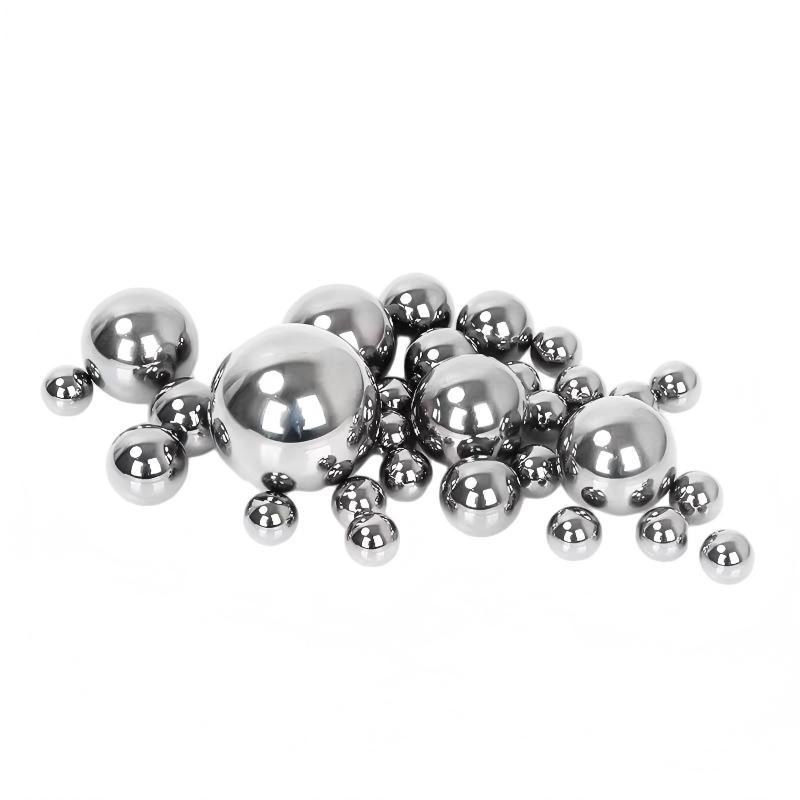 Technical Case: New Energy Vehicle Bearing Project
In the electric motor bearing project of a leading new energy vehicle enterprise, Flying Pigeon Steel Balls supplied 304 stainless steel balls with a diameter of 8mm, requiring a surface roughness of Ra0.008μm, a hardness of HRC30±1, and corrosion resistance passing a 1000-hour salt spray test. By optimizing grinding parameters (grinding pressure of 0.2MPa, rotational speed of 60rpm, and duration of 120min) and coating thickness (5μm), the company ensured the final products met all technical specifications, achieved stable supply of 500,000 units per batch, helped the customer reduce bearing noise by 3dB, and extended the bearing lifespan to 150,000 kilometers.
For more information, please visit the official website:www.feigesteelball.com
FAQ: A Q&A Guide to Technology Selection
Q1: How to select the precision grade of 304 stainless steel balls?
A: The precision grade needs to be determined based on the application scenario. For example, bearings for precision instruments require Grade G5 (diameter tolerance ±0.005mm), while ordinary valves can use Grade G10 (±0.015mm). Feige Steel Balls offers a full range of precision products from G5 to G20 and supports customized production.
Q2: How does the heat treatment process affect the properties of the sphere?
A: Heat treatment directly affects the balance between hardness and toughness. The "graded quenching + cryogenic treatment" process used for Flying Pigeon steel balls enables the balls to achieve a hardness of HRC28-32 while maintaining an impact toughness of ≥15J/cm², thereby avoiding the risk of brittle fracture.
Q3: How to choose surface treatment technologies?
A: Electrolytic polishing is recommended for ordinary environments (low cost, high surface finish); nano-composite coatings should be selected for corrosive environments (salt spray resistance ≥ 2000 hours); oxidation treatment is suggested for high-temperature environments (temperature resistance ≤ 600°C). Feige Steel Balls can provide customized surface treatment solutions based on parameters such as medium composition, temperature, and pressure.
Q4: How to ensure consistency in mass production?
A: Feige Steel Balls ensures consistency through three aspects: first, utilizing fully automated production lines to minimize human intervention; second, testing the concentration and pH value of the grinding fluid every two hours; third, introducing an MES system for real-time traceability of production data. Currently, the company maintains a batch pass rate of over 99% for G5-grade balls.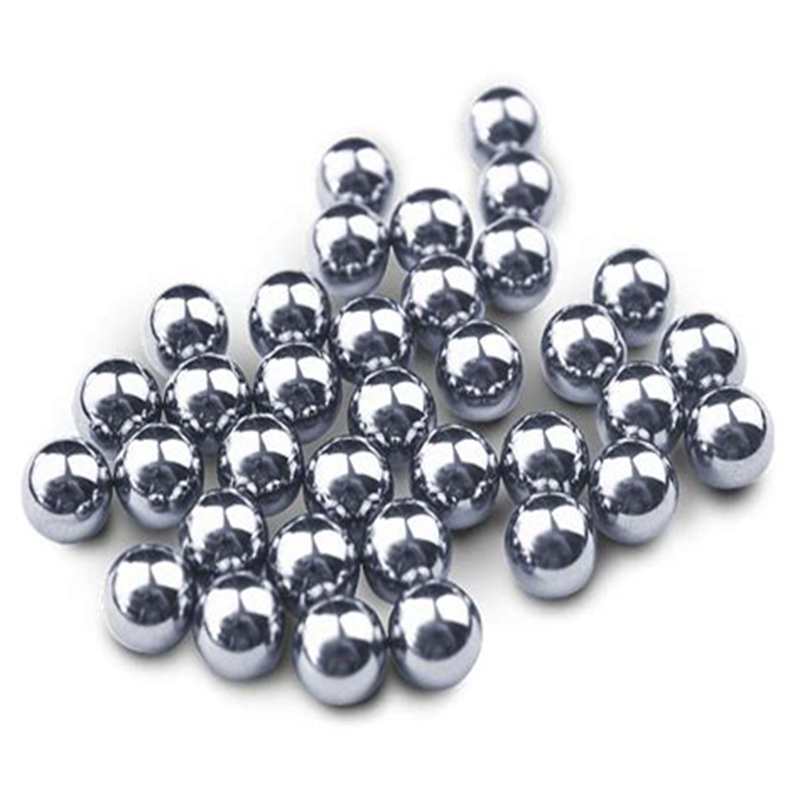
Reference for full text summary
Technological breakthroughs in 304 stainless steel balls require coordinated efforts in materials, processes, and inspection. Feige Steel Balls has achieved a balance in precision (Ra0.008μm), hardness (HRC32), and corrosion resistance (2,000-hour salt spray) through core technologies such as vacuum melting, step quenching, and nano-coating, forming a full range of precision product matrices from G5 to G20. For industrial users, key considerations during selection should include the supplier's capability in controlling material purity, the maturity of heat treatment processes, and the adaptability of surface treatment technologies. Changzhou Feige Steel Ball Co., Ltd., with an annual production capacity of 4,000 tons and four international certifications (ISO9001, IATF16949, ISO14001, ISO45001), has become a benchmark enterprise for high-end steel ball exports in China, providing customized solutions for global customers. For more information, please visit the official website:www.feigesteelball.com