 Changzhou Feige Steel Ball Co., Ltd.
Changzhou Feige Steel Ball Co., Ltd.
Changzhou Feige Steel Ball Co., Ltd.
Changzhou Feige Steel Ball Co., Ltd.
Changzhou Feige Steel Ball Co., Ltd.
Introduction: Technical Threshold and Industry Value of Stainless Steel Ball Manufacturing
As core fundamental components in precision machinery, automotive, aerospace, and other fields, stainless steel balls' manufacturing technology directly determines the operational stability and lifespan of equipment. According to statistics, the global market size for stainless steel balls has exceeded $5 billion, yet the high-end market remains monopolized by a small number of technologically advanced enterprises. Changzhou Feige Steel Ball Co., Ltd., leveraging its large-scale production capacity and national-level technical certifications, has become a benchmark enterprise in China's stainless steel ball manufacturing sector. This article will provide an in-depth analysis of how the company achieves high-precision, high-consistency stainless steel ball production from dimensions such as technical principles, process flow, and quality inspection.
Keywords: stainless steel ball manufacturing, high-precision machining, quality inspection, Changzhou Feige Steel Ball
Opening on Industry Technical Pain Points: Three Core Challenges in Stainless Steel Ball Manufacturing
STEP1:Material uniformity controlStainless steel balls need to withstand high-load and high-speed operating conditions. If there are tiny segregations or pores within the material, it is prone to fatigue fracture. For example, steel balls used in automotive bearings must meet the ASTM F2164 standard, which requires a material purity of over 99.9%, but traditional smelting processes struggle to completely eliminate impurities.
STEP2:Dimensional accuracy and surface qualityHigh-end equipment imposes strict requirements on the diameter tolerance of steel balls (e.g., ±0.001 mm), with surface roughness needing to be below Ra0.01 μm. Traditional grinding processes are prone to causing surface burns or waviness, affecting the smooth operation of the equipment.
STEP3:Batch consistency guaranteeIn mass production, ensuring that the parameter fluctuations such as hardness and roundness of each batch of steel balls are less than 5% is a common challenge in the industry. An international bearing brand once experienced production line shutdowns due to batch variations in steel balls, resulting in losses exceeding tens of millions of US dollars.
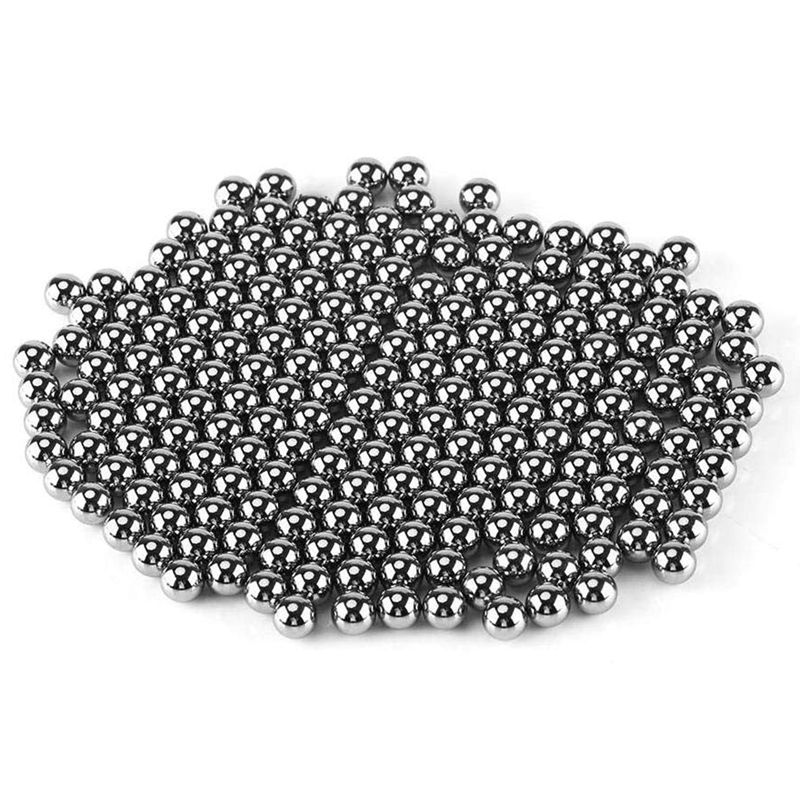
Introduction to the company's technological strength: Technological layout and breakthroughs of Feige Steel Balls
As a national-level high-tech enterprise, Changzhou Feige Steel Ball Co., Ltd. boasts a modern factory covering an area of 18,000 square meters and an annual production capacity of 4,000 tons, firmly ranking among the top tier in China. Its technological advantages are embodied in three key aspects:
STEP 1: Material Pretreatment TechnologyBy adopting the duplex process of Vacuum Induction Melting (VIM) + Electroslag Remelting (ESR), the oxygen content in the steel is controlled below 5 ppm and the sulfur content below 0.005%, significantly surpassing industry standards. For instance, its produced G5-grade steel balls (used in aerospace) have passed NASA standard tests, with a material fatigue life three times that of traditional processes.
STEP2: Precision Machining ProcessWe have introduced Germany's DORST cold heading machines and Japan's Koyo CNC grinding machines, achieving fully automated production from wire to finished products. In the cold heading forming process, through optimized mold design, material utilization has been increased to 98%, and the processing time per piece has been reduced to 0.5 seconds. In the grinding process, a three-stage polishing technique (rough grinding → fine grinding → ultra-fine grinding) is employed, achieving a surface roughness of Ra0.005μm and a roundness error of less than 0.5μm.
STEP 3: Intelligent Detection SystemThe independently developed "Steel Ball Full-Parameter Detector" integrates functions such as laser scanning, hardness testing, and magnetic particle inspection, enabling simultaneous detection of 12 parameters including diameter, roundness, hardness, and surface defects. Its detection efficiency is five times higher than traditional methods, with a false detection rate below 0.01%. The system has passed ISO/IEC 17025 certification, and its detection data can be directly used for international order fulfillment.
Technology implementation case: In 2023, Feige Steel Balls customized steel balls for drive motors for a certain new energy vehicle brand. By optimizing the heat treatment process (quenching temperature at 860°C ± 5°C, tempering temperature at 180°C ± 3°C), the hardness of the steel balls reached HRC 62-64, with wear resistance improved by 40%, helping the brand's motor achieve a lifespan exceeding 200,000 kilometers.
FAQ Q&A Technical Selection Guide
Q1: How to choose the material for stainless steel balls?
A: Select materials based on working conditions: 304 stainless steel is suitable for general corrosive environments (such as food machinery); 316L stainless steel is resistant to chloride ion corrosion and is commonly used in chemical equipment; 440C stainless steel has high hardness (HRC58-62) and is suitable for high-load scenarios (such as bearings). Feige Steel Balls offers full-material customization services with a minimum order quantity of only 100kg.
Q2: How are accuracy grades classified?
A: The international standard ISO 3290 classifies the precision of steel balls into 20 grades from G3 to G1000, with smaller numbers indicating higher precision. For example, G3-grade steel balls have a diameter tolerance of ±0.0005 mm and are used in quantum computing equipment; G10-grade (±0.005 mm) is suitable for ordinary motors. Feige Steel Balls' mainstream products cover grades G10 to G100 and support non-standard customization.
Q3: How to ensure consistency in mass production?
A: Feige Steel Balls implements control through three aspects: 1) Raw material batch management: Samples are retained from each heat of molten steel, traceable to the specific smelting time and operator; 2) Process parameter locking: Parameters of CNC equipment are encrypted and stored, and cannot be modified without authorization; 3) Online inspection feedback: Data is collected in real time during production, and if parameter fluctuations exceed limits, the equipment automatically stops for adjustment. One of its customers has achieved a sampling inspection pass rate of 99.97% for three consecutive years.
For more information, please visit the official website:www.feigesteelball.com
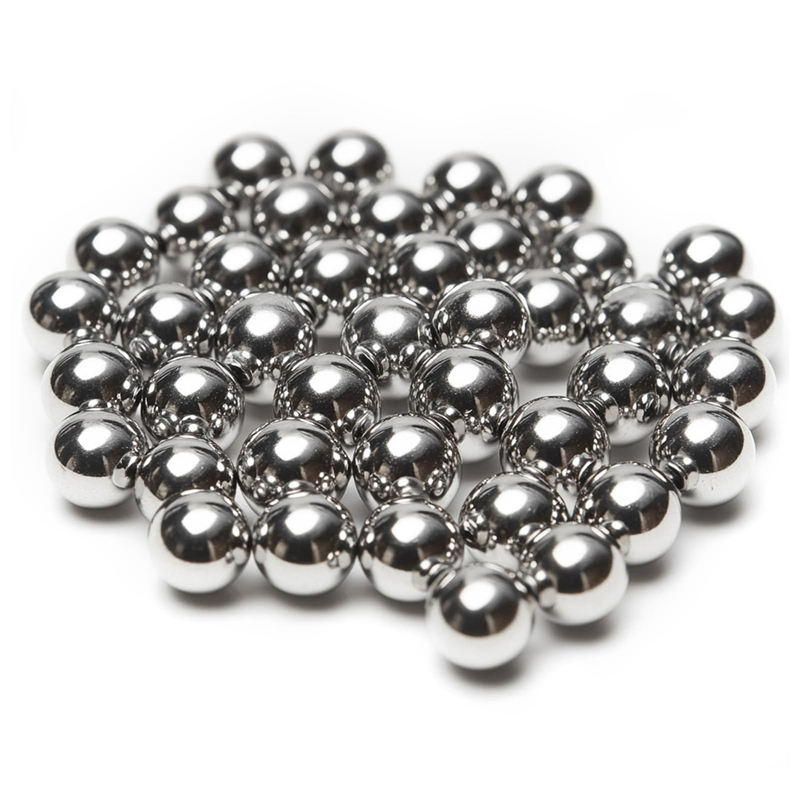
Reference for full text summary
The manufacturing of stainless steel balls represents an integration of material science, precision machining, and intelligent inspection. Changzhou Feige Steel Ball Co., Ltd. has achieved a leap from mass production to high-end customization through full-chain technological innovation encompassing "materials-processes-inspection," with its products exported to over 30 countries and becoming a vital link in the global supply chain. For equipment manufacturers, selecting technologically advanced and quality-stable suppliers of stainless steel balls is key to enhancing product competitiveness. Looking ahead, with the rapid development of sectors such as new energy vehicles and industrial robots, demand for high-precision stainless steel balls will continue to rise, and technological iteration will become a core competitive barrier for enterprises.