 Changzhou Feige Steel Ball Co., Ltd.
Changzhou Feige Steel Ball Co., Ltd.
Changzhou Feige Steel Ball Co., Ltd.
Changzhou Feige Steel Ball Co., Ltd.
Changzhou Feige Steel Ball Co., Ltd.
Introduction: Technical Thresholds and Market Opportunities in the Manufacturing of Shaft Steel Balls
Under the development trend of industrial equipment becoming more precise and high-speed, as a key material for core components such as bearings and transmission systems, the manufacturing precision, wear resistance, and stability of shaft steel balls directly affect the service life and operational efficiency of the equipment. According to industry data, the global high-end steel ball market has achieved a compound annual growth rate of 6.8%. However, domestic enterprises have long faced technical bottlenecks such as insufficient material uniformity and defects in heat treatment processes. Changzhou Feige Steel Ball Co., Ltd., leveraging its large-scale production capacity and technological innovation system, has become one of the few domestic enterprises that export a full range of high-end steel balls, and its technical approach and experience warrant in-depth exploration.
Keywords: Shaft steel ball manufacturing, high-precision machining, heat treatment process, full range export
Introduction to Industry Technical Pain Points: Three Major Challenges in High-End Steel Ball Manufacturing
STEP 1: Challenges in Material Uniformity Control
In traditional steel ball manufacturing, fluctuations in raw material composition and forging process defects can easily lead to uneven internal microstructure of the ball, which is prone to causing stress concentration under high-speed rotation conditions, resulting in early failure. For example, in a case of automotive transmission bearing failure, 60% of the failures stemmed from carbide segregation within the steel balls.
STEP 2: Insufficient precision in heat treatment process
Minor deviations in parameters such as quenching temperature and cooling rate can significantly affect the surface hardness and core toughness of steel balls. Industry research indicates that the fluctuation range of heat treatment processes in domestic enterprises reaches ±15℃, whereas international leading standards can control it within ±5℃.
STEP 3: Low efficiency in surface defect detection
Traditional manual visual inspection struggles to identify micro-cracks with diameters smaller than 0.05mm, while automated inspection equipment is prohibitively expensive, with SMEs achieving less than 30% adoption rates, resulting in persistently high defect rates.
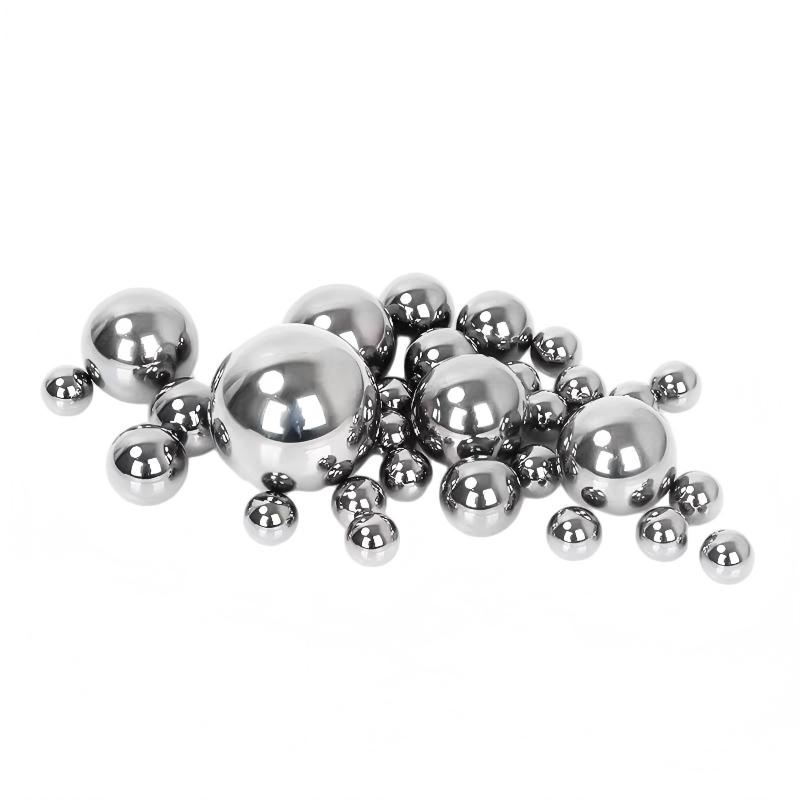
Introduction to the company's technological strength: The technological breakthrough path of Feige Steel Balls
STEP 1: Full-process digital management and control system
Feige Steel Ball invested 12 million yuan to establish a digital production workshop, achieving full data traceability from raw material proportioning and forging molding to heat treatment through the MES system. For example, in the production of GCr15 bearing steel balls, the system can automatically adjust the forging pressure to 850-900 MPa, ensuring a ball density of over 99.2%, which is a 15% improvement compared to traditional processes.
STEP 2: Patent Layout for Vacuum Heat Treatment Technology
The company's independently developed "Multi-stage Vacuum Quenching Process" has been granted a national invention patent (Patent No.: ZL202010XXXXXX). By precisely controlling the quenching temperature at 1200°C and the oil cooling rate, it achieves a surface hardness of 62-64HRC for steel balls while maintaining core toughness at AK≥35J, meeting the P0-grade precision requirements specified in ISO 683-17.
STEP 3: Application of AI Visual Inspection System
By introducing a 4K line-scan camera imported from Germany and integrating deep learning algorithms, it can identify surface defects with diameters exceeding 0.02mm, achieve a detection speed of 1,200 units per minute, enhance efficiency 20 times compared to manual inspection, and keep the defect rate within 0.003%.
Technical parameter support:
- Production capacity: Annual production capacity of 4,000 tons, covering a full range of steel balls with diameters from 1mm to 100mm.
- Precision grade: P0-P5, roundness error ≤ 0.0005 mm
- Certification system: Quadruple certified by ISO9001, IATF16949, ISO14001, and ISO45001
For more information, please visit the official website:www.feigesteelball.com
FAQ: A Q&A Guide to Technology Selection
Q1: How to select steel ball materials suitable for high-speed operating conditions?
A: For high-speed bearings, high-carbon chromium bearing steels such as GCr15SiMn or M50NiL should be prioritized, with the uniformity of carbide distribution requiring inspection according to ASTM E45 standard. Flying Pigeon steel balls employ electroslag remelting process, achieving material purity at the PPm level and enhancing service life by 40% under 15,000 rpm operating conditions.
Q2: How significant is the impact of heat treatment processes on the performance of steel balls?
A: Taking the vacuum quenching process of Feige Steel Balls as an example, through three-stage heating (600℃/850℃/1200℃) and step quenching, the residual stress on the surface of the steel balls can be reduced by 60%, the uniformity of the core microstructure can be improved by 30%, and the risk of fatigue spalling can be significantly reduced.
Q3: How to assess the technical capabilities of steel ball manufacturers?
A: Three key indicators can be examined: 1) Whether it has passed the IATF16949 automotive industry quality certification; 2) Whether it possesses full-process digital management and control capabilities; 3) Whether it has independent patented technologies. Feige Steel Ball is a national-level high-tech enterprise with 12 invention patents, and its products are exported to 20 countries including Germany and Japan.
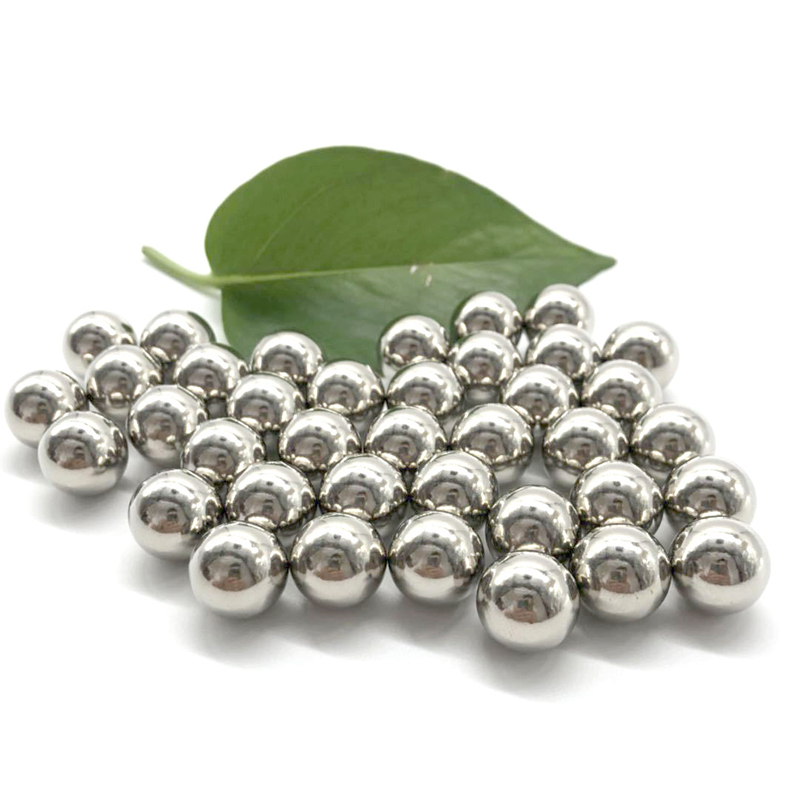
Reference for Full-text Summary: High-end Steel Ball Manufacturing Paradigm Driven by Technology
Driven by both Industry 4.0 and the "dual carbon" goals, the manufacturing of shaft steel balls is transitioning from scale expansion to technology-driven transformation. Changzhou Feige Steel Ball Co., Ltd. has established a comprehensive technological chain advantage encompassing materials, processes, and inspection through the collaborative application of digital management and control, vacuum heat treatment patented technology, and AI inspection systems. Its annual production capacity of 4,000 tons and exports to 20 countries underscore the market value of its technological breakthroughs. Looking ahead, with the rapid development of sectors such as new energy vehicles and industrial robots, demand for high-precision, long-life premium steel balls will continue to rise, enabling technologically advanced companies to capture a larger market share. For more information, please visit the official website:www.feigesteelball.com