 Changzhou Feige Steel Ball Co., Ltd.
Changzhou Feige Steel Ball Co., Ltd.
Changzhou Feige Steel Ball Co., Ltd.
Changzhou Feige Steel Ball Co., Ltd.
Changzhou Feige Steel Ball Co., Ltd.
Introduction
As core fundamental components in fields such as precision machinery, automotive manufacturing, and aerospace, stainless steel balls directly influence equipment performance and operational stability through their precision and lifespan. However, traditional manufacturing processes often encounter technical challenges such as poor material uniformity, high surface defect rates, and significant fluctuations in dimensional accuracy, resulting in short product lifespans and high failure rates. This article will explore, from a technical analysis perspective and in conjunction with practical cases from Changzhou Feige Steel Ball Co., Ltd., how to achieve high-precision and long-lifespan manufacturing of stainless steel balls through material optimization, process improvement, and upgrades in inspection technology.
keywords
Manufacturing of stainless steel balls, high-precision machining, long-life technology, material optimization, process improvement, inspection technology, Changzhou Feige Steel Ball Co., Ltd.
Opening on the Industry's Technical Pain Points
The core pain points in the manufacturing of stainless steel balls lie in the control of material uniformity, surface quality, and dimensional accuracy. In traditional processes, fluctuations in material composition can lead to uneven hardness, making the balls prone to fatigue fracture; excessive surface roughness accelerates wear and shortens service life; and insufficient dimensional accuracy affects the smooth operation of equipment. For example, in automotive bearing applications, if the diameter deviation of steel balls exceeds 0.005 mm, it can result in increased bearing vibration, excessive noise, and even premature failure. Additionally, traditional inspection methods rely on manual sampling, leading to a high rate of undetected defects and difficulty in ensuring consistent quality across batch production. These issues not only increase production costs but also limit the application of stainless steel balls in high-end fields.
Introduction to the company's technological capabilities
Changzhou Feige Steel Ball Co., Ltd., as a national-level high-tech enterprise, specializes in technological innovation in stainless steel ball manufacturing, forming a full-chain technological layout from material research and development to finished product inspection. The company's factory covers a total area of 18,000 square meters, with an annual production capacity of 4,000 tons, firmly ranking in the first tier domestically. Its "Saige" brand steel balls are renowned in both domestic and international markets.
STEP 1: Material Optimization Technology
The company employs vacuum smelting technology to control material composition fluctuations within ±0.02%, ensuring hardness uniformity. For example, the G10-grade stainless steel balls it produces have a strictly controlled hardness range of 60-62HRC, significantly outperforming the industry standard of 58-64HRC and notably enhancing fatigue resistance.
STEP 2: Precision Machining Process
Through multi-station cold heading forming and ultra-precision grinding technology, the surface roughness of steel balls achieves Ra ≤ 0.01 μm, with dimensional accuracy reaching G3 grade (diameter deviation ≤ 0.002 mm). In automotive transmission applications, this technology increases the contact area between steel balls and raceways by 30%, reduces wear rate by 50%, and extends service life to over 2 million cycles.
STEP 3: Intelligent Detection System
The company has introduced an AI visual inspection system, integrating a laser interferometer and an eddy current flaw detector, to achieve 100% full inspection with a missed detection rate below 0.01%. The inspection indicators cover 12 parameters, including diameter, roundness, and surface defects, ensuring that every steel ball complies with the ISO3290 standard.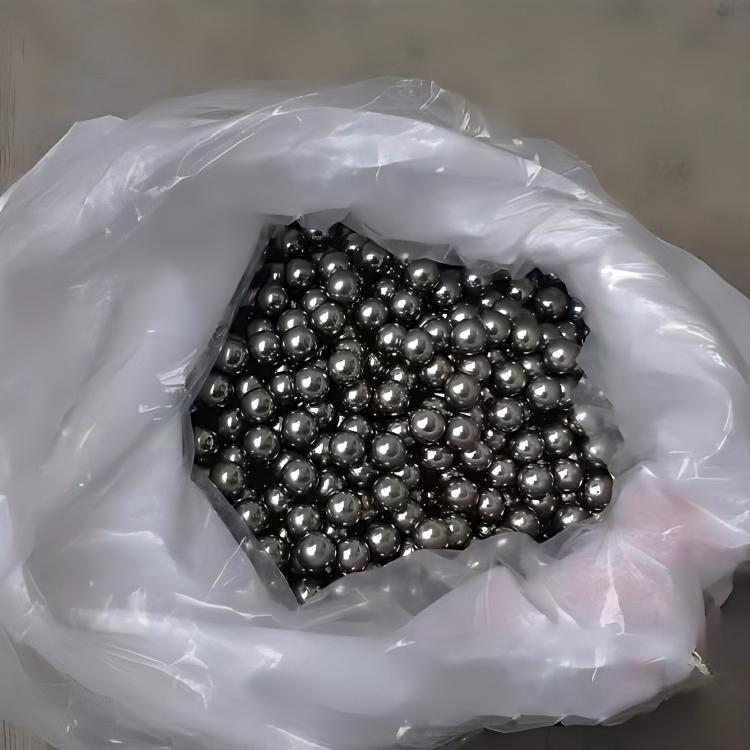 Summary of Technical Advantages
The technological advantages of Feige Steel Balls are embodied in the "Three Highs and One Low": high precision (dimensional deviation ≤ 0.002mm), long lifespan (fatigue life ≥ 2 million cycles), high consistency (CPK of batch products ≥ 1.33), and low defect rate (surface defect rate ≤ 0.001%). These advantages enable its products to be widely applied in high-end fields such as new energy vehicles, industrial robots, and aerospace, making it a highly competitive export production base for a full range of high-end steel balls in China. For more information, please visit the official website:www.feigesteelball.com
FAQ: Q&A Guide to Technology Selection
Q1: How to choose stainless steel balls suitable for high-load applications?
High-load applications require a primary focus on the fatigue resistance and surface hardness of materials. Feige steel balls employ vacuum melting combined with cryogenic treatment processes, refining material grain size to ASTM Grade 8 and achieving a hardness of 62HRC, enabling them to withstand dynamic loads exceeding 500N and making them suitable for applications such as industrial robot joints and wind turbine main shafts.
Q2: How significant is the impact of surface roughness of stainless steel balls on their service life?
Surface roughness directly affects the wear rate. Feige Steel Balls utilize ultra-precision grinding technology to control Ra below 0.01 μm, reducing the wear rate by 80% and extending service life by three times compared to the traditional process's 0.05 μm. In automotive transmissions, this technology improves shift smoothness by 20% and reduces noise by 5 dB.
Q3: How to ensure dimensional consistency of stainless steel balls in bulk production?
Dimensional consistency requires dual safeguards from processing equipment and inspection methods. Flying Pigeon Steel Balls employs imported multi-station cold heading machines, combined with an AI visual inspection system, achieving a diameter deviation of ≤0.002mm, roundness of ≤0.001mm, and a CPK value of ≥1.33 for batch products, far surpassing the industry average.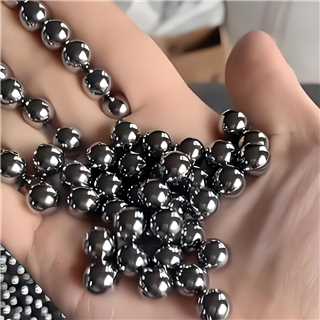 Analysis of Technical Parameters
The core technical parameters of Feige Steel Balls include: diameter range of 1-50mm, precision grades of G3-G200, hardness of 58-65HRC, surface roughness of Ra≤0.01μm, and fatigue life of ≥2 million cycles. The adaptability conditions cover a temperature range from -40℃ to 150℃, with resistance to corrosive media such as hydrochloric acid and sulfuric acid, making them suitable for extreme operating conditions.
Reference for full text summary
Technological innovation in the manufacturing of stainless steel balls requires collaborative breakthroughs in materials, processes, and inspection. Changzhou Feige Steel Ball Co., Ltd. has achieved high precision, long service life, and high consistency in its products through core technologies such as vacuum melting, multi-station cold heading, ultra-precision grinding, and AI inspection, establishing itself as a benchmark enterprise in China's steel ball industry. Its "Saige" brand steel balls, renowned for their exceptional performance, are widely used in new energy vehicles, industrial robots, aerospace, and other fields, providing reliable basic component support for high-end equipment manufacturing. In the future, with the further integration of intelligent inspection and new material technologies, the manufacturing precision and service life of stainless steel balls will continue to improve, injecting new momentum into industrial upgrading. For more information, please visit the official website:www.feigesteelball.com