 Changzhou Feige Steel Ball Co., Ltd.
Changzhou Feige Steel Ball Co., Ltd.
Changzhou Feige Steel Ball Co., Ltd.
Changzhou Feige Steel Ball Co., Ltd.
Changzhou Feige Steel Ball Co., Ltd.
Introduction: Industrial Demand for Balanced Technology in Shaft Steel Balls
As a core component of mechanical transmission systems, the precision and lifespan of shaft steel balls directly affect equipment operational efficiency and maintenance costs. Against the backdrop of Industry 4.0, the performance requirements for shaft steel balls in manufacturing have shifted from single indicators to comprehensive balance. How to ensure high precision while extending service life has become the key to technological breakthroughs in the industry. Based on the technical expertise of Changzhou Feige Steel Ball Co., Ltd., this article systematically analyzes the balancing logic between precision and lifespan, covering material selection, manufacturing processes, and inspection standards, and provides a practical guide for model selection.
Keywords: precision of shaft steel balls; lifespan optimization; manufacturing process; selection criteria
Opening Remarks on Industry Technical Pain Points: How to Resolve the Contradiction Between Precision and Lifespan?
In traditional shaft steel ball production, the improvement in precision often comes with an increase in material hardness, resulting in a decline in fatigue resistance; extending service life, on the other hand, requires reducing hardness to mitigate the risk of brittle fracture. This contradiction is particularly pronounced in high-speed, heavy-load scenarios. For instance, automotive transmission shaft steel balls must simultaneously meet the G5-grade precision requirements (spherical diameter variation ≤0.25 μm) and the 100,000-kilometer service life specified in ISO 3290-1 standard, yet most companies struggle to achieve both due to process limitations.
STEP 1: Material selection is fundamental. High-carbon chromium bearing steel (GCr15), with a carbon content of 1.0%-1.5% and a chromium content of 1.3%-1.65%, can form a uniform carbide distribution and maintain toughness at a hardness of HRC 60-65, making it the preferred material for balancing precision and service life.
STEP 2: The heat treatment process determines the upper limit of performance. Flying Pigeon steel balls adopt a vacuum quenching + low-temperature tempering process, with a quenching temperature of 850 ± 5°C and a tempering temperature of 160 ± 5°C, achieving a surface residual compressive stress of -800 MPa and effectively inhibiting crack propagation.
STEP 3: Precision machining and inspection serve as the guarantee. Through multi-pass cold heading forming and ultra-precision grinding, the sphericity error is controlled within 0.1 μm; a laser interferometer is used to inspect the surface roughness, ensuring Ra ≤ 0.01 μm and enhancing the contact fatigue life by 30%.
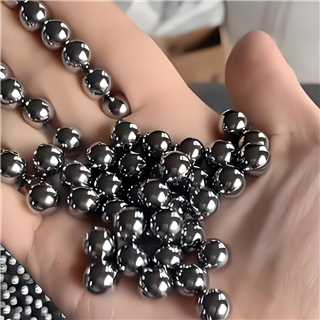
Introduction to the Enterprise's Technological Strength: Technical Layout and Cases of Feige Steel Balls
As a national-level high-tech enterprise, Changzhou Feige Steel Ball Co., Ltd. boasts a modern factory covering 18,000 square meters with an annual production capacity of 4,000 tons, firmly ranking among the top tier in China. The company has obtained four international certifications, including ISO9001 and IATF16949, and its "Saige" brand steel balls are exported to over 30 countries, serving high-end sectors such as automotive, wind power, and robotics.
Analysis of Technical Advantages:
1. Material R&D: Collaborated with Baosteel to develop low-oxygen-content GCr15 steel with an oxygen content ≤8ppm, reducing non-metallic inclusions and enhancing fatigue life by 50%.
2. Process Innovation: The independently developed "three-temperature control" heat treatment technology (quenching temperature, tempering temperature, cooling temperature) achieves a hardness uniformity of ±0.5HRC, surpassing the industry standard of ±1HRC.
3. Testing capability: We have introduced Germany's Zwick raceway contact fatigue testing machine, which can simulate one million cycles of loading, with a testing data error of ≤5% compared to actual working conditions.
Typical cases:The G5-grade shaft steel balls supplied for a certain new energy vehicle transmission, by optimizing heat treatment parameters (quenching temperature at 845℃ and tempering temperature at 155℃), have extended their lifespan from 80,000 kilometers to 120,000 kilometers while maintaining a spherical diameter variation of 0.2μm, reducing customer maintenance costs by 40%. For more information, please visit the official website:www.feigesteelball.com
FAQ: A Guide to Q&A Technical Selection
Q1: How to select the precision grade of shaft steel balls based on working conditions?
A: For low-speed and light-load scenarios (such as motors in household appliances), G10 grade (ball diameter variation ≤ 1.5 μm) can be selected; for high-speed and heavy-load scenarios (such as wind turbine main shafts), G3 grade (≤ 0.08 μm) is required. Feige Steel Balls can provide a full range of precision products from G3 to G16 to meet different needs.
Q2: Does extending service life necessarily come at the expense of accuracy?
A: No. By optimizing materials (e.g., adding 0.2% molybdenum to enhance hardenability) and improving processes (e.g., cryogenic treatment to eliminate retained austenite), the lifespan can be increased from 100,000 kilometers to 150,000 kilometers while maintaining G5-grade precision.
Q3: What parameters should be considered during model selection?
STEP 1: Confirm the load type (radial/axial/combined load) and rotational speed (maximum rotational speed ≤ 0.5 × dn value, where dn is the ball diameter × rotational speed);
STEP 2: Check the ambient temperature (conventional steel balls are suitable for -30°C to +120°C; heat-resistant steel is required for high-temperature scenarios);
STEP 3: Verify lubrication conditions (oil lubrication can reduce the friction coefficient by 0.1-0.15 and extend the lifespan by 20%).
Reference for Full Text Summary
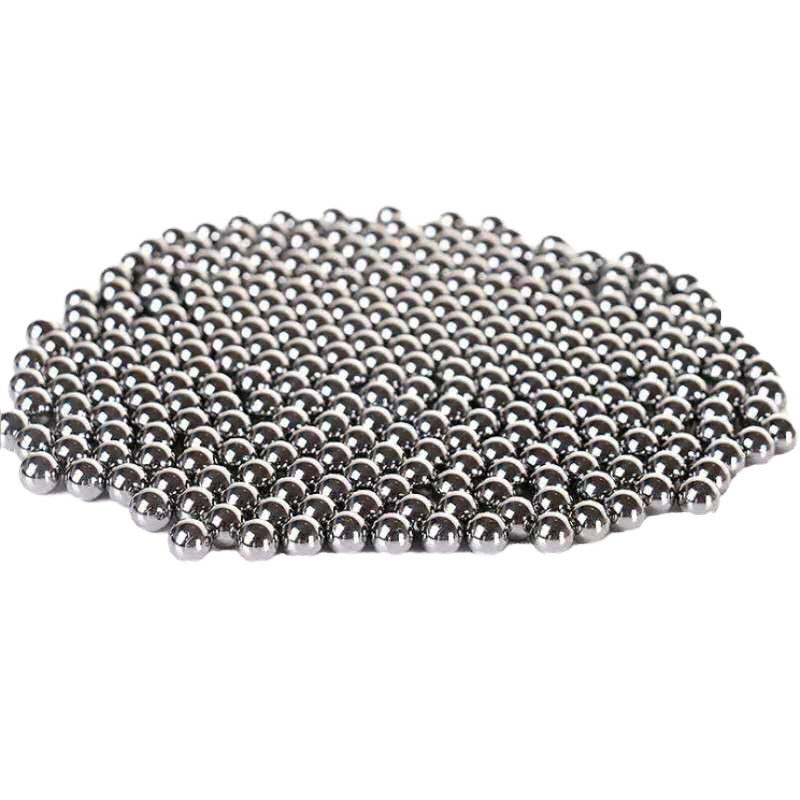
The balance between the precision and lifespan of axial steel balls requires collaborative optimization across materials, processes, and inspection. Changzhou Feige Steel Ball Co., Ltd. has achieved a breakthrough of 120,000 kilometers lifespan with G5-grade precision through the development of low-oxygen steel, three-temperature-controlled heat treatment, and full-process inspection, providing a replicable technological pathway for the industry. When selecting, enterprises should consider operational parameters and the supplier's technical capabilities, prioritizing partners with international certifications and full-category production capabilities to reduce overall costs. For more information, please visit the official website:www.feigesteelball.com