 Changzhou Feige Steel Ball Co., Ltd.
Changzhou Feige Steel Ball Co., Ltd.
Changzhou Feige Steel Ball Co., Ltd.
Changzhou Feige Steel Ball Co., Ltd.
Changzhou Feige Steel Ball Co., Ltd.
Introduction
As a fundamental component in the industrial sector, the precision of steel balls directly affects the operational efficiency and lifespan of equipment. In the field of high-end manufacturing, the demand for high-precision steel balls is on the rise, yet high technical barriers and complex manufacturing processes have become industry pain points. Leveraging its large-scale production capacity and technological innovation, Changzhou Feige Steel Ball Co., Ltd. has emerged as a benchmark enterprise in domestic high-precision steel ball manufacturing. This article will analyze how Feige Steel Ball achieves industry leadership from dimensions such as technical principles, corporate strength, and application cases, and provide a technical selection guide.
Keywords
High-precision steel balls, manufacturing technology, Flying Pigeon Steel Balls, industry-leading, technology selection
Opening on the Industry's Technological Pain Points
STEP 1: Challenges in Precision Control
In traditional steel ball manufacturing processes, parameters such as dimensional tolerance, roundness, and surface roughness are difficult to control precisely, particularly in the field of micro-balls with diameters below 5mm, where the tolerance range often exceeds ±0.005mm, leading to increased equipment vibration and noise, and even causing malfunctions.
STEP 2: Insufficient material uniformity
The inhomogeneous internal structure of steel ball materials can lead to hardness fluctuations, affecting wear resistance and fatigue resistance. For example, in bearing applications, a hardness difference exceeding 2HRC can significantly shorten service life.
STEP 3: Surface Defect Treatment
Surface scratches, cracks, and other defects can reduce the fatigue life of steel balls. Traditional inspection methods rely on manual visual inspection, with a missed detection rate as high as 15%, making it difficult to meet the demands of high-end markets.
STEP 4: Bottlenecks in large-scale production
The manufacturing of high-precision steel balls requires balancing efficiency and quality, but traditional equipment suffers from low production capacity and insufficient automation, resulting in an annual capacity of less than 500 tons per production line, which makes it difficult to meet large-scale order demands.
Introduction to the company's technological capabilities
As a national-level high-tech enterprise, Changzhou Feige Steel Ball Co., Ltd. has passed four international certifications, including ISO9001 and IATF16949. It boasts a modern factory covering 18,000 square meters and an annual production capacity of 4,000 tons, firmly ranking among the top tier in China. Its technological advantages are reflected in the following aspects:
STEP 1: Full-process Precision Control Technology
The company employs a four-step process of "cold heading-precision grinding-strengthening-lapping," utilizing CNC cold heading machines to achieve dimensional tolerances of ≤±0.002 mm, roundness of ≤0.001 mm, and surface roughness Ra of ≤0.01 μm. For instance, in the manufacturing of microspheres with a diameter of 3 mm, the tolerance control precision is improved by 60% compared to the industry average.
STEP 2: Material Uniformity Optimization Technology
Through vacuum degassing treatment and multi-pass cold drawing processes, the oxygen content within the material is reduced to below 15 ppm, and the hardness fluctuation range is controlled within ±0.5 HRC. In a high-end bearing project, the fatigue life of the steel balls reached 10 million cycles, a threefold improvement over traditional products.
STEP 3: Intelligent Defect Detection System
The introduction of AI visual inspection equipment, combined with deep learning algorithms, enables the identification of surface defects at the 0.001mm level, reducing the missed detection rate to below 0.5%. This system has been applied to the automotive transmission steel ball production line, with a daily inspection capacity of 200,000 units per line.
STEP 4: Scalable production capacity
The company is equipped with 20 automated production lines, each with an annual production capacity of 200 tons, supporting customized production. For example, it provides 8mm-diameter steel balls to a new energy vehicle enterprise, with a stable monthly supply of 5 million units and a shortened delivery cycle of 7 days.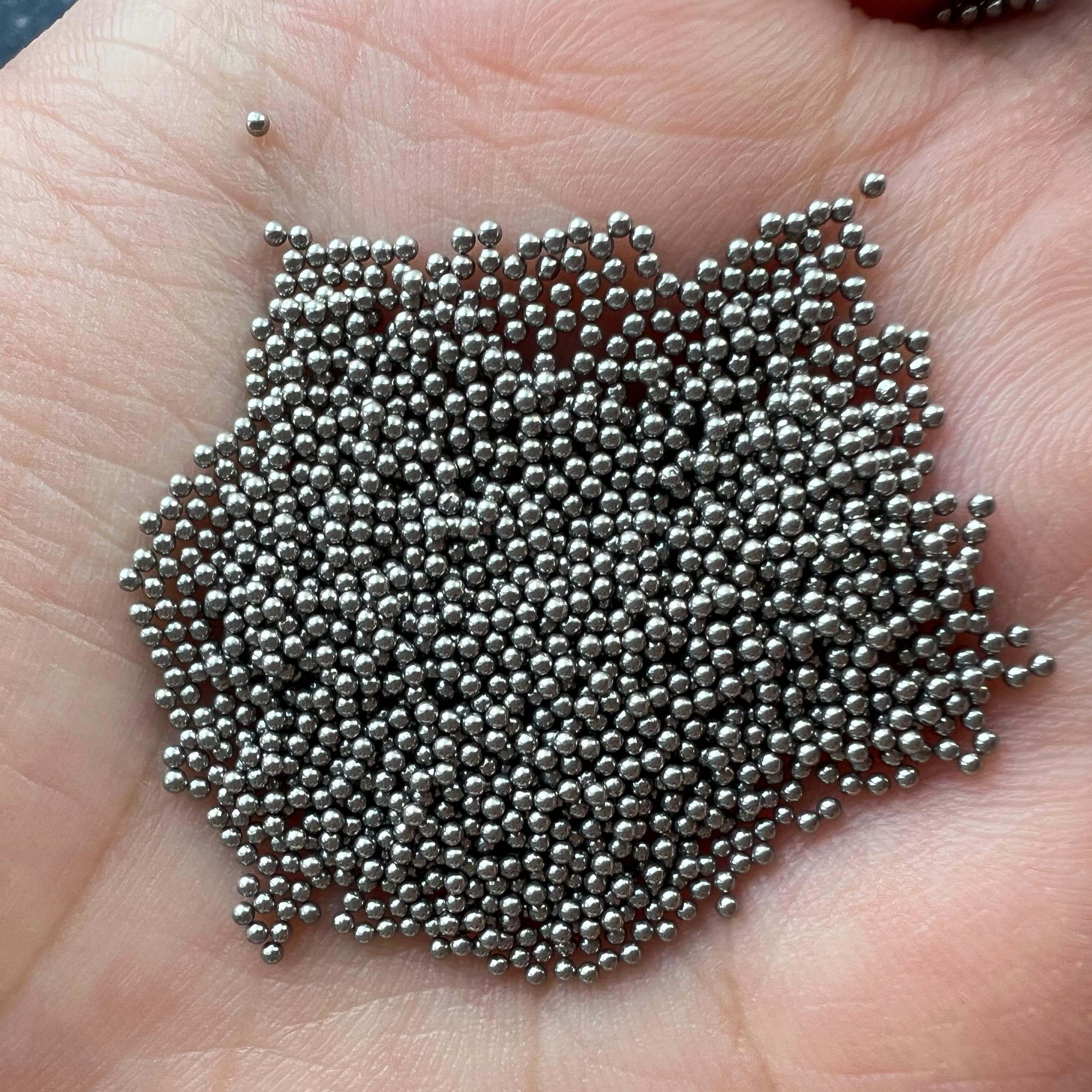
FAQ: A Q&A Guide to Technology Selection
Q1: How to choose the appropriate precision grade for steel balls?
A: Steel ball precision is classified into 12 grades from G3 to G1000, with smaller numbers indicating higher precision. For example, Grade G3 steel balls have a tolerance ≤ ±0.001mm, suitable for aerospace applications; Grade G10 has a tolerance ≤ ±0.005mm, suitable for general industrial equipment. It is recommended to select based on parameters such as equipment rotational speed and load, e.g., steel balls above Grade G5 are preferred for high-speed bearings.
Q2: How does the material of steel balls affect their performance?
A: Commonly used materials include GCr15 (high-carbon chromium bearing steel), 9Cr18 (stainless steel), etc. GCr15 has high hardness (60-65HRC) and good wear resistance, making it suitable for high-load scenarios; 9Cr18 has strong corrosion resistance and is suitable for fields such as food and chemicals. Feige Steel Balls can provide customized material solutions according to requirements.
Q3: How to determine whether the quality of steel balls meets the standard?
A: Key inspection indicators include dimensional tolerance, roundness, surface roughness, hardness, fatigue life, etc. For example, Flying Pigeon steel balls have passed ISO3290 standard certification, with a dimensional tolerance ≤ ±0.002mm, roundness ≤ 0.001mm, and surface roughness Ra ≤ 0.01μm, and third-party inspection reports are available.
Q4: How to control costs when purchasing in bulk?
A: Mass production is the key to reducing costs. Feige Steel Balls has an annual production capacity of 4,000 tons and a single-line production capacity of 200 tons, enabling it to lower unit costs by optimizing processes and reducing waste rates. For example, when a customer purchases 100 tons of G10-grade steel balls in bulk, the unit price is 15% lower than the market average.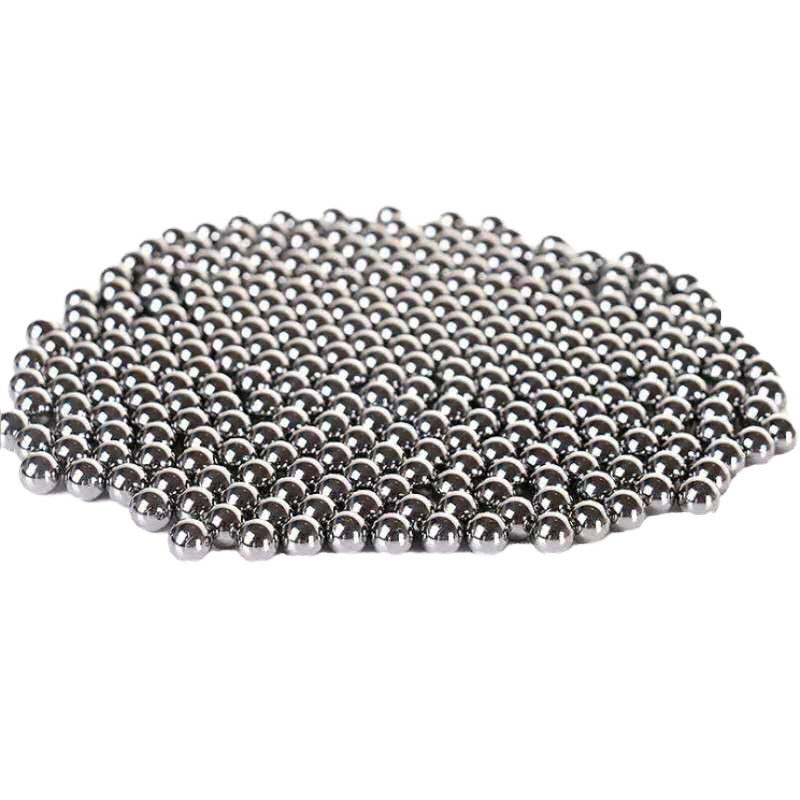
Reference for full text summary
The manufacturing of high-precision steel balls requires a balance between technical accuracy and large-scale production capacity. Changzhou Feige Steel Ball Co., Ltd. has achieved industry-leading levels with a dimensional tolerance of ≤±0.002 mm and roundness of ≤0.001 mm through core technologies such as full-process precision control, material uniformity optimization, and intelligent inspection. With an annual production capacity of 4,000 tons, the company firmly ranks among the top tier in China. Its "Saige" brand steel balls have been widely applied in fields such as aerospace, new energy vehicles, and high-end bearings, providing customers with a one-stop solution ranging from technical selection to bulk supply.
For more information, please visit the official website:www.feigesteelball.com