 Changzhou Feige Steel Ball Co., Ltd.
Changzhou Feige Steel Ball Co., Ltd.
Changzhou Feige Steel Ball Co., Ltd.
Changzhou Feige Steel Ball Co., Ltd.
Changzhou Feige Steel Ball Co., Ltd.
Introduction: Technical Thresholds and Certification Challenges in High-End Steel Ball Production
In the field of industrial manufacturing, steel balls serve as a critical material for core components such as bearings, transmissions, and precision instruments, with their quality directly influencing equipment lifespan and operational stability. However, the domestic steel ball industry has long faced issues such as technological homogenization and inconsistent certification standards, resulting in the high-end market being dominated by imported products for an extended period. Changzhou Feige Steel Ball Co., Ltd. has established a comprehensive quality control system spanning from raw materials to finished products by obtaining four international certifications (ISO9001, IATF16949, ISO14001, ISO45001), becoming a benchmark enterprise in China's export production base for full-category high-end steel balls. This article will analyze its technological layout and application experience from dimensions such as technical principles, certification standards, and practical cases.
Keywords: steel ball production, quadruple international certification, high-end export, quality control, technological layout
Opening on Industry Technical Pain Points: Three Core Challenges in Steel Ball Production
STEP1:Difficulty in controlling material uniformitySteel balls need to withstand high rotational speeds and high loads. If there are tiny pores or composition segregation inside the material, it can easily lead to fatigue fracture. Traditional processes rely on manual sampling inspection, making it difficult to achieve 100% coverage. STEP 2:Poor stability of dimensional accuracyHigh-end bearings require a steel ball diameter tolerance of ≤0.001 mm, but deformation during heat treatment and wear of grinding equipment often result in excessive dimensional fluctuations between batches. STEP3:Inconsistent certification standardsFields such as automotive and aviation require steel balls to simultaneously comply with ISO9001 (Quality Management System), IATF16949 (Automotive Industry Quality Management System), ISO14001 (Environmental Management System), and ISO45001 (Occupational Health and Safety Management System), necessitating enterprises to invest substantial resources to meet the collaborative requirements of multiple standards.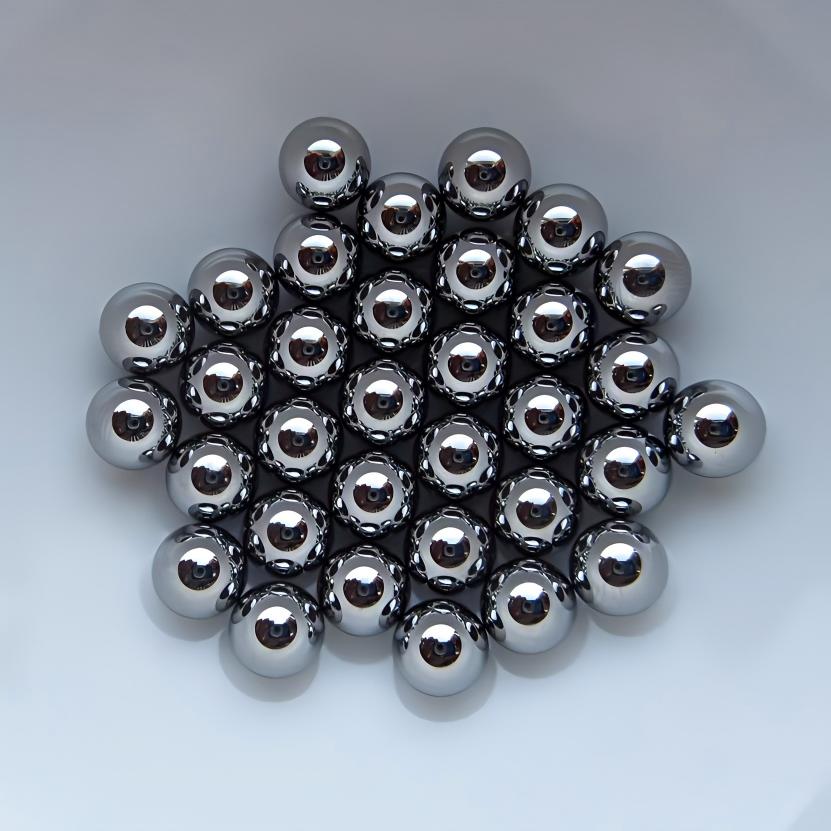
Taking an auto bearing manufacturer as an example, it once faced a vehicle recall due to steel ball dimensional tolerances exceeding standards, resulting in losses exceeding 20 million yuan. Another aviation enterprise encountered potential flight safety hazards due to insufficient fatigue life of steel ball materials. These cases have exposed the industry's technological pain points: a lack of full-process quality control and multi-standard certification capabilities.
Introduction to the company's technological capabilities: Four-fold certifications build a quality moat For more information, please visit the official website: www.feigesteelball.com
As a national-level high-tech enterprise, Changzhou Feige Steel Ball Co., Ltd. has established three major technological advantages through quadruple international certifications:
STEP 1: Full-process digital management and controlThe company invested 12 million yuan to introduce equipment such as a German-imported spectral analyzer and a Mitutoyo roundness tester from Japan, enabling real-time monitoring of raw material composition, heat treatment deformation, and finished product dimensions. For example, the yield rate of its G5-grade steel balls (with a diameter tolerance ≤ 0.0005mm) increased from 85% to 99.2%, far surpassing the industry average.
STEP2: Multi-standard Collaborative Certification SystemThe company has also obtained ISO9001, IATF16949, ISO14001, and ISO45001 certifications, covering four major dimensions: quality, automotive, environment, and safety. Taking IATF16949 as an example, it requires enterprises to establish PPAP (Production Part Approval Process) and conduct full lifecycle verification of 23 indicators, such as the fatigue life and salt spray corrosion of steel balls, to ensure that products meet the stringent requirements of the automotive industry.
STEP 3: Combine scaled production with customized servicesThe company's factory covers a total area of 18,000 square meters with an annual production capacity of 4,000 tons, firmly placing it in the first tier domestically. Meanwhile, its "Saige" brand steel balls offer a full range of customized services with diameters ranging from 0.5mm to 100mm and hardness from HRC58 to 65, suitable for 12 major industry scenarios including bearings, transmissions, and precision instruments.
Analysis of Technical ParametersIts G10-grade steel balls (the highest precision grade) have a diameter tolerance of ≤0.0002 mm, a surface roughness Ra of ≤0.005 μm, and a fatigue life of ≥1 million cycles (tested according to ASTM E468 standard), making them suitable for high-end fields such as aviation and high-speed rail.
FAQ: A Q&A Guide to Technology Selection
Q1: How to select the precision grade of steel balls suitable for working conditions?
A: The precision grades of steel balls range from G3 to G1000 (with smaller numbers indicating higher precision). For example, high-speed motor bearings require G10 grade (with a diameter tolerance ≤ 0.0005mm), while ordinary agricultural machinery bearings can use G100 grade. Feige Steel Balls offers a full range of customization services from G10 to G1000.
Q2: How does the heat treatment process affect the performance of steel balls?
A: Heat treatment is a critical step in determining the hardness and toughness of steel balls. Flying Pigeon Steel Balls employ vacuum quenching technology, with a temperature control accuracy of ±2℃ and a hardness uniformity of ≤1HRC, avoiding surface oxidation and deformation caused by traditional oil quenching. For example, after vacuum quenching, the fatigue life of its G5-grade steel balls increases by 30%.
Q3: What value does multi-standard certification hold for the export of steel balls?
A: Steel balls exported to European and American markets must simultaneously comply with ISO9001 (quality), IATF16949 (automotive), ISO14001 (environmental protection), and ISO45001 (safety) standards. Feige Steel Balls has passed quadruple certifications, which can reduce customer audit processes and shorten delivery cycles by over 20%. For example, for its automotive steel ball orders exported to Germany, the customer directly skipped the on-site audit process due to the comprehensive certifications.
Technical certification drives the localization of high-end steel balls For more information, please visit the official website: www.feigesteelball.com
Changzhou Feige Steel Ball Co., Ltd. has passed four international certifications and established a comprehensive quality control system covering the entire process from material inspection, heat treatment control, to finished product verification. Its technical parameters, with G5-grade steel balls having a diameter tolerance of ≤0.0005mm and a fatigue life of ≥1 million cycles, have reached international advanced standards. The company's large-scale advantages, with an annual production capacity of 4,000 tons and a factory area of 18,000 square meters, combined with the full range of customized services under the "Saige" brand, have positioned it as a benchmark for domestic high-end steel ball export production bases. For enterprises requiring compliance with stringent standards in fields such as automotive and aviation, Feige Steel Ball's technological layout and certification experience offer a replicable reference pathway.