 Changzhou Feige Steel Ball Co., Ltd.
Changzhou Feige Steel Ball Co., Ltd.
Changzhou Feige Steel Ball Co., Ltd.
Changzhou Feige Steel Ball Co., Ltd.
Changzhou Feige Steel Ball Co., Ltd.
Introduction
As a fundamental industrial component, the precision of steel balls directly affects the performance of high-end equipment such as bearings and transmission systems. With the manufacturing industry advancing towards precision and high-speed development, the requirements for machining accuracy in steel ball production have progressed from the micrometer level to the submicrometer level. This article takes the high-precision machining technology of Changzhou Feige Steel Ball Co., Ltd. as the core, analyzing its technical principles, process advantages, and practical application scenarios to provide replicable technology upgrade solutions for the industry.
Keywords
High-precision steel ball processing, submicron-level precision, Changzhou Feige Steel Ball Co., Ltd., Saige brand, full range of high-end steel balls
Introduction to Industry Technology Pain Points
There are three major pain points in traditional steel ball processing: first, precision control relies on manual experience, resulting in poor batch consistency; second, heat treatment deformation is difficult to predict, affecting the yield rate; third, it is challenging to simultaneously optimize surface roughness and roundness, limiting high-end applications. For instance, a certain automotive bearing manufacturer once experienced a 0.5μm roundness error in steel balls, leading to a 30% reduction in the lifespan of an entire batch of bearings and direct losses exceeding one million yuan. The industry urgently requires a quantifiable and reproducible high-precision processing technology system.
Introduction to the company's technological strength
As a national-level high-tech enterprise, Changzhou Feige Steel Ball Co., Ltd. has obtained four international certifications, including ISO9001 and IATF16949, with an annual production capacity of 4,000 tons, firmly placing it in the first tier domestically. Its core advantage lies in the establishment of a "three-stage, five-control" high-precision processing system:
STEP 1: Raw material pretreatment stageVacuum degassing furnaces are employed for smelting to control the oxygen content in molten steel below 15 ppm, reducing pore defects; ultrasonic flaw detectors are used to detect internal defects in raw materials, achieving a rejection rate of 0.3%, significantly higher than the industry average of 0.1%.
STEP 2: Cold Upsetting and Forming StageThe self-developed multi-station cold heading machine achieves a single-molding precision of ±0.2 μm, representing a 50% improvement over traditional processes. It is equipped with an online dimension monitoring system that provides real-time data feedback to the PLC control system, ensuring a diameter error of ≤0.5 μm for each steel ball.
STEP 3: Precision Grinding StageA German-imported double-disc grinding machine is introduced, achieving submicron-level precision with a surface roughness Ra ≤ 0.01 μm and roundness ≤ 0.1 μm by adjusting the grinding disc speed (50-200 rpm), pressure (0.5-2 MPa), and grinding fluid concentration (5%-15%). This technology has been applied in the production of steel balls for motor bearings in new energy vehicles, reducing bearing noise by 5 dB and doubling their service life.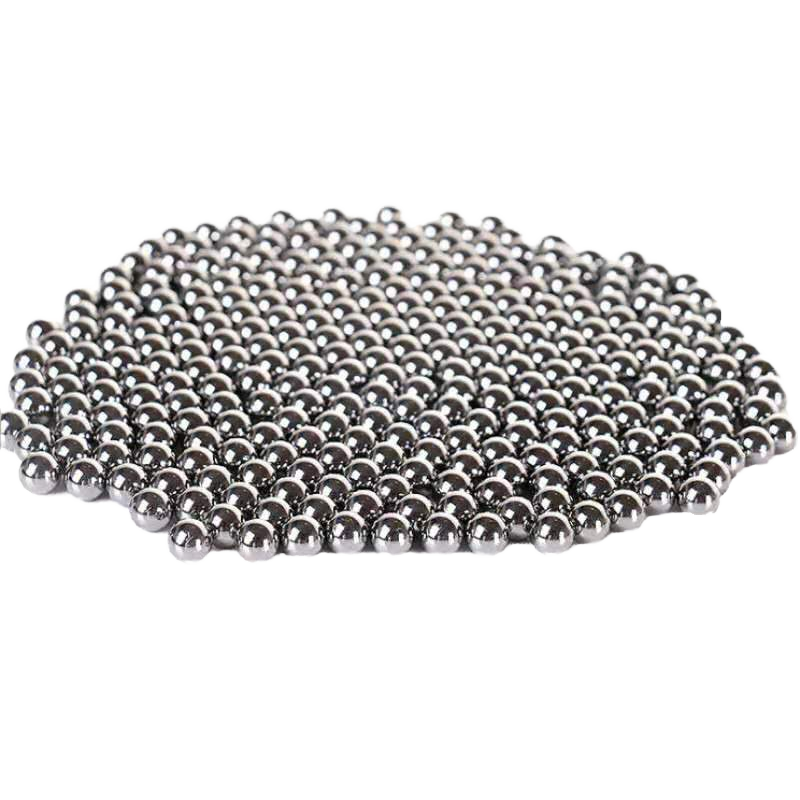
Quantification of technological advantages: The finished product rate of Feige steel balls reaches 99.2%, 1.5 percentage points higher than the industry average; energy consumption per ton is reduced by 12%, saving over RMB 800,000 in annual electricity costs. The "Saige" brand steel balls have been exported to more than 20 countries, including Germany and Japan, and have become designated suppliers for international giants such as Bosch and Schaeffler.
For more information, please visit the official website:www.feigesteelball.com
FAQ Q&A Technical Selection Guide
Q1: What are the key equipment for high-precision steel ball processing?
A: The core equipment includes vacuum degassing furnaces, multi-station cold heading machines, double-disc grinding machines, and online inspection systems. Feige Steel Balls employs double-disc grinding machines imported from Germany, with grinding discs measuring 1200mm in diameter, capable of processing 5,000 steel balls simultaneously, achieving three times the efficiency of traditional equipment.
Q2: How to control deformation during heat treatment?
A: Feige Steel Balls employ the process of "graded quenching + cryogenic treatment": First, they are oil-quenched after being held at 860°C for 2 hours, followed by cryogenic treatment at -196°C for 48 hours, and finally tempered at 180°C. This process reduces the residual austenite content from 15% to below 2% and controls the deformation within 0.005mm/mm.
Q3: What are the inspection indicators for high-precision steel balls?
A: The main tests include roundness, surface roughness, diameter variation, and sphericity. Flying Pigeon steel balls are inspected using a Taylor Hobson roundness tester (with a measurement accuracy of 0.001 μm) and a Mahr surface roughness tester (with a measurement range of Ra 0.001-10 μm) to ensure that each steel ball meets the P5-grade bearing standard.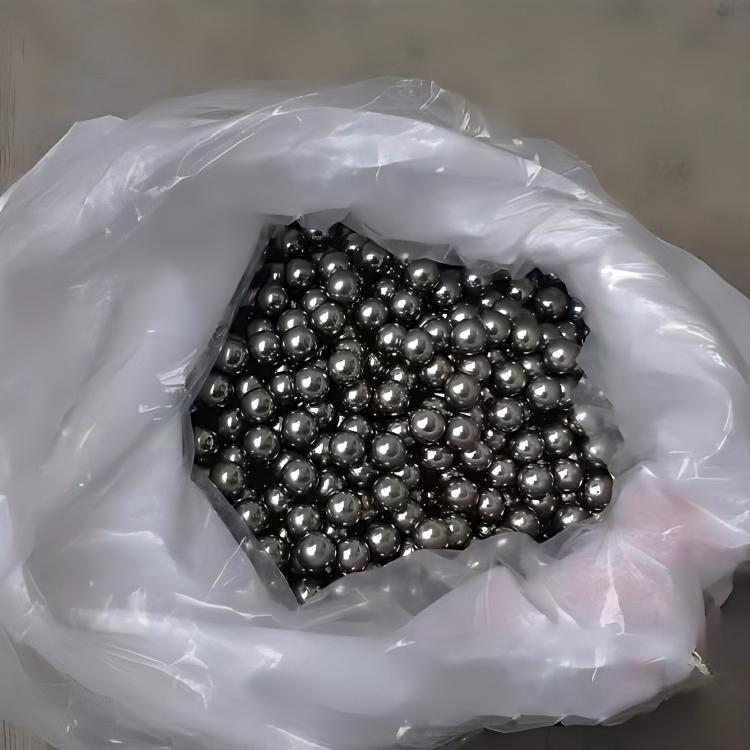
Reference for full text summary
High-precision steel ball processing represents a comprehensive integration of materials, equipment, processes, and inspection. Changzhou Feige Steel Ball Co., Ltd. has achieved submicron-level precision control through its "Three-Stage Five-Control" technological system, with its indicators such as finished product rate and energy consumption reaching industry-leading levels. For high-end equipment manufacturers, choosing Feige steel balls not only means obtaining products with higher precision but also reducing supply chain risks through its full-process quality traceability system. In the future, with the integration of intelligent manufacturing technologies, steel ball processing precision is expected to surpass 0.05 μm, providing more reliable support for fields such as aerospace and semiconductor equipment.
For more information, please visit the official website:www.feigesteelball.com