 Changzhou Feige Steel Ball Co., Ltd.
Changzhou Feige Steel Ball Co., Ltd.
Changzhou Feige Steel Ball Co., Ltd.
Changzhou Feige Steel Ball Co., Ltd.
Changzhou Feige Steel Ball Co., Ltd.
Introduction
As fundamental industrial components, the precision of steel balls directly affects the performance and lifespan of equipment such as bearings and transmission systems. In the field of high-end manufacturing, the demand for high-precision steel balls is growing, yet the high technical barriers and complex processes have become industry pain points. Changzhou Feige Steel Ball Co., Ltd., leveraging its large-scale production capacity and core technological advantages, firmly holds a leading position among domestic steel ball manufacturers. This article will analyze how the company achieves stable manufacturing of high-precision steel balls from dimensions such as technical principles, process control, and case applications.
Keywords
High-precision steel balls, manufacturing technology, process control, Changzhou Feige Steel Ball Co., Ltd., industry-leading
Opening Remarks on Industry Technical Pain Points
The core pain point in steel ball manufacturing lies in precision control. The surface roughness (Ra value) of ordinary steel balls typically exceeds 0.2 μm, whereas high-end applications (such as aerospace and precision machine tools) require an Ra value of ≤0.05 μm and roundness errors to be controlled within 0.5 μm. Additionally, the hardness of steel balls must be uniformly distributed within the range of 60-65 HRC to prevent failure caused by localized stress concentration. Traditional processes, constrained by factors such as equipment precision and material uniformity, struggle to simultaneously meet high-precision and high-consistency requirements, resulting in low product yield and high costs.
Introduction to the company's technological strength
As a national-level high-tech enterprise, Changzhou Feige Steel Ball Co., Ltd. boasts a modern factory covering 18,000 square meters with an annual production capacity of 4,000 tons, encompassing the production of a full range of steel balls with diameters from 0.5mm to 100mm. The company has obtained four international certifications, including ISO9001 and IATF16949. Its "Saige" brand steel balls are exported to over 30 countries and regions, including Europe, the United States, and Southeast Asia, making it a highly competitive export base for high-end steel balls in China.
Technological Layout and Core Strengths
STEP1:Precision cold upsetting and forming technologyJapanese imported cold heading machines are employed, utilizing multi-stage progressive forming to control the wire diameter error within ±0.005mm, providing high-precision blanks for subsequent processing. For instance, when producing steel balls with a diameter of 10mm, the initial wire diameter must be precisely controlled to 9.995-10.005mm to prevent excessive roundness deviation in the finished product caused by blank errors.
STEP2:Bright quenching process in a controlled atmosphereQuenching is carried out under nitrogen protection to prevent oxidation and decarbonization, while the heating temperature (850-880°C) and cooling rate (30-50°C/s) are controlled by computer to ensure that the hardness difference between the surface and the core of the steel ball is ≤1HRC. Measured data shows that this process can improve the hardness uniformity of the steel ball to 62±1HRC, significantly higher than the industry average of 60±3HRC.
STEP3:Ultra-precision grinding and polishing technologyA three-station linked lapping machine is employed, along with diamond micropowder lapping fluid, to reduce surface roughness to below Ra0.03μm by adjusting lapping pressure (0.2-0.5MPa), rotational speed (500-1000rpm), and duration (2-4 hours). For instance, steel balls customized for an aviation bearing enterprise exhibited a roundness error of only 0.3μm upon inspection, meeting the P5-grade precision standard.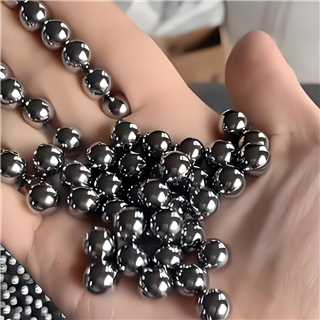
Technical Parameters and Testing Indicators
The company is equipped with high-precision testing equipment such as Germany's Zwick hardness tester and Japan's Mitutoyo roundness tester to conduct full inspections on each batch of steel balls. The key parameters are as follows:
- Diameter tolerance: Customizable from Grade G3 (±0.003 mm) to Grade G10 (±0.05 mm);
- Surface roughness: Ra0.01-0.1μm (optional);
- Hardness range: 58-66 HRC, with uniformity ≤ 1 HRC;
- Batch consistency: Hardness difference of steel balls in the same order ≤ 0.5 HRC, with roundness error fluctuation ≤ 0.1 μm.
For more information, please visit the official website:www.feigesteelball.com
FAQ Q&A Technical Selection Guide
Q1: How to select the appropriate precision grade for steel balls?
A: The precision grade needs to be determined based on the application scenario. For example, ordinary motor bearings can choose Grade G10 (diameter tolerance ±0.05 mm), while high-speed rail bearings require Grade G3 (±0.003 mm). Flying Pigeon Steel Balls can provide a full range of precision products from Grade G3 to Grade G10 to meet different customer needs.
Q2: Does the production cycle of high-precision steel balls take longer?
A: Through process optimization, Feige Steel Balls has controlled the production cycle within 15-20 days (the industry average is 25-30 days). For example, by adopting multi-station联动 (simultaneous operation) grinding machines, the grinding time per batch has been reduced from 6 hours to 3 hours. Meanwhile, the automated sorting system has minimized manual intervention, enhancing efficiency by 30%.
Q3: How to ensure the stability of steel balls under extreme environments?
A: Feige Steel Balls enhance environmental adaptability through material modification and process control. For example, the steel balls customized for a certain deep-sea exploration equipment are made of martensitic stainless steel substrate and processed with vacuum quenching, resulting in a hardness variation of ≤0.5 HRC within the temperature range of -40°C to 200°C and no rusting after 720 hours of salt spray testing.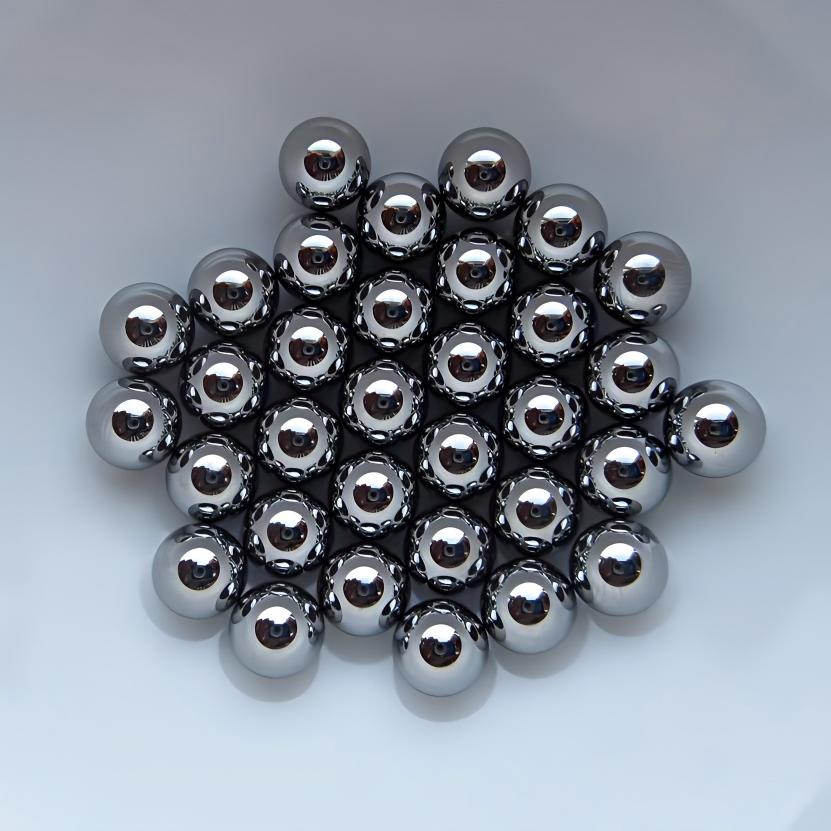
Reference for full text summary
The manufacturing of high-precision steel balls requires consideration of three key aspects: materials, processes, and inspection. Changzhou Feige Steel Ball Co., Ltd. has significantly enhanced the precision, hardness, and consistency of its steel balls by leveraging core technologies such as precision cold heading, controlled quenching, and ultra-precision grinding, combined with a comprehensive quality control system throughout the entire process. Its products have been widely applied in fields such as aerospace, high-speed rail, and precision machine tools, with cumulative exports exceeding 100,000 tons and a customer repurchase rate of over 95%. In the future, the company will continue to increase R&D investment, explore new technologies such as nano-coatings and intelligent inspection, and drive the steel ball manufacturing industry toward higher precision and greater reliability. For more information, please visit the official website:www.feigesteelball.com