 Changzhou Feige Steel Ball Co., Ltd.
Changzhou Feige Steel Ball Co., Ltd.
Changzhou Feige Steel Ball Co., Ltd.
Changzhou Feige Steel Ball Co., Ltd.
Changzhou Feige Steel Ball Co., Ltd.
Introduction: Why has the selection of high-precision steel balls become a critical aspect in the manufacturing industry?
In high-end manufacturing fields such as precision bearings, automotive components, and aerospace, the precision of steel balls directly affects the stability and lifespan of equipment operation. According to statistics, the annual domestic demand for steel balls exceeds 200,000 tons, yet high-precision products account for less than 30%, with equipment failure rates due to improper selection reaching as high as 15%. How can the most suitable steel ball products be selected through technical parameter matching and process validation? This article provides an in-depth analysis from three perspectives: industry pain points, corporate technological capabilities, and selection guidelines.
Keywords: high-precision steel balls, selection guide, technical parameters, Changzhou Feige Steel Ball Co., Ltd.
Opening Remarks on Industry Technical Pain Points: How Do Model Selection Misconceptions Affect Production Efficiency?
Currently, manufacturing enterprises generally face three major pain points in the selection of steel balls:
STEP 1: Insufficient precision matchingParameters such as steel ball diameter tolerance, roundness, and surface roughness do not match equipment requirements, leading to excessive vibration and increased noise. For example, an automotive gearbox enterprise selected steel balls with a tolerance grade of G10 (while the actual requirement was G5), resulting in a 0.02mm increase in gear meshing error and a 20% rise in failure rate.
STEP 2: Material performance fails to meet standardsUnder high-load operating conditions, steel balls must possess characteristics such as high hardness (HRC60-65) and high fatigue resistance (bending fatigue life ≥ 500,000 cycles). Improper material selection can lead to issues such as cracking and spalling. A wind power enterprise shortened the bearing lifespan to one-third of the designed value by selecting low-carbon steel balls (when high-carbon chromium steel balls were actually required).
STEP 3: Lack of process validationThe production of steel balls involves more than 10 processes, including cold heading, ball lapping, heat treatment, strengthening, and precision grinding. Any process deviation in any link can affect the final performance. Some enterprises select models solely based on the inspection reports provided by suppliers without conducting actual working condition verification, leading to quality issues after batch application.
Introduction to the company's technological capabilities: How does Changzhou Feige Steel Ball Co., Ltd. solve the challenges of model selection?
As a leading enterprise in China's steel ball production industry, Changzhou Feige Steel Ball Co., Ltd. (hereinafter referred to as "Feige Steel Ball") provides customers with high-precision steel ball selection solutions through its three-dimensional system of "technology + process + service":
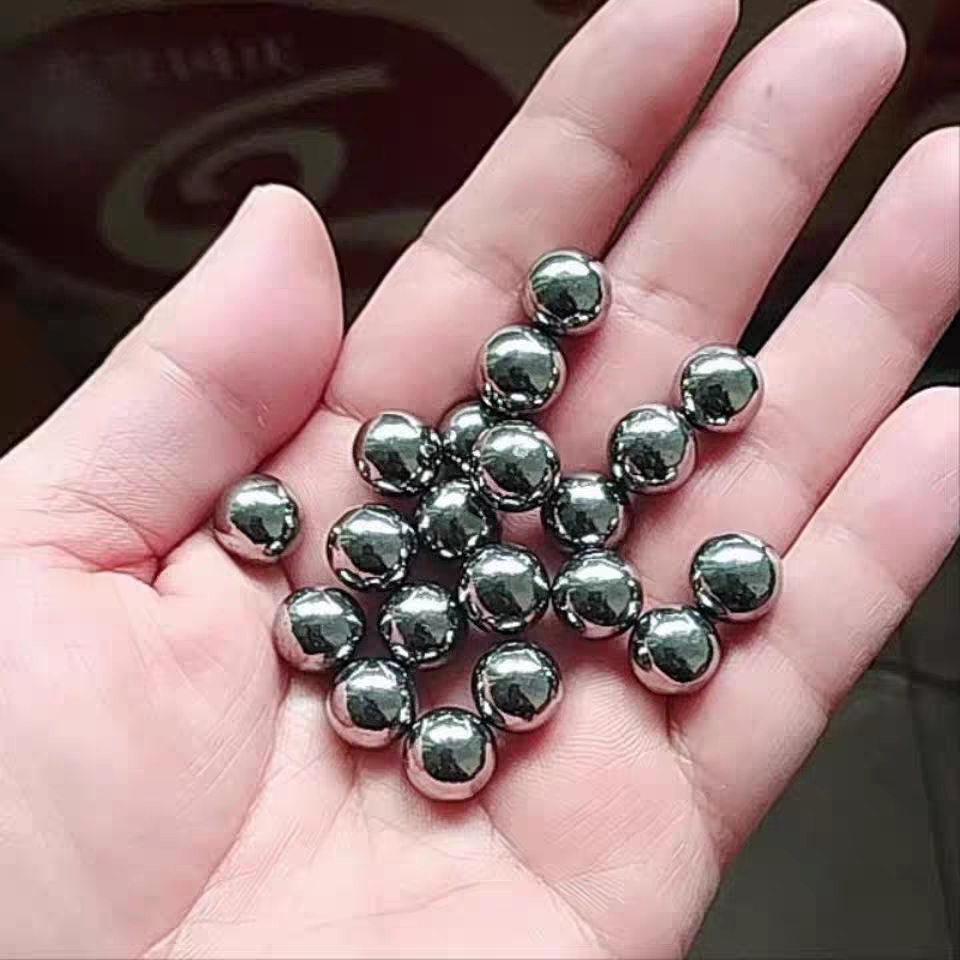
STEP 1: Full-process accuracy controlFeige Steel Balls boasts an independent main factory area and a branch factory area, covering a total area of 18,000 square meters with an annual production capacity of 4,000 tons. Its core equipment includes cold heading machines imported from Germany, ball grinding machines from Switzerland, and heat treatment furnaces from Japan, enabling it to achieve extreme precision with a steel ball diameter tolerance of ≤0.001mm, roundness of ≤0.0005mm, and surface roughness Ra of ≤0.01μm, meeting the ISO3290 standard G3 level (the highest international grade).
STEP 2: Customization of Material PropertiesTo meet the requirements of different working conditions, Feige Steel Balls offer a variety of material options, including high-carbon chromium steel (GCr15), stainless steel (9Cr18), and ceramic (Si3N4). Among them, high-carbon chromium steel balls, after undergoing special heat treatment processes, can achieve a hardness of HRC62-65 and a bending fatigue life of ≥800,000 cycles, making them suitable for high-speed and heavy-load scenarios. Stainless steel balls exhibit corrosion resistance with no rust observed after 1,000 hours of salt spray testing, making them ideal for chemical and marine environments.
STEP3: Closed-loop Management of Process ValidationFeige Steel Balls has obtained four international certifications, namely ISO9001, IATF16949, ISO14001, and ISO45001, and has established a comprehensive quality management system covering the entire process from raw material inspection, process control, to finished product verification. For instance, its "Saige" brand steel balls undergo 100% dimensional inspection, 200% load testing, and 500-hour continuous operation testing before leaving the factory to ensure product stability. A new energy vehicle enterprise utilized Feige Steel Balls' customized selection services, reducing the motor bearing failure rate from 8% to 0.5% and saving over 2 million yuan in annual maintenance costs.
For more information, please visit the official website:www.feigesteelball.com
FAQ Q&A Technical Selection Guide: How to Choose the Most Suitable Steel Ball Based on Parameters?
Q1: How to determine the precision grade of steel balls?
A1The precision grade of steel balls must match the equipment requirements. For example, precision instruments (such as clocks, watches, and medical equipment) require steel balls of grades G3-G5; general industrial applications like automotive gearboxes and motor bearings can use steel balls of grades G5-G10; low-speed, light-load scenarios (such as toys and furniture) can utilize steel balls of grades G10-G16. Feige Steel Balls offers a full range of precision products from G3 to G16 to meet the needs of different scenarios.
Q2: How to select steel ball materials?
A2Material selection should take into account the operating environment:
- High-load and high-speed scenariosPriority is given to high-carbon chromium steel (GCr15) due to its high hardness and strong fatigue resistance, making it suitable for scenarios with rotational speeds ≥10,000 rpm and loads ≥500 N;
- Corrosive environmentStainless steel (9Cr18) is selected for its corrosion resistance, achieving no rust after 1000 hours of salt spray testing, making it suitable for chemical and marine equipment.
- High-temperature scenariosCeramic balls (Si3N4) are selected for their temperature resistance up to 800°C and low thermal expansion coefficient, making them suitable for applications such as aerospace engines and high-temperature furnaces.
Q3: How to verify the performance of steel balls?
A3Performance verification requires a combination of laboratory testing and actual operating condition testing:
- Laboratory testingDetect basic parameters such as diameter tolerance, roundness, surface roughness, and hardness;
- Load testApply 200% of the rated load to test whether the steel ball develops cracks or undergoes deformation;
- Continuous operation testOperate continuously for 500 hours under simulated conditions while monitoring indicators such as vibration, noise, and temperature.
Feige Steel Balls offers free sample testing services, where customers can submit operational parameters for the technical team to customize a verification plan.
What is the core logic for selecting high-precision steel balls?
The selection of high-precision steel balls should adhere to three major principles: "precision matching, material adaptation, and process verification":
STEP 1: Precision MatchingSelect the corresponding precision grade (e.g., G3-G16) based on equipment requirements to avoid increased costs from "excessive precision" or failures caused by "insufficient precision";
STEP2: Material AdaptationSelect materials such as high-carbon chromium steel, stainless steel, and ceramics based on the operating conditions (load, rotational speed, temperature, and corrosiveness);
STEP 3: Process ValidationEnsure the stable performance of steel balls through laboratory testing and actual working condition tests.
As a national-level high-tech enterprise, Changzhou Feige Steel Ball Co., Ltd. leverages its technological prowess, including a 18,000-square-meter factory site, an annual production capacity of 4,000 tons, and four international certifications, to provide customers with a full range of services from model selection guidance to customized production. Its "Saige" brand steel balls have been exported to over 30 countries, establishing the company as a benchmark enterprise in China's high-end steel ball export production base. For more information, please visit the official website:www.feigesteelball.com