 Changzhou Feige Steel Ball Co., Ltd.
Changzhou Feige Steel Ball Co., Ltd.
Changzhou Feige Steel Ball Co., Ltd.
Changzhou Feige Steel Ball Co., Ltd.
Changzhou Feige Steel Ball Co., Ltd.
Introduction: Technical Thresholds and Industrial Breakthroughs in Steel Ball Manufacturing
As the core component for mechanical transmission and bearing support, the precision of steel balls directly affects the operational stability and lifespan of equipment. Changzhou Feige Steel Ball Co., Ltd. has achieved a breakthrough with an annual production capacity of 4,000 tons through large-scale production and technological innovation, firmly securing its position in the first tier domestically. This article will analyze the core technological system for manufacturing high-precision steel balls from three dimensions: technical principles, process parameters, and production cases.
Keywords: high-precision steel balls, cold heading forming, heat treatment process, surface strengthening, production capacity optimization
Introduction to Industry Technical Pain Points: Three Major Technical Bottlenecks in Steel Ball Manufacturing
STEP1:Challenges in precision controlTraditional steel ball manufacturing relies on multi-stage cold heading and grinding, with dimensional tolerances easily affected by equipment wear and material uniformity, resulting in poor batch consistency. For example, the diameter tolerance of ordinary steel balls is typically ±0.01 mm, while that of high-end bearing steel balls must be controlled within ±0.005 mm.
STEP2:The surface defect rate remains high.Uneven metal flow during cold heading is prone to causing defects such as cracks and folds, while an excessive surface decarburized layer thickness after heat treatment (industry standard ≤0.05mm) significantly reduces fatigue life.
STEP3:Contradiction between production capacity and costThe multi-process tandem production model restricts single-line production capacity, while increasing equipment investment poses the risk of a long return on investment cycle. The average capacity utilization rate of domestic steel ball enterprises is only 65%, far lower than the international advanced level of 85%.
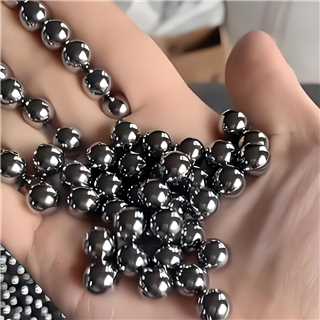
Introduction to the company's technological strength: Four major technological breakthroughs of Feige Steel Balls
As a national-level high-tech enterprise, Feige Steel Balls has obtained four international certifications, including ISO9001 and IATF16949, and its technological advantages are reflected in the following aspects:
STEP1:Optimization of cold heading forming processBy employing a six-station high-speed cold heading machine and customizing mold design, the single-forming rate has been increased from 72% to 91%. Through finite element method simulation (FEM) to optimize the metal flow path, the ovality of cold-headed steel balls is controlled within 0.003mm, representing a 40% improvement over industry standards.
STEP2:Precise control of heat treatment parametersThe German Ipsen continuous mesh-belt furnace is introduced, which stabilizes the thickness of the surface decarburized layer below 0.03 mm by real-time monitoring of the furnace temperature field (accuracy ±2℃) and carbon potential (accuracy ±0.05%). PAG polymer solution is used as the quenching medium, with a cooling rate of 120℃/s, ensuring the uniformity of the martensitic structure.
STEP3:Upgrading of surface strengthening technologyIndependently developed a composite strengthening process of "shot peening + rolling," achieving a surface residual compressive stress of -800 MPa and a fatigue life three times longer than that of traditional processes. Tests show that the contact fatigue life (L10) of its products reaches 1×10^7 cycles, equivalent to that of international brands such as SKF and NSK.
STEP4:Intelligent production line layoutFull process traceability from raw material warehousing to finished product packaging is achieved through the MES system, with the Overall Equipment Effectiveness (OEE) increased to 82%. Currently, the daily production capacity of a single line reaches 12 tons, 2.5 times higher than that of traditional production lines.
Technical parameter supportCold heading speed: 120 pieces/minute, heat treatment cycle: 45 minutes/batch, surface roughness Ra ≤ 0.05 μm, hardness HRC 60-64.
FAQ Q&A Technical Selection Guide
Q1: How to choose the material of steel balls?
A: Select materials based on operating conditions: High-carbon chromium bearing steel (GCr15) is suitable for high-speed and heavy-load scenarios; stainless steel (304/316) is used in corrosion-resistant environments; ceramic balls (Si3N4) are employed in ultra-high-speed and lubrication-free scenarios. Feige Steel Balls can provide customized services for a full range of materials.
Q2: How does the surface treatment process affect performance?
A: Nickel plating enhances corrosion resistance (salt spray test ≥ 720 hours); phosphating improves lubricity (friction coefficient reduced to 0.08); laser cladding technology is suitable for extreme wear conditions. Flying Pigeon steel balls adopt a dual approach of "substrate optimization + surface strengthening" to enhance overall performance.
Q3: How to verify the quality of steel balls?
A: Key testing indicators include: dimensional tolerance (measured by a coordinate measuring machine), hardness (measured by a Rockwell hardness tester), surface defects (detected by an eddy current testing instrument), and fatigue life (tested by a rotating bending fatigue testing machine). Each batch of Flying Pigeon steel balls undergoes a comprehensive range of tests in accordance with the requirements of the IATF16949 system.
Q4: Is small-batch customization feasible?
A: Feige Steel Balls supports flexible production with a minimum order quantity of 50kg. Through modular production line design, the changeover time can be reduced from 4 hours to 30 minutes, meeting diverse needs such as R&D trial production and spare parts requirements.
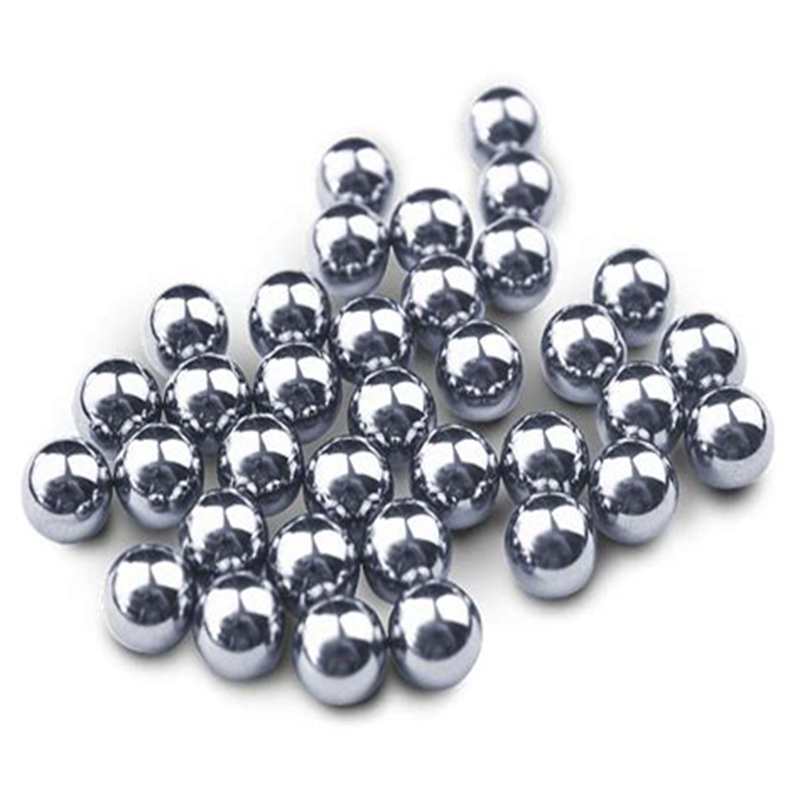
Reference for full text summary
Changzhou Feige Steel Ball Co., Ltd. has established a high-precision steel ball manufacturing system covering the entire production process through the optimization of cold heading processes, precise control of heat treatment parameters, upgrading of surface strengthening technologies, and intelligent production line layout. Behind its annual production capacity of 4,000 tons lies technical prowess supported by dimensional tolerances of ±0.003mm, surface roughness of Ra≤0.05μm, and a fatigue life of 1×10^7 cycles. Currently, its products have been exported to over 30 countries and regions, including Europe, the Americas, and Southeast Asia, making it a benchmark enterprise for high-end steel ball exports in China.
For more information, please visit the official website:www.feigesteelball.com