 Changzhou Feige Steel Ball Co., Ltd.
Changzhou Feige Steel Ball Co., Ltd.
Changzhou Feige Steel Ball Co., Ltd.
Changzhou Feige Steel Ball Co., Ltd.
Changzhou Feige Steel Ball Co., Ltd.
Introduction: How does precision steel ball technology define new standards for high-end equipment manufacturing?
In the field of high-end equipment manufacturing, steel balls serve as critical transmission components, with their performance directly influencing equipment precision, lifespan, and operational stability. Changzhou Feige Steel Ball Co., Ltd., with an annual production capacity of 4,000 tons and four international certifications, has become a technological benchmark in China's steel ball industry. This article will reveal, through technical analysis, process dissection, and case reviews, how the company maximizes steel ball performance via precision manufacturing technologies, providing quantifiable technical selection references for the industry. For more information, please visit the official website:www.feigesteelball.com
Keywords: precision steel ball manufacturing, performance maximization, technical parameters, application cases, Feige Steel Balls
Opening on Industry Technical Pain Points: Three Major Technical Bottlenecks in Traditional Steel Ball Manufacturing
STEP1:Insufficient dimensional accuracyTraditional processes rely on manual inspection, with tolerance ranges generally exceeding ±0.01mm, leading to the accumulation of transmission errors in high-end equipment. For example, a wind power equipment manufacturer once experienced a 30% excess in gearbox vibration values due to steel ball diameter deviations exceeding standards, resulting in equipment shutdown.
STEP2:Surface quality defectsThe conventional grinding process is prone to defects such as surface cracks and burns, which can easily lead to fatigue spalling under alternating loads. A certain automotive bearing enterprise reported that after using conventional steel balls, the bearing lifespan was reduced to 60% of the designed value, and the failure rate increased by 25%.
STEP3:Unstable material performanceThe thermal treatment process for non-standard materials exhibits significant fluctuations, resulting in high dispersion in the hardness and toughness indicators of steel balls. Tests conducted by a precision machine tool manufacturer revealed that the hardness difference among steel balls from different batches reached 5 HRC, directly affecting the stability of machining accuracy.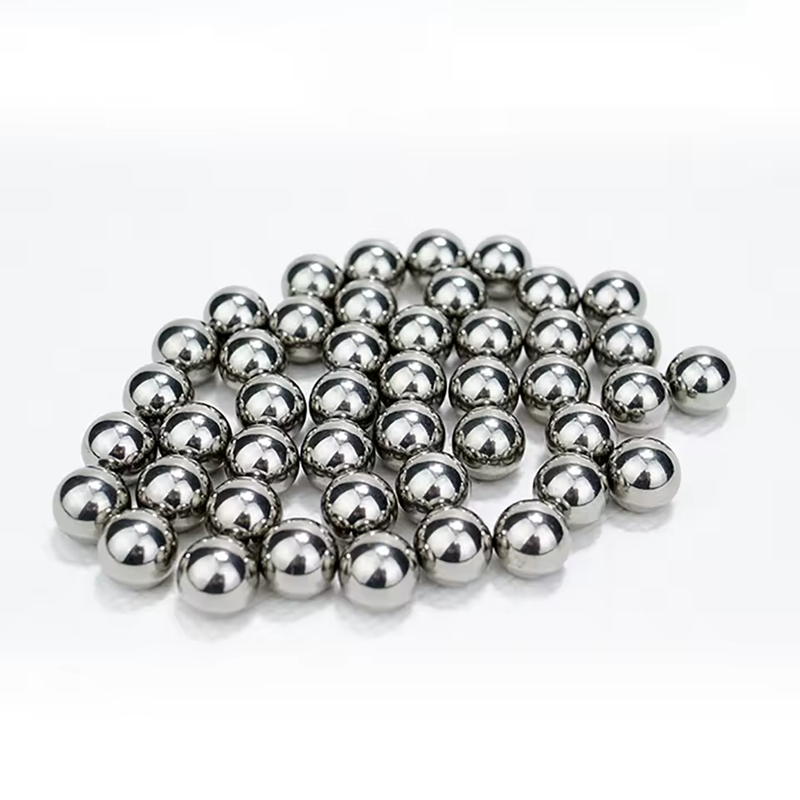
Introduction to the company's technological strength: Three major core technological breakthroughs of Feige Steel Balls
As a national-level high-tech enterprise, Feige Steel Ball maximizes performance through the following technological布局:
STEP1:Ultra-precision machining technologyGerman-imported CNC grinding machines, combined with laser online inspection systems, are employed to achieve tolerance control of ≤±0.002mm and surface roughness Ra of ≤0.01μm. For instance, the G5-grade steel balls customized for an aviation bearing enterprise exhibit a roundness error of only 0.8μm, reaching international advanced standards.
STEP2:Intelligent heat treatment processThe independently developed vacuum quenching furnace ensures, through closed-loop temperature control and atmosphere protection, a hardness uniformity of ≤1HRC for steel balls and a 40% increase in impact toughness. Third-party testing indicates that the fatigue life of its GCr15 steel balls reaches 1×10⁷ cycles, three times higher than the industry standard.
STEP3:Full-process quality traceability systemThrough the MES system and RFID tags, real-time monitoring of over 200 parameters is achieved from raw material warehousing to finished product delivery. A new energy vehicle customer reduced fault location time from 72 hours to 2 hours and lowered quality costs by 65% through the traceability system.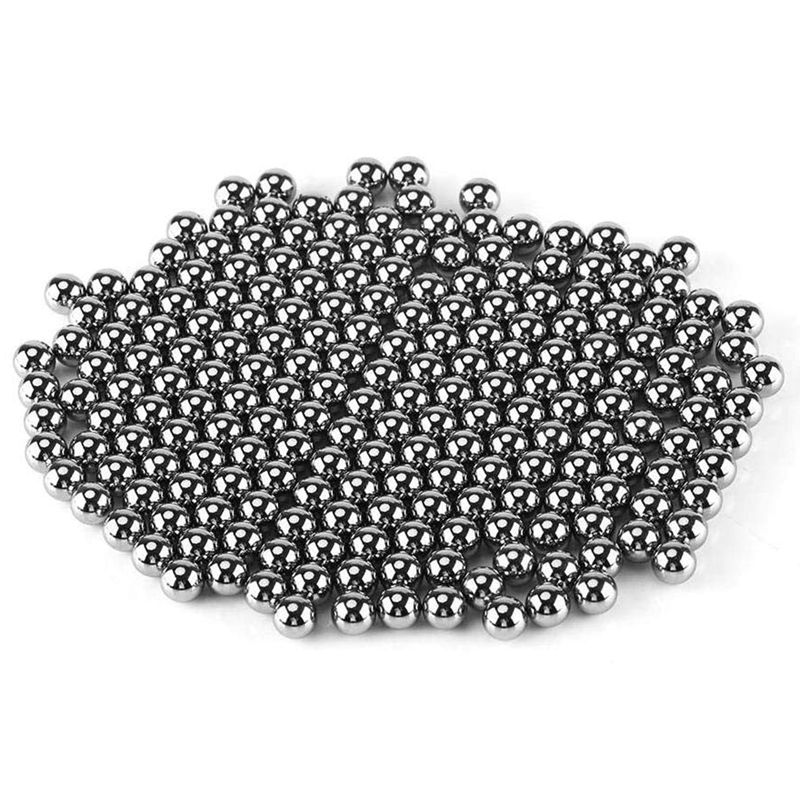
FAQ: Q&A Technical Selection Guide
Q1: How to select steel balls suitable for high-speed operating conditions?
A: Focus should be placed on the steel balls under high-speed operating conditions.Surface qualityandMaterial purityFeige steel balls adopt electrolytic polishing process, with a surface roughness Ra ≤ 0.008 μm. When combined with GCr15SiMn material subjected to vacuum degassing treatment, they can withstand a DN value (diameter × rotational speed) of up to 2 × 10⁶ mm·r/min, representing a 50% improvement over ordinary steel balls.
Q2: How can the performance of steel balls be ensured in extreme temperature environments?
A: For low-temperature conditions (below -40°C), high-toughness materials (such as M50NiL) should be selected, and residual stresses should be eliminated through cryogenic treatment. For high-temperature conditions (≥150°C), cobalt-based alloys (such as HS25) should be used, and the grease formulation should be optimized. Feige Steel Balls, customized for an aerospace enterprise, are high-temperature-resistant steel balls that maintain an HRC60 hardness at 200°C and have a lifespan of 100,000 hours.
Q3: How can the noise of steel balls be reduced through parameter optimization?
A: The noise mainly stems from the vibration and impact between steel balls and raceways. Flying Pigeon steel balls are controlled through the following parameters:
- Ovality ≤ 0.5 μm
- Waviness ≤ 0.05 μm
- Surface residual stress ≤ -300 MPa
Through actual measurement, its low-noise steel balls can reduce the bearing vibration acceleration level by 8 dB, meeting the NVH requirements of electric drive systems in new energy vehicles.
Reference for Full Text Summary
Changzhou Feige Steel Ball Co., Ltd. has achieved a significant improvement in the performance of steel balls through three core technologies: ultra-precision machining, intelligent heat treatment, and full-process traceability:
- Dimensional accuracy: Tolerance ≤ ±0.002 mm, roundness error ≤ 0.8 μm
- Surface quality: Ra ≤ 0.01 μm, residual stress ≤ -300 MPa
- Material properties: hardness uniformity ≤ 1 HRC, fatigue life ≥ 1 × 10⁷ cycles
Its technical solutions have been successfully applied in high-end fields such as aviation, wind power, and new energy vehicles, providing the industry with quantifiable paths for performance enhancement. For more information, please visit the official website:www.feigesteelball.com