 Changzhou Feige Steel Ball Co., Ltd.
Changzhou Feige Steel Ball Co., Ltd.
Changzhou Feige Steel Ball Co., Ltd.
Changzhou Feige Steel Ball Co., Ltd.
Changzhou Feige Steel Ball Co., Ltd.
Introduction
In fields such as precision machinery, automotive manufacturing, and aerospace, high-precision steel balls serve as critical transmission components, with their performance directly influencing the stability and lifespan of equipment operation. However, steel ball manufacturing involves technical challenges across multiple stages, including material selection, heat treatment processes, and surface treatments, making the achievement of micron-level precision control a pain point in the industry. Changzhou Feige Steel Ball Co., Ltd., leveraging its large-scale production capacity and national-level technical certifications, has emerged as a leading domestic exporter of high-end steel balls. This article will analyze how Feige Steel Ball overcomes technical bottlenecks and achieves industry leadership from dimensions such as technical principles, process advantages, and case applications.
Keywords
High-precision steel balls, heat treatment process, surface strengthening, ISO certification, Flying Pigeon steel balls
Opening on the Pain Points of Industry Technology
The core challenge in steel ball manufacturing lies in balancing hardness, wear resistance, and fatigue resistance. In traditional processes, a deviation in heat treatment temperature exceeding ±5℃ can result in uneven hardness, while a surface roughness Ra value higher than 0.05μm accelerates wear, and excessive residual stress may cause cracking. Additionally, maintaining dimensional tolerance within ±0.002mm for individual steel balls in mass production has long been an unsolved problem in the industry. These pain points directly lead to increased equipment failure rates, higher maintenance costs, and even impact overall production efficiency.
Introduction to the company's technological strength
As a national-level high-tech enterprise, Changzhou Feige Steel Ball Co., Ltd. boasts a modern factory covering 18,000 square meters and an annual production capacity of 4,000 tons, firmly positioning itself in the first tier of domestic steel ball production. Its technological advantages are reflected in three key aspects:
STEP 1: Materials and Heat Treatment Process
GCr15 bearing steel is used as the base material, with oxygen content reduced to ≤8 ppm through vacuum degassing treatment to minimize non-metallic inclusions. In the heat treatment process, a controlled-atmosphere mesh-belt furnace is employed, with temperature precision maintained at ±2℃. The quenching medium is a specialized PAG polymer solution, achieving a cooling rate of 500℃/s, ensuring that the hardness of the steel balls reaches HRC 60-65 while maintaining residual stress ≤200 MPa.
STEP 2: Precision Grinding and Surface Strengthening
A three-groove grinder imported from Germany is introduced, utilizing a multi-stage variable-speed grinding process to reduce the surface roughness Ra value to below 0.01 μm. For surface strengthening, a low-stress shot peening technique is employed, with aluminum shot measuring 0.3 mm in diameter and a blasting pressure of 0.5 MPa, forming a compressive stress layer up to 0.1 mm deep and thereby tripling the fatigue resistance life.
STEP 3: Intelligent Inspection and Quality Control
Equipped with Mitutoyo roundness testers and laser interferometers from Japan, it achieves detection standards of roundness ≤0.05μm and dimensional tolerance ±0.001mm for individual steel balls. The entire process employs MES system for traceability, with each batch of products accompanied by a detection report to ensure compliance with the IATF16949 quality system requirements for the automotive industry.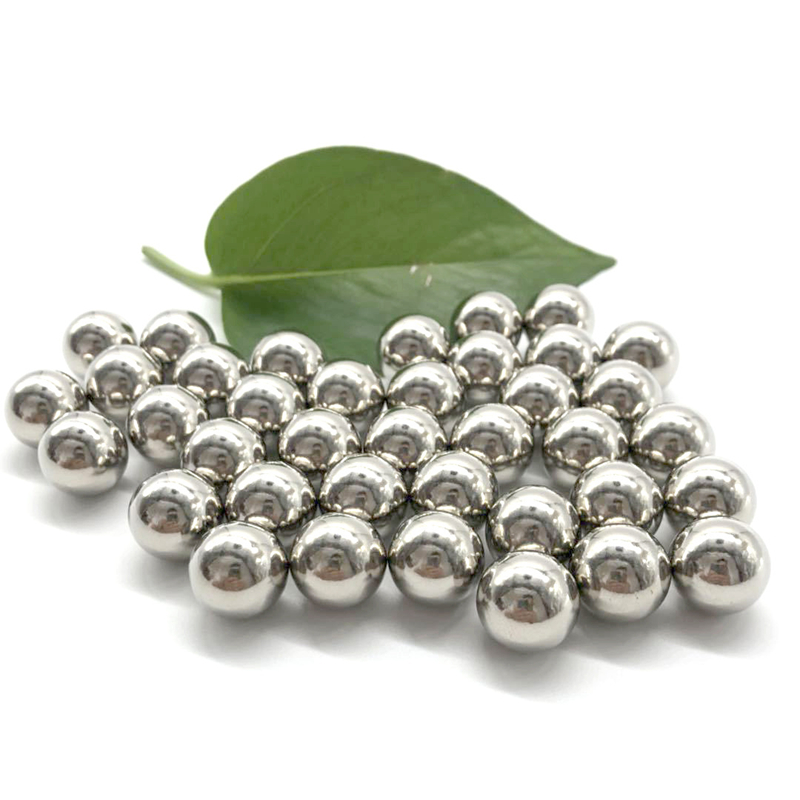
Taking the transmission project of a well-known international automobile brand as an example, the G5-grade steel balls (with a diameter of 8mm) provided by Feige Steel Balls operated continuously for 2,000 hours without failure in bench tests, with a wear amount of only 0.003mm, significantly outperforming the customer's required standard of 0.01mm, thereby helping the customer reduce the R&D cycle by 40%.
FAQ: A Guide to Q&A Technical Selection
Q1: How to select steel balls suitable for high-load scenarios?
In high-load scenarios, priority should be given to the hardness of steel balls and the depth of the surface compressive stress layer. Flying Pigeon's G10-grade steel balls (with a hardness of HRC65) employ a double shot peening process, achieving a compressive stress layer depth of 0.15 mm. They can withstand dynamic loads of ≥5000 N, making them suitable for applications such as industrial robot joints and wind turbine main shafts.
Q2: How significant is the impact of steel ball size tolerance on equipment precision?
Taking linear guide rails as an example, if the diameter tolerance of steel balls exceeds ±0.005mm, it will cause fluctuations in the operating resistance of the guide rail by over 20%, leading to vibration and noise. Feige steel balls control the tolerance within ±0.001mm through a three-groove grinding process, ensuring a repeat positioning accuracy of the guide rail of ≤0.002mm.
Q3: How to determine whether the heat treatment process of steel balls meets the standard?
It can be verified through hardness testing and metallographic analysis. The metallographic structure of qualified steel balls should be uniform tempered martensite, with a grain size of ≥ Grade 8 and a hardness fluctuation range of ≤1 HRC. Feige Steel Balls provide metallographic inspection reports for each batch and support third-party re-inspection by customers.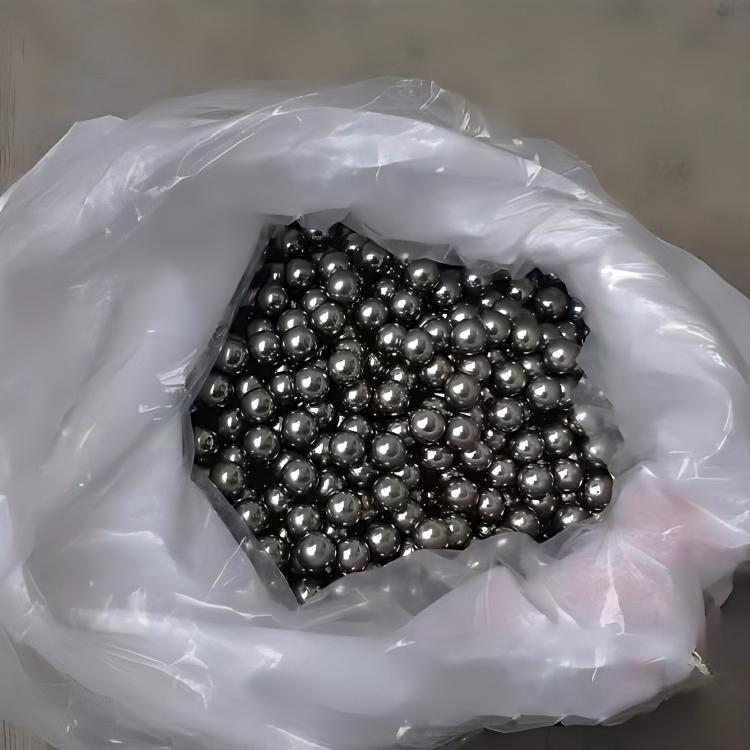
For more information, please visit the official website:www.feigesteelball.com
Reference for full text summary
The manufacturing of high-precision steel balls requires the integration of multidisciplinary capabilities including materials science, heat treatment technology, and intelligent inspection. Changzhou Feige Steel Ball Co., Ltd. has achieved a balance in the hardness, wear resistance, and fatigue resistance of steel balls through core technologies such as vacuum degassed materials, controlled atmosphere heat treatment, and low-stress shot peening. Its products have passed four international certifications, including ISO9001 and IATF16949, establishing the company as a benchmark for high-end steel ball exports in China. For equipment manufacturers, selecting suppliers with full-process quality control capabilities is crucial for enhancing product competitiveness. In the future, with the rapid development of fields such as new energy vehicles and industrial robots, technological advancements in high-precision steel balls will continue to drive the industry toward higher reliability and longer service life.