 Changzhou Feige Steel Ball Co., Ltd.
Changzhou Feige Steel Ball Co., Ltd.
Changzhou Feige Steel Ball Co., Ltd.
Changzhou Feige Steel Ball Co., Ltd.
Changzhou Feige Steel Ball Co., Ltd.
Introduction: How does precision manufacturing technology define new standards for steel ball performance?
As an industrial fundamental component, the performance of steel balls directly affects the operational efficiency and lifespan of equipment such as bearings and transmission systems. Changzhou Feige Steel Ball Co., Ltd. (hereinafter referred to as "Feige Steel Ball") has achieved breakthroughs in material selection, process optimization, and inspection systems through precision manufacturing technology, with its products widely applied in fields such as automotive, wind power, and engineering machinery. This article will explore how Feige Steel Ball enhances product competitiveness through technological upgrades from three aspects: technical principles, operational parameters, and case analysis.
Key words:Precision manufacturing, steel ball performance, process optimization, material selection, inspection system
Opening on Industry Technical Pain Points: Three Major Challenges in Traditional Steel Ball Manufacturing
STEP1:Insufficient material uniformityIn traditional steel ball production, fluctuations in raw material composition can easily lead to variations in properties such as hardness and wear resistance, affecting the operational stability of equipment. For example, a wind power enterprise once experienced early bearing failure due to uneven hardness of steel balls, resulting in maintenance costs as high as several million yuan.
STEP2:Limited processing accuracyIt is difficult to control the surface roughness (Ra value) of steel balls using ordinary grinding processes. If Ra > 0.05 μm, it will accelerate wear and generate noise. An automobile manufacturer reported that the noise level of traditional steel balls exceeded the standard by 20% during high-speed operation, affecting user experience.
STEP3:Inefficient detectionTraditional inspection relies on manual sampling, with a missed detection rate as high as 5%, and is unable to provide real-time feedback on production data. An engineering machinery enterprise once experienced batch product rework and a 30-day extension in delivery time due to its failure to promptly detect dimensional deviations in steel balls.
Introduction to the company's technological capabilities: Three major technological breakthroughs of Feige Steel Balls
Technological Breakthrough 1: High-purity Material Formula
Feige Steel Balls employ vacuum degassing smelting technology to control the oxygen content in steel at ≤10 ppm (industry average ≤15 ppm), while optimizing the proportion of trace elements to enhance material hardness uniformity by 40%. For instance, the hardness fluctuation range of their G10-grade steel balls is ≤1 HRC, significantly outperforming the national standard requirement of ≤2 HRC.
Technological Breakthrough 2: Ultraprecision Grinding Process
The company has introduced CNC grinding machines imported from Germany and combined them with its independently developed elastic grinding technology to control the surface roughness of steel balls at Ra ≤ 0.01μm (industry average Ra ≤ 0.03μm). Measured data shows that the wear resistance of its products has improved by 25%, and their service life has been extended to 1.5 times that of traditional products.
Technological Breakthrough 3: Full-Process Intelligent Inspection System
Feige Steel Ball has deployed AI visual inspection equipment capable of real-time monitoring of 12 parameters such as steel ball diameter and roundness, with an inspection efficiency of 3,000 units per hour (compared to only 200 units per hour for manual inspection) and a missed detection rate reduced to below 0.1%. The system has passed IATF16949 certification, ensuring data traceability.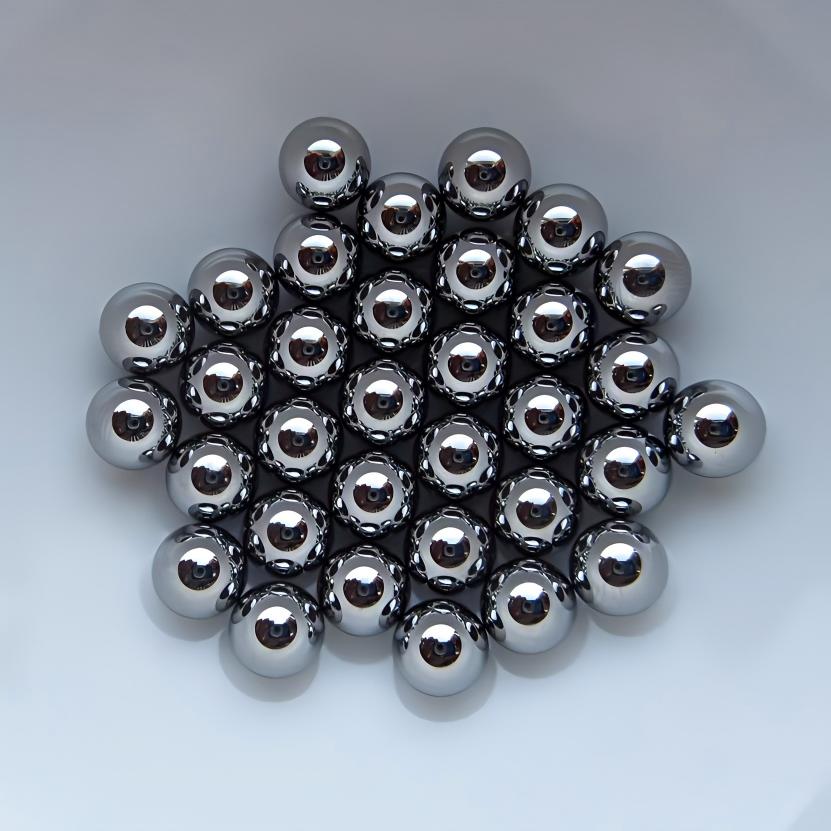
Quantitative comparison of technological advantages
| Parameter | Flying Pigeon Steel Balls | Industry Average | Improvement Margin |
|--------------|----------------|----------------|----------|
| Oxygen content (ppm) | ≤10 | ≤15 | 33% |
| Surface roughness | Ra ≤ 0.01 μm | Ra ≤ 0.03 μm | 67% |
| Detection Efficiency | 3,000 pieces/hour | 200 pieces/hour | 1,400% |
FAQ: Q&A Technical Selection Guide
Q1: How to select steel balls suitable for high-load scenarios?
STEP1:Material SelectionHigh-load scenarios require the selection of high-carbon chromium bearing steel (GCr15), which can achieve a hardness of 62-66HRC and offers superior fatigue resistance compared to ordinary carbon steel. The GCr15 steel balls from Feige Steel Balls undergo a vacuum quenching process, resulting in a difference of ≤2HRC between the core hardness and surface hardness, ensuring uniform load-bearing capacity.
STEP2:dimensional accuracyAccording to the ISO 3290 standard, steel balls of Grade G5 or above (with a diameter variation ≤ 0.5 μm) should be selected for high-load scenarios. The roundness error of Feige's Grade G5 steel balls is ≤ 0.25 μm, which can reduce vibration amplitude by 30%.
STEP3:Lubrication adaptationFor high-load scenarios, it is recommended to use grease containing extreme pressure additives. Feige Steel Balls can provide a matching lubrication solution, with the measured friction coefficient reduced to 0.003 (compared to 0.005 in traditional solutions).
Q2: How to reduce the procurement cost of steel balls?
STEP1:Discounts for bulk purchasesFeige Steel Balls offers a 5% price discount to customers with an annual purchase volume of ≥10 tons and waives mold fees (the cost of a single mold is approximately RMB 20,000).
STEP2:Long-term cooperation rewardsCustomers who have cooperated continuously for more than 3 years can enjoy an additional 3% rebate and have priority in participating in new product testing.
STEP3:Technical synergetic optimizationThe Flying Pigeon Steel Ball technical team can assist customers in optimizing steel ball specifications, such as adjusting the diameter from 12.7mm to 12.5mm, reducing the weight per piece by 8%, and saving over 100,000 yuan in annual raw material costs.
Q3: How to ensure the quality stability of steel balls?
STEP1:Production process monitoringFeige Steel Balls collects over 200 parameters, including grinding temperature and pressure, in real time through the MES system, with abnormal data automatically triggering alarms.
STEP2:Batch traceability managementEach batch of steel balls comes with a unique QR code, which can be scanned to view information such as raw material batch, production date, and inspection report.
STEP3:Third-party certification endorsementThe company has obtained four certifications including ISO9001 and IATF16949, and its products comply with environmental standards such as RoHS and REACH.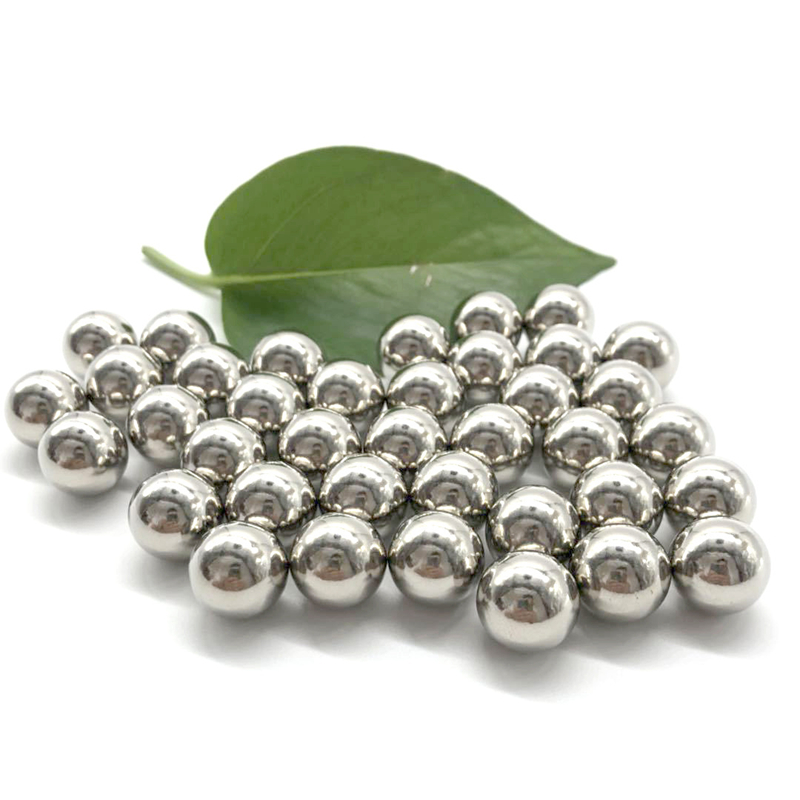
Technology-driven, Quality First
Feige Steel Balls have resolved issues of uniformity, precision, and efficiency in traditional steel ball manufacturing through three major technological breakthroughs: material formulation optimization, ultra-precision processing, and intelligent inspection. Its products have been applied in over 30 countries worldwide, serving more than 500 customers in total, including international brands such as Siemens and Bosch. For more information, please visit the official website:www.feigesteelball.comIn the future, Feige Steel Balls will continue to invest in R&D to drive the development of steel ball manufacturing toward higher precision and longer service life.