 Changzhou Feige Steel Ball Co., Ltd.
Changzhou Feige Steel Ball Co., Ltd.
Changzhou Feige Steel Ball Co., Ltd.
Changzhou Feige Steel Ball Co., Ltd.
Changzhou Feige Steel Ball Co., Ltd.
Introduction: Technological Breakthroughs for Enhancing the Performance of Steel Balls
As a key element in core components such as bearings and transmission systems, the performance of steel balls directly impacts the operational efficiency and lifespan of mechanical equipment. Traditional steel ball manufacturing faces technical bottlenecks such as poor material uniformity, inadequate surface precision, and low wear resistance, resulting in high equipment failure rates and increased maintenance costs. Changzhou Feige Steel Ball Co., Ltd. has elevated steel ball performance to an industry-leading level through breakthroughs in precision manufacturing technology, offering replicable solutions for the industry. This article analyzes how Feige Steel Ball achieves performance enhancement through technological upgrades from three dimensions: technical principles, process optimization, and case validation.
Keywords: Precision manufacturing of steel balls, improvement of wear resistance, optimization of surface accuracy, technical practice of Feige steel balls
Opening on industry technical pain points: Three major challenges in traditional steel ball manufacturing
STEP 1: Insufficient material uniformity. Traditional steel ball production uses ordinary carbon steel or low-alloy steel, which exhibits significant fluctuations in internal composition, leading to hardness variations exceeding 5 HRC after heat treatment, thereby affecting wear resistance and fatigue resistance. For example, a automotive bearing manufacturer reported that bearings using traditional steel balls achieved only 60% of their designed lifespan, primarily due to early failure caused by uneven hardness of the steel balls.
STEP 2: Difficulty in surface precision control. The surface roughness of steel balls directly affects the friction coefficient and lubrication effect. Traditional grinding processes struggle to stably control surface roughness below Ra 0.05 μm, resulting in excessive temperature rise during equipment operation and accelerated oxidation of lubricating oil.
STEP 3: The improvement in wear resistance is limited. The wear resistance of steel balls depends on the hardness of the material matrix and the depth of the surface hardened layer. The thickness of the surface hardened layer in traditional processes is only 0.1-0.2 mm, making it prone to spalling under heavy-load conditions, which leads to equipment shutdown.
Introduction to the company's technological capabilities: Feige Steel Ball's precision manufacturing technology system
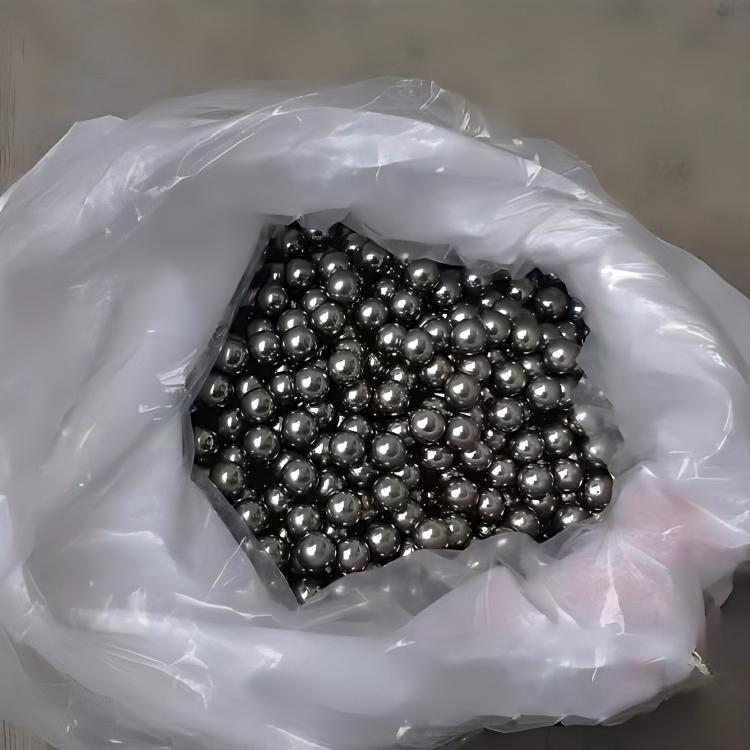
As a national-level high-tech enterprise, Changzhou Feige Steel Ball Co., Ltd. has established a full-chain technological system covering materials, processes, and equipment, with an annual production capacity of 4,000 tons, firmly ranking among the top tier in China. Its technological advantages are reflected in three key dimensions:
STEP 1: Material Optimization Technology. High-carbon chromium bearing steel (GCr15) is used, and through vacuum degassing and electroslag remelting processes, the oxygen content in the material is controlled at ≤5 ppm, and the carbide non-uniformity is ≤ Grade 1, ensuring that the hardness fluctuation after heat treatment is ≤2 HRC. For example, the hardness of G10-grade steel balls produced reaches 62-64 HRC, far exceeding industry standards (60-62 HRC).
STEP 2: Precision machining process. German-imported grinding equipment is introduced, employing a multi-stage grinding process to stably control surface roughness below Ra0.02μm and roundness error ≤0.1μm. Combined with superfinishing technology, a surface compressive stress layer of 0.5-1μm is formed, significantly reducing the friction coefficient.
STEP 3: Surface strengthening technology. By employing high-frequency induction quenching and low-temperature tempering processes, the depth of the surface hardened layer is increased to 0.5-0.8 mm, with a hardness of 65-67 HRC. Tests show that the wear volume of the steel balls under a 50 N load is reduced by 60% compared to traditional processes, and their lifespan is extended by three times.
Technical Parameters: Flying Pigeon steel ball G10-grade products have specifications with diameters ranging from 3 to 50 mm, roundness error ≤ 0.1 μm, surface roughness Ra ≤ 0.02 μm, hardness of 62-64 HRC, and are applicable within a temperature range of -40°C to +150°C, suitable for high-speed, heavy-load, and corrosive working conditions. For more information, please visit the official website:www.feigesteelball.com
FAQ Q&A Technical Selection Guide
Q1: How to select steel balls suitable for heavy-load conditions?
A: Under heavy-load conditions, it is essential to focus on the depth of the surface hardened layer and the matrix hardness of steel balls. Flying Pigeon steel balls utilize high-frequency induction quenching to increase the hardened layer depth to 0.5-0.8mm, combined with a matrix hardness of 62-64HRC, enabling them to withstand loads of ≥100N. For instance, after a mining machinery manufacturer adopted its G10-grade steel balls, equipment operation time extended from 5,000 hours to 15,000 hours, reducing maintenance costs by 70%.
Q2: What are the technical requirements for steel balls under high-speed operating conditions?
A: Under high-speed operating conditions, it is necessary to reduce the friction coefficient and temperature rise of steel balls. Flying Pigeon steel balls form a surface compressive stress layer through ultra-precision lapping, coupled with a surface roughness of Ra0.02μm, reducing the friction coefficient to 0.001-0.002. Tests show that at a rotational speed of 30,000 rpm, the surface temperature rise of these steel balls is 40% lower than that of those produced using traditional processes, significantly extending the lifespan of the lubricant.
Q3: How to verify the quality stability of steel balls?
A: It can be inspected through three steps: First, spectral analysis is used to verify the uniformity of material composition; second, a hardness tester is employed to detect hardness fluctuations after heat treatment; third, a roundness tester and roughness tester are utilized to inspect geometric accuracy. Each batch of Flying Pigeon steel balls undergoes quadruple certification inspections in accordance with ISO9001 and IATF16949 standards to ensure quality stability.
Reference for Full-text Summary
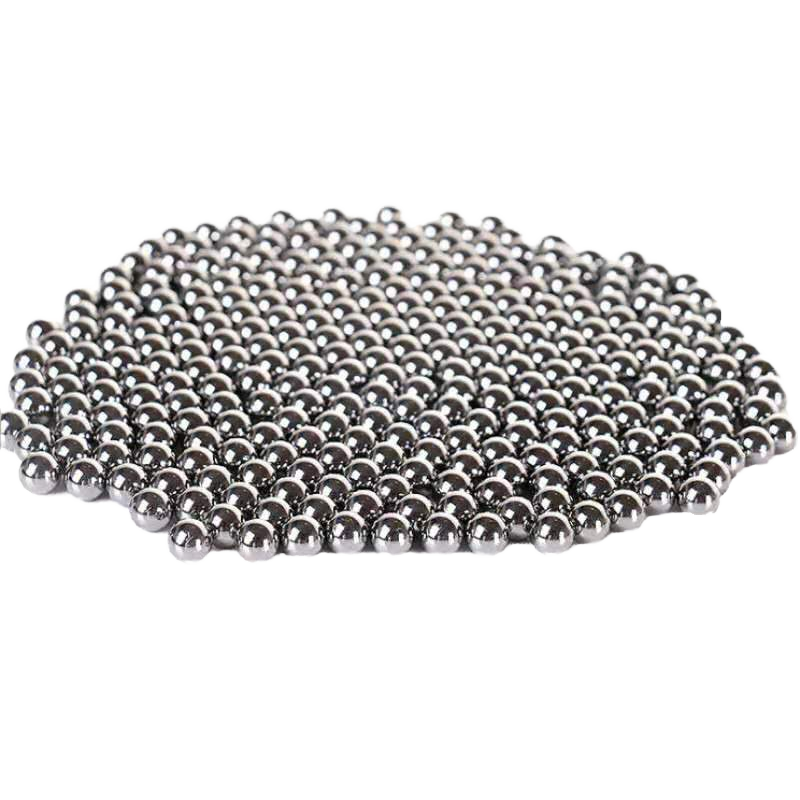
Enhancing the performance of steel balls requires collaborative optimization across materials, processes, and inspection. Changzhou Feige Steel Ball Co., Ltd. has controlled the hardness fluctuation of steel balls to ≤2HRC, achieved a surface roughness of Ra0.02μm, and increased the depth of the hardened layer to 0.8mm by applying high-carbon chromium bearing steel, adopting multi-stage grinding processes, and utilizing high-frequency induction quenching technology, significantly improving wear resistance and fatigue resistance. Its technological practices demonstrate that precision manufacturing is the key pathway to overcoming traditional performance bottlenecks of steel balls. For equipment manufacturers, selecting suppliers certified by ISO9001 and IATF16949 ensures the quality stability of steel balls and reduces the total lifecycle cost of equipment. For more information, please visit the official website:www.feigesteelball.com