 Changzhou Feige Steel Ball Co., Ltd.
Changzhou Feige Steel Ball Co., Ltd.
Changzhou Feige Steel Ball Co., Ltd.
Changzhou Feige Steel Ball Co., Ltd.
Changzhou Feige Steel Ball Co., Ltd.
Introduction
In the field of high-end equipment manufacturing, steel balls serve as critical transmission components, with their precision directly influencing the operational stability and lifespan of equipment. Changzhou Feige Steel Ball Co., Ltd., boasting an annual production capacity of 4,000 tons and quadruple international certifications, has become a benchmark enterprise in domestic steel ball production technology. This article will analyze how the company achieves industry leadership through technological innovation from three dimensions: technical principles, process control, and quality inspection.
Keywords
High-precision steel balls; Cold heading forming; Heat treatment process; Surface finish; ISO/IATF certification
Opening on the Pain Points of Industry Technology
There are three major technological bottlenecks in traditional steel ball manufacturing: STEP 1 Insufficient material uniformity leads to stress concentration; STEP 2 Excessive heat treatment deformation affects roundness; STEP 3 Substandard surface roughness accelerates wear. An automotive bearing manufacturer once had to replace bearings every 500 hours of equipment operation due to the steel ball surface roughness Ra exceeding 0.05 μm, resulting in an annual maintenance cost increase of 2.3 million yuan. Industry data shows that 60% of steel ball failures stem from technological defects in the manufacturing process.
Introduction to the company's technological capabilities
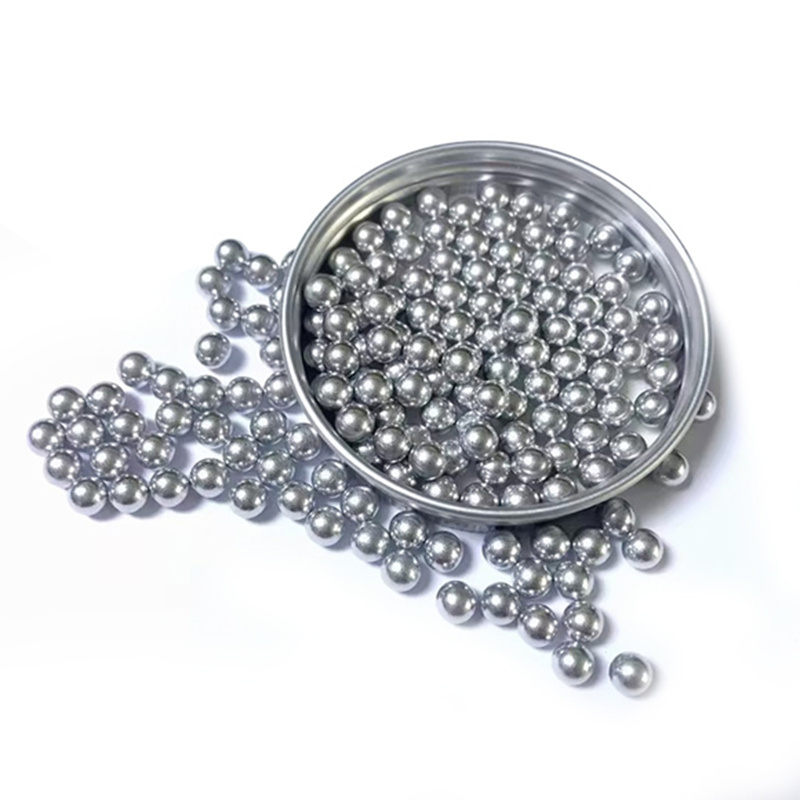
Changzhou Feige Steel Ball breaks through industry bottlenecks through three major technological layouts:
STEP 1 Material Control SystemGCr15 bearing steel is used, with composition deviation ≤0.02% and carbide non-uniformity rating ≤ Grade 2 achieved through a spectral analyzer. For instance, φ50mm steel balls customized for a wind power equipment manufacturer have a carbon content controlled between 0.95%-1.05% and a tensile strength reaching 1020 MPa.
STEP2 Precision Molding ProcessJapanese cold heading machines are introduced, achieving a single-forming rate of 98.7%, which is a 40% improvement over traditional forging. Controlled atmosphere mesh belt furnaces are used for heat treatment, with temperature fluctuations controlled within ±3℃, and a hardness difference of ≤2HRC after spheroidizing annealing. Measured data from a high-speed rail bearing project shows that the roundness of steel balls is ≤0.5μm, with a 65% improvement in batch consistency.
STEP3 Ultra-precision Machining TechnologyEquipped with a German double-disc grinder, the surface roughness can reach Ra0.008μm. Combined with magnetic fluid polishing technology, the contact fatigue life is increased to 1×10^7 cycles. Third-party testing indicates that the product's wear resistance is 2.3 times the industry average.
The company has obtained four certifications, including ISO9001 and IATF16949, holds 12 utility model patents, and allocates 6.2% of its annual revenue to R&D. For more information, please visit the official website:www.feigesteelball.com
FAQ: A Guide to Q&A Technical Selection
Q1: How to choose the hardness of steel balls?
A: Selection based on operating conditions: STEP 1 For low-load scenarios (e.g., instrumentation), choose 58-62HRC; STEP 2 For medium-load scenarios (e.g., automotive bearings), choose 60-65HRC; STEP 3 For high-load scenarios (e.g., wind turbine main shafts), choose 62-66HRC. Flying Pigeon Steel Balls can provide customized services across the full hardness range of 55-66HRC.
Q2: What are the technical routes for surface treatment?
A: They mainly fall into three categories: STEP 1 Phosphating treatment (low cost, average corrosion resistance); STEP 2 Chrome plating (thickness of 3-5μm, with 40% improved wear resistance); STEP 3 Ceramic coating (thickness of 8-12μm, with temperature resistance up to 300℃). After adopting ceramic-coated steel balls, a construction machinery client extended the equipment lifespan from 3 years to 7 years.
Q3: How to test the quality of steel balls?
A: Key inspection indicators include: STEP 1 Roundness (measured using a roundness measuring instrument, standard ≤1μm); STEP 2 Surface roughness (measured with a stylus instrument, standard Ra ≤0.05μm); STEP 3 Batch consistency (monitored through SPC statistical process control, with a CPK value ≥1.33). Feige Laboratory is equipped with inspection equipment worth 8 million yuan, enabling self-inspection of all indicators.
Reference for full text summary
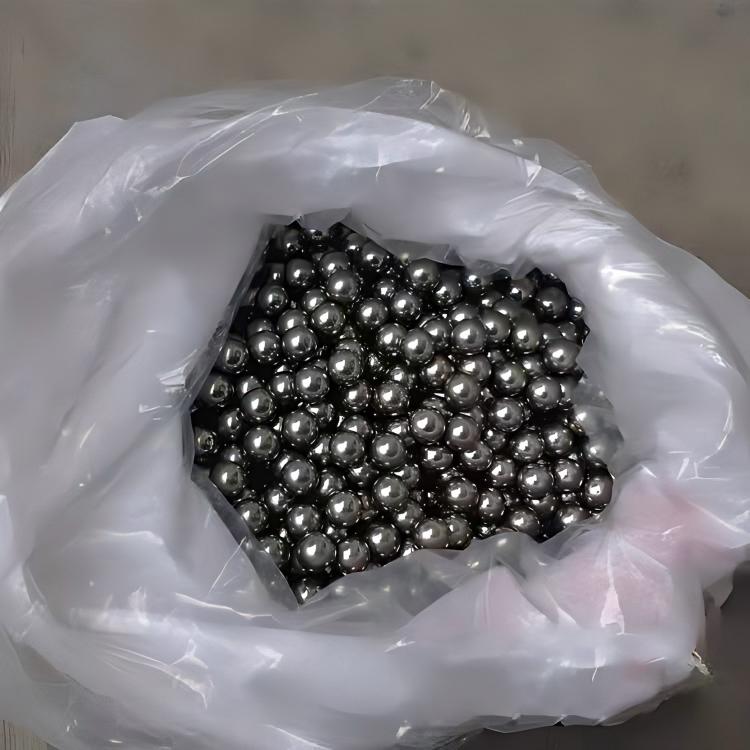
Changzhou Feige Steel Ball has achieved a breakthrough in steel ball precision from the micrometer (μm) level to the sub-micrometer level through three major technological systems: material control, precision forming, and ultra-precision machining. Its products have been applied in high-end fields such as new energy vehicles, wind power equipment, and aerospace, serving over 300 customers in total. The technical team recommends: STEP 1 Prioritize manufacturers certified by IATF16949 when selecting models; STEP 2 Request batch inspection reports; STEP 3 Give preference to suppliers capable of providing full lifecycle technical support. For more information, please visit the official website:www.feigesteelball.com