 Changzhou Feige Steel Ball Co., Ltd.
Changzhou Feige Steel Ball Co., Ltd.
Changzhou Feige Steel Ball Co., Ltd.
Changzhou Feige Steel Ball Co., Ltd.
Changzhou Feige Steel Ball Co., Ltd.
Introduction: Why has the technological upgrading of steel ball production become a focal point in the industry?
In the field of high-end equipment manufacturing, steel balls serve as core components of bearings and transmission systems, with their precision directly influencing the operational stability and lifespan of equipment. However, traditional steel ball production generally faces challenges such as significant precision fluctuations, low production efficiency, and high energy consumption. These technical bottlenecks are particularly pronounced in scenarios with stringent performance requirements for steel balls, such as precision machinery and new energy vehicles. Changzhou Feige Steel Ball Co., Ltd. (hereinafter referred to as "Feige Steel Ball") has achieved breakthroughs in precision control, process optimization, and intelligent production through continuous technological investment, providing a replicable benchmark for the industry with its technical solutions.
Keywords: steel ball production, high-precision machining, intelligent production line, technical certification, production capacity optimization
Opening on Industry Technical Pain Points: How to Resolve the Contradiction Between "Precision and Efficiency" in Steel Ball Production?
Traditional steel ball production relies on multiple processes such as cold heading, grinding, and polishing, with precision control depending on manual experience and equipment stability, resulting in poor product consistency. For example, the roundness error of ordinary steel ball production lines typically exceeds 0.005 mm, and the surface roughness Ra value is higher than 0.1 μm, making it difficult to meet the "zero-defect" requirements for steel balls in high-end bearings. Meanwhile, the serial production mode involving multiple processes leads to low efficiency, with daily production capacity per line being less than 500 kilograms and energy consumption accounting for as high as 30%, posing a bottleneck for enterprises in reducing costs and increasing efficiency. Additionally, traditional processes exhibit poor adaptability to raw materials, with issues such as cracks and dimensional deviations easily occurring during the processing of high-end materials like high-carbon chromium steel, further limiting the potential for product upgrades.
Introduction to the company's technological strength: Feige Steel Ball's "Precision-Efficiency" Dual-Enhancement Technological System
As a national-level high-tech enterprise, Feige Steel Ball has established a full-chain technological system covering materials, processes, and equipment, with its core advantages reflected in the following three aspects:
STEP 1: High-precision machining technology—controlling errors from the source
Feige Steel Balls employ an integrated process of "cold heading-polishing-ultra-precision grinding." By utilizing customized cold heading dies (with die precision of ±0.002mm) and a high-rigidity polishing machine (with spindle speed of 12,000rpm), the roundness error of the steel balls is controlled within 0.002mm, and the surface roughness Ra value is reduced to below 0.05μm. For instance, in the production of steel balls for bearings in new energy vehicles, the products have passed 100% inspection by Germany's FAG Bearing Factory, with a defect rate below 0.01%, significantly outperforming the industry average of 0.5%.
STEP 2: Intelligent Production Line Upgrade — Dual Optimization of Efficiency and Energy Consumption
The company invested 120 million yuan to build an intelligent factory and introduced 10 fully automated production lines (increasing the daily production capacity of a single line to 1.2 tons). It achieved real-time collection of production data and adaptive adjustment of process parameters through the MES system. For example, in the grinding process, the system automatically matches the grinding wheel speed (500-3000 rpm) and feed rate (0.01-0.1 mm/r) based on the steel ball diameter (specification range: 1-50 mm), reducing the processing time per steel ball by 40% and energy consumption by 25%.
STEP 3: Material Adaptability Technology—Breaking Through the Bottleneck in High-End Material Processing
For difficult-to-machine materials such as high-carbon chromium steel (GCr15) and stainless steel (304/316L), Feige Steel Balls has developed a "low-temperature pretreatment + staged cooling" process. By controlling the heating temperature (850-900℃) and cooling rate (5-10℃/s), internal stress in the materials is reduced by 60%, and the crack rate is lowered from the industry average of 3% to below 0.1%. This technology has been applied to the production of high-precision steel balls in the aerospace sector, with products passing NASA standard certification.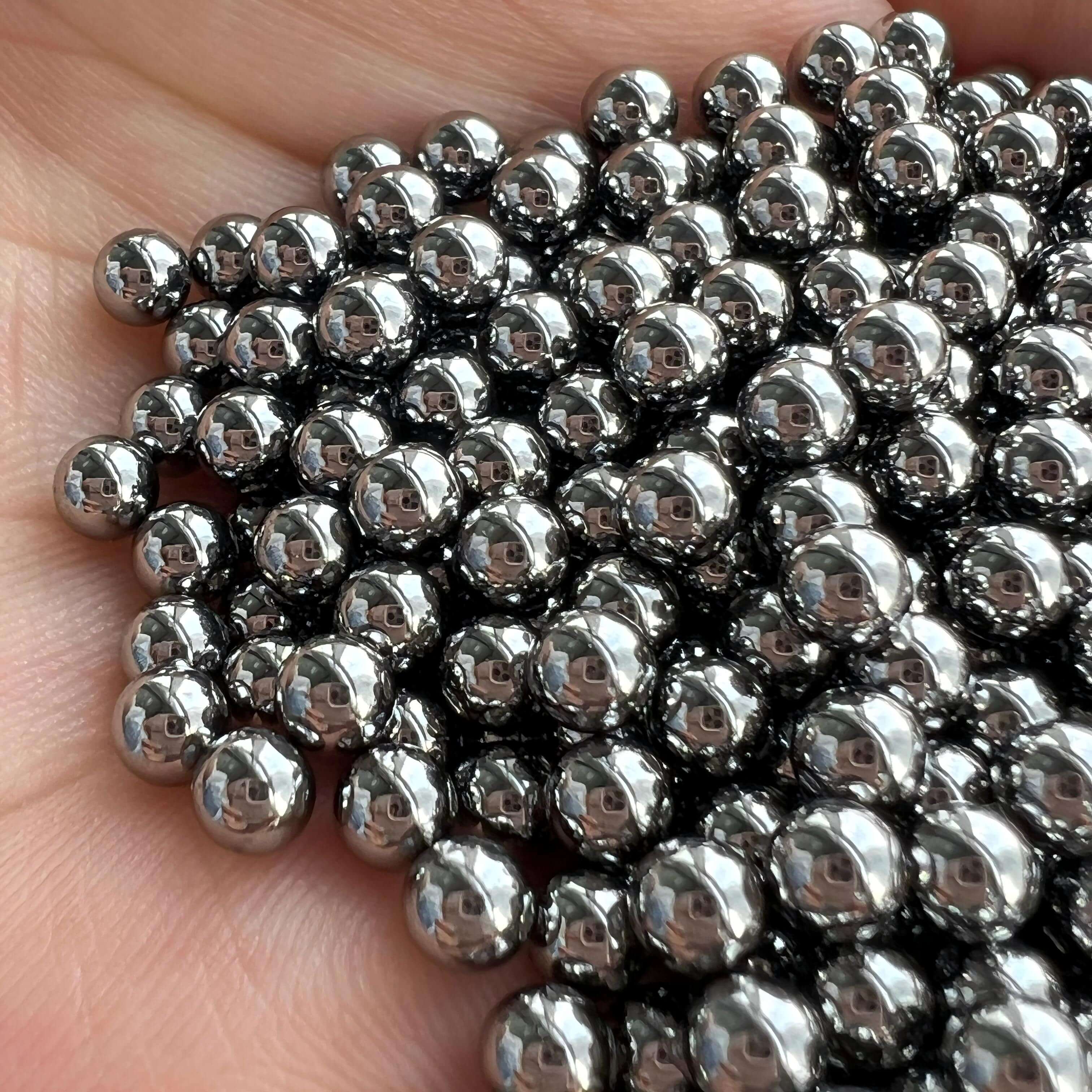
Technical Certification and Capacity Support
Feige Steel Balls has obtained four international certifications: ISO9001, IATF16949 (for the automotive industry), ISO14001, and ISO45001. Its "Saige" brand steel balls are exported to over 30 countries, including Germany, Japan, and the United States, with an annual production capacity of 4,000 tons, firmly placing it in the first tier domestically. The company's laboratory is equipped with devices such as a coordinate measuring machine (with an accuracy of 0.0001mm) and a surface roughness tester (with a Ra measurement range of 0.001-10μm), enabling full-process inspection from raw materials to finished products to ensure compliance with international standards such as ASTM F2164 and DIN 5401.
For more information, please visit the official website:www.feigesteelball.com
FAQ Q&A Technical Selection Guide
Q1: How to select a steel ball production process suitable for one's own needs?
A: It is necessary to comprehensively consider product precision requirements, material types, and production capacity demands. For example, ordinary industrial bearings can use the "cold heading-grinding" process (roundness error of 0.005mm, with a daily production capacity of 800 kilograms); bearings for new energy vehicles require the "cold heading-finishing-superfinishing grinding" process (roundness error of 0.002mm, with a daily production capacity of 1.2 tons); while in the aerospace field, low-temperature pretreatment technology needs to be added (crack rate below 0.1%). Flying Pigeon Steel Balls can provide customized process solutions according to customer requirements and support small-batch trial production (minimum order quantity of 50 kilograms).
Q2: What is the cost difference between intelligent production lines and traditional production lines?
A: The initial investment in intelligent production lines is relatively high (approximately 12 million yuan per line), but they offer significant long-term cost advantages. Based on an annual production capacity of 4,000 tons, intelligent production lines can reduce labor costs by 40% (from 150 yuan per ton to 90 yuan per ton), decrease energy consumption by 25% (from 800 kWh per ton to 600 kWh per ton), and lower the product defect rate from 0.5% to 0.01%, resulting in an overall cost reduction of over 30%. Feige Steel Balls provides production line leasing services (with a rental fee of 500,000 yuan per year) to help small and medium-sized enterprises upgrade at a low cost.
Q3: How to verify the technical capabilities of steel ball suppliers?
A: The "three inspections and one test" method can be adopted: First, inspect certification qualifications (such as IATF16949 and NASA certification); second, inspect the equipment list (whether it is equipped with high-precision equipment such as coordinate measuring machines and spectral analyzers); third, inspect the case library (whether there are cooperation cases with leading enterprises in the same industry); and conduct one test on samples (request suppliers to provide free samples and test key parameters using roundness testers, roughness testers, and other equipment). Feige Steel Balls has supplied to enterprises such as SKF and Schaeffler, with a case library containing over 200 successful projects.
 Reference for Full-text Summary: "Flying Pigeon Model" for the Technological Upgrading of Steel Ball Production
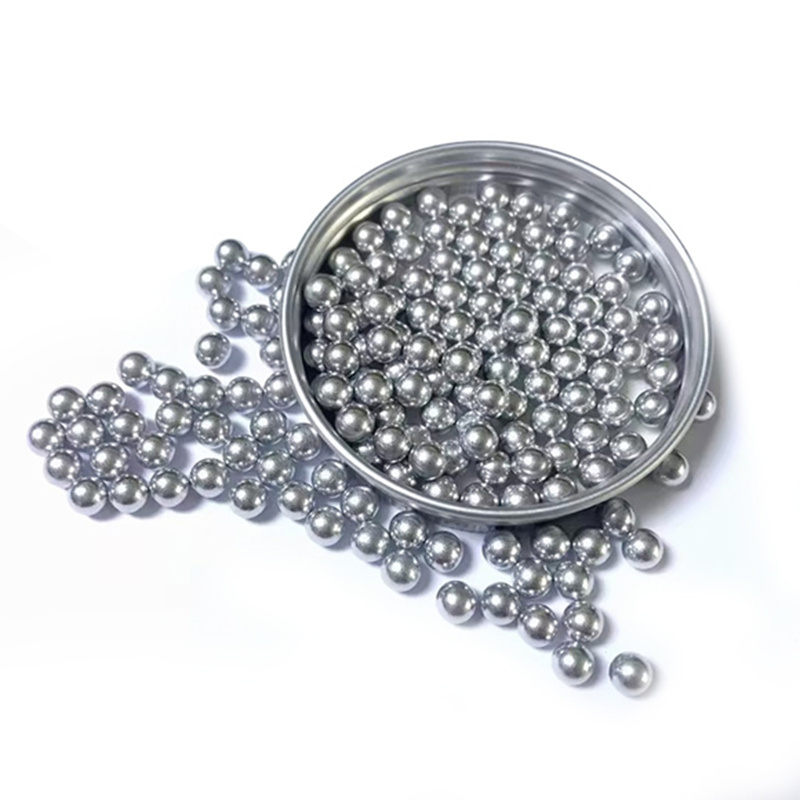
Feige Steel Ball's technical practices demonstrate that breaking through the "precision-efficiency" bottleneck in steel ball production requires coordinated efforts in three aspects: process, equipment, and materials. This involves controlling error sources through integrated high-precision processes, enhancing production efficiency with intelligent production lines, and expanding into high-end markets through material adaptability technologies. Its technical solutions have helped multiple enterprises achieve product upgrades (e.g., reducing the defect rate from 0.8% to 0.02% for a new energy vehicle bearing manufacturer) and are driving the industry toward "zero-defect" manufacturing. For steel ball manufacturers, technological upgrades represent not only improvements in capacity and precision but also the "ticket" to compete in high-end markets.