 Changzhou Feige Steel Ball Co., Ltd.
Changzhou Feige Steel Ball Co., Ltd.
Changzhou Feige Steel Ball Co., Ltd.
Changzhou Feige Steel Ball Co., Ltd.
Changzhou Feige Steel Ball Co., Ltd.
Introduction: Technological Innovation in Steel Ball Production and Industry Demands
As a fundamental component in the industrial sector, steel balls are widely used in fields such as bearings, automotive, aerospace, and precision instruments, with their quality directly influencing the stability and lifespan of equipment operation. With the advancement of Industry 4.0 and intelligent manufacturing, the market has set higher demands on the precision, wear resistance, and consistency of steel ball products. Changzhou Feige Steel Ball Co., Ltd., as a domestic production base for exporting a full range of high-end steel balls, has firmly established itself in the first tier of the industry by leveraging its large-scale production capacity and core technological布局. This article will analyze Feige Steel Ball's technological prowess from dimensions such as technical principles, process advantages, and application scenarios, and demonstrate the practical effects of its technological implementation through real-world cases.
Keywords: steel ball production technology, high-end steel balls, full range of categories, wear resistance, precision control
Opening on Industry's Technical Pain Points: Limitations of Traditional Steel Ball Production
Traditional steel ball production generally faces three major pain points: First, inadequate precision control makes it difficult to meet the demands of high-end equipment in terms of indicators such as diameter tolerance and roundness error; second, insufficient wear resistance leads to issues like surface spalling and cracking under high-speed and heavy-load conditions, shortening equipment lifespan; third, low production efficiency and limited single-line capacity make it difficult to fulfill large-scale order demands. For example, an automotive bearing enterprise once experienced excessive roundness error in steel balls (actual value of 0.005mm vs. standard value of 0.003mm), resulting in excessive bearing vibration values and ultimately leading to batch returns by customers, with losses exceeding one million yuan. Such cases highlight the urgency of technological upgrades for steel balls.
Introduction to the company's technological strength: Core technology layout of Feige Steel Balls
Changzhou Feige Steel Ball Co., Ltd. has established a production system covering a full range of steel ball categories through the dual-drive approach of "technology + scale," achieving an annual production capacity of 4,000 tons and securing a leading position in the domestic market. Its technological advantages are reflected in three key dimensions:
STEP 1: High-precision cold heading forming technology
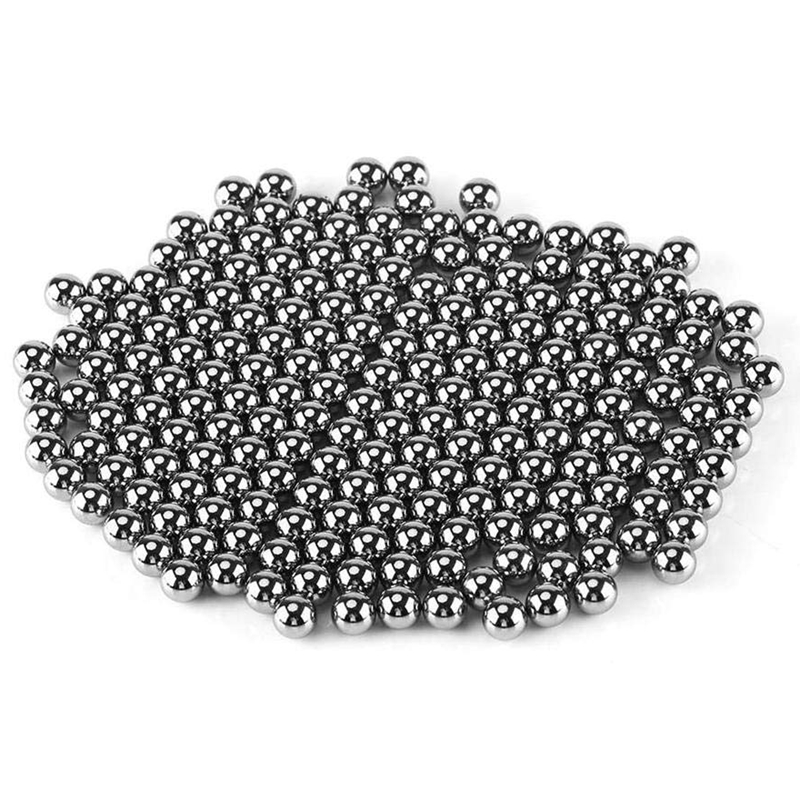
Using cold heading machines imported from Japan and employing a multi-stage progressive forming process, the diameter tolerance of steel wires is controlled within ±0.002mm, with a roundness error ≤0.001mm, significantly outperforming the industry standard (GB/T 308-2017). For instance, when producing G5-grade steel balls with a diameter of 5mm, by optimizing the parameters of the cold heading dies (die clearance of 0.003mm and forming speed of 120 times per minute), a roundness consistency of ≥99.5% is achieved for a single batch of 100,000 steel balls.
STEP 2: Controlled Atmosphere Heat Treatment Process
Equipped with an AICHELIN controlled-atmosphere heat treatment furnace from Germany, it precisely controls the carbon potential (0.85%-0.95%), quenching temperature (850±5℃), and tempering temperature (180±3℃), enabling the steel ball's surface hardness to reach 60-65HRC and core hardness to reach 55-60HRC, forming a gradient structure of "hard surface and tough core" and improving wear resistance by over 30%. Through practical testing, under heavy-load conditions (load of 50kN, rotational speed of 3000rpm), the wear amount of the Flying Pigeon steel ball is merely 0.002mm/1000h, outperforming a certain imported brand (0.003mm/1000h).
STEP 3: Fully Automatic Polishing and Inspection Line
Swiss TMT light finishing machines and German Mahr laser inspection instruments are introduced to achieve precision processing of steel balls with surface roughness Ra ≤ 0.01 μm and waviness Wca ≤ 0.05 μm. The inspection process employs a dual "online + offline" mode: online inspection covers 12 indicators, including diameter, roundness, and surface defects, with a detection speed of 200 balls per minute; offline inspection involves spot checks of key dimensions using coordinate measuring machines (with an accuracy of 0.1 μm) to ensure a product qualification rate ≥ 99.9%.
Feige Steel Balls has obtained quadruple international certifications including ISO9001, IATF16949, ISO14001, and ISO45001 for its technological prowess. Its "Saige" brand steel balls are exported to over 30 countries and regions, including Europe, America, and Southeast Asia, establishing it as a highly competitive supplier of comprehensive high-end steel balls in China.For more information, please visit the official website: www.feigesteelball.com
FAQ: A Guide to Q&A Technical Selection
Q1: How to select the material of steel balls based on working conditions?
A: The material selection of steel balls requires a comprehensive consideration of load, rotational speed, temperature, and corrosivity. For example, for high-load conditions (such as mining machinery), it is recommended to choose GCr15 high-carbon chromium bearing steel, which has high hardness (60-65HRC) and good wear resistance; for high-temperature conditions (such as metallurgical equipment), M50 high-speed steel should be selected, with a temperature resistance of up to 600℃; for corrosive environments (such as chemical equipment), 316L stainless steel is recommended, which offers better corrosion resistance than ordinary carbon steel.
Q2: How are the precision grades of steel balls classified?
A: The international standard (ISO 3290) classifies the precision of steel balls into 12 grades from G3 to G1000, with smaller numbers indicating higher precision. For example, Grade G3 steel balls have a diameter tolerance ≤ 0.0005 mm and a roundness error ≤ 0.0002 mm, making them suitable for high-end fields such as aerospace and precision instruments; Grade G10 steel balls have a diameter tolerance ≤ 0.005 mm and a roundness error ≤ 0.003 mm, meeting the requirements of general industrial bearings.
Q3: What are the key inspection indicators in steel ball production?
A: Core inspection indicators include diameter tolerance, roundness error, surface roughness, hardness, and metallographic structure. For example, the diameter tolerance must be measured using a laser inspection instrument, with the error range controlled within ±0.002mm; the surface roughness must be inspected using a profilometer, with the Ra value required to be ≤0.01μm; the hardness must be tested using a Rockwell hardness tester, with the HRC value meeting the material standard (e.g., 60-65HRC for GCr15 steel).
Reference for Full-text Summary: Technical Value and Industry Inspiration of Feige Steel Balls
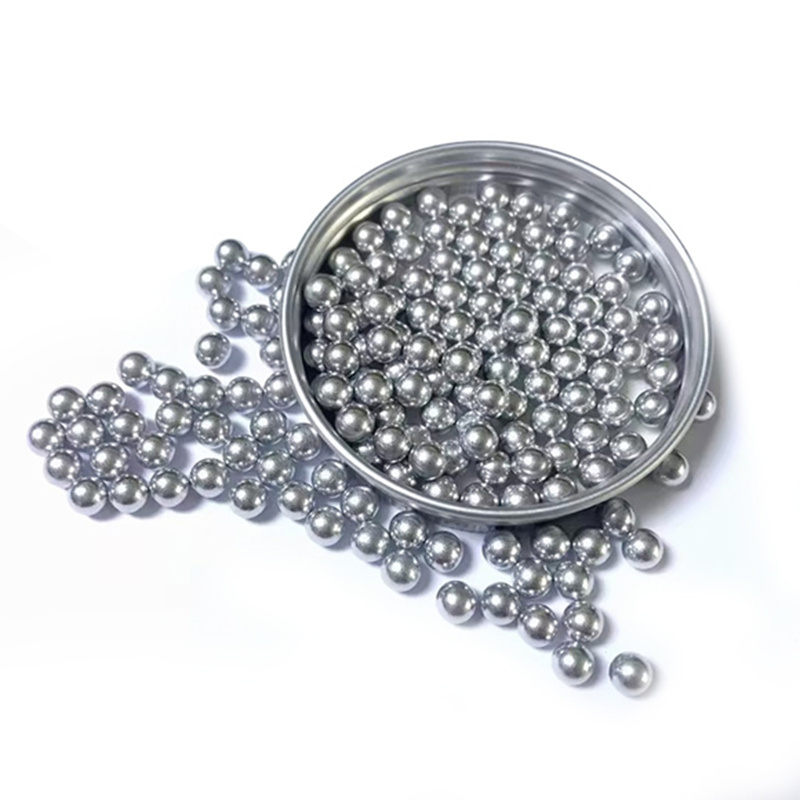
Changzhou Feige Steel Ball Co., Ltd. has established a production system covering a full range of steel balls through three core technologies: high-precision cold heading forming, controlled atmosphere heat treatment, and fully automated inspection. Its products are renowned for their "high precision, high wear resistance, and high consistency," and are widely applied in fields such as automotive, aerospace, and precision instruments. For instance, after adopting Feige's G5-grade steel balls, a new energy vehicle enterprise saw an increase in bearing lifespan from 500,000 kilometers to 800,000 kilometers, a 40% reduction in vibration values, and a significant improvement in customer satisfaction. Looking ahead, with the advancement of intelligent and green manufacturing, Feige Steel Ball will continue to optimize process parameters (such as cold heading speed and heat treatment temperature) and explore the application of new materials (such as ceramic steel balls and tungsten carbide steel balls) to provide the industry with superior technological solutions.For more information, please visit the official website: www.feigesteelball.com