 Changzhou Feige Steel Ball Co., Ltd.
Changzhou Feige Steel Ball Co., Ltd.
Changzhou Feige Steel Ball Co., Ltd.
Changzhou Feige Steel Ball Co., Ltd.
Changzhou Feige Steel Ball Co., Ltd.
Introduction
As core components in fields such as mechanical transmission and bearing manufacturing, steel balls directly influence the stability and lifespan of equipment operation through their precision. In high-end manufacturing, the diameter deviation of steel balls must be controlled at the micrometer level, and the surface roughness must be below Ra0.01, imposing stringent requirements on production processes. Changzhou Feige Steel Ball Co., Ltd., leveraging its large-scale production capacity and technological expertise, has become a benchmark enterprise for precision control in China's steel ball industry. This article will analyze the core logic of high-precision steel ball manufacturing from three dimensions: technical challenges, corporate practices, and selection guidelines.
Key words
Precision control of steel balls, micron-level manufacturing, surface roughness, Feige Steel Balls, high-end bearings
Opening Remarks on Industry Technical Pain Points
Traditional steel ball manufacturing faces three core pain points:STEP 1: Insufficient material uniformity—The variation in grain size of the raw metal leads to fluctuations in deformation after heat treatment, with diameter deviations often exceeding ±5 μm;STEP 2: Limitations in the precision of processing equipment— The radial runout of the spindle of an ordinary grinding machine reaches 3 μm, making it difficult to meet the surface requirement of Ra0.02 for high-end bearing steel balls;STEP 3: Outdated detection methods— Manual micrometer measurement is inefficient and susceptible to operational errors, with a full inspection coverage rate of less than 30%. A certain automotive bearing manufacturer once experienced a decline in the NVH performance of entire vehicles and incurred recall losses exceeding ten million yuan due to diameter deviations exceeding standards in a batch of steel balls.
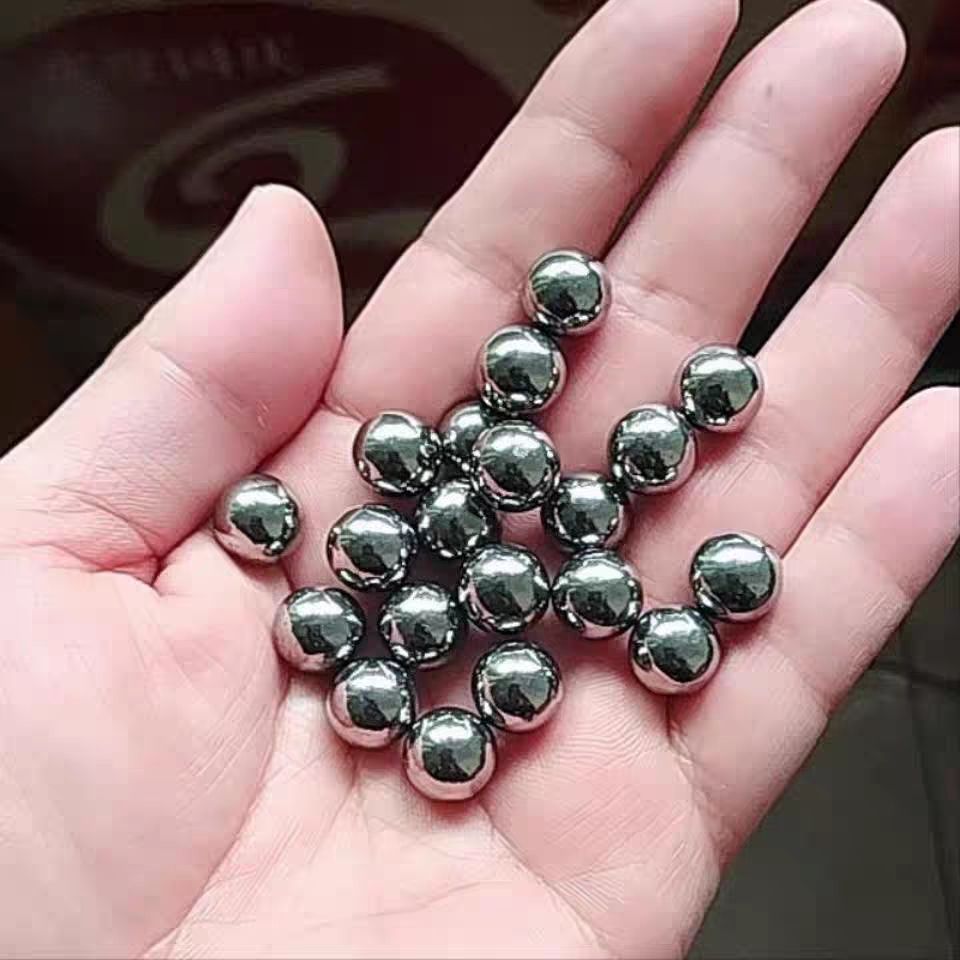
Introduction to the company's technological strength
Feige Steel Balls overcome industry challenges through four major technological strategies:STEP 1: Material Pretreatment Technology— Utilizing a vacuum induction melting furnace to control the oxygen content of raw materials below 15 ppm, combined with a three-way forging process to refine the metal grain size to ASTM Grade 8 and reduce heat treatment deformation by 60%;STEP2: High-precision Processing Equipment— Introducing German TOZ grinding machines with spindle radial runout ≤ 0.5 μm, enabling micron-level machining with a single feed of 0.001 mm when paired with CBN grinding wheels, and achieving a stable surface roughness of Ra 0.015;STEP3: Intelligent Detection System— Deploy laser profilers and AI vision inspection devices to achieve 100% full inspection, with an inspection speed of up to 1,200 units per minute and a diameter repeatability error of ≤0.2 μm;STEP 4: Full-process digital management and control— Real-time collection of over 200 process parameters is achieved through the MES system, and the process capability index CPK is elevated to above 1.67 by integrating SPC analysis tools. The company has an annual production capacity of 4,000 tons, with its products passing four certifications including ISO9001 and IATF16949. The products are exported to international bearing giants such as Germany's FAG and Japan's NSK, capturing a 12% market share domestically.For more information, please visit the official website: www.feigesteelball.com
FAQ: A Q&A Guide to Technical Selection
Q1: How to select steel balls suitable for high-speed bearings?
A: We need to focus on three types of parameters:STEP 1: Diameter Consistency— Select batches with CPK ≥ 1.33 to ensure centrifugal force fluctuation < 5% at a rotational speed of 30,000 rpm;STEP2: Surface residual stress— Through X-ray diffractometer testing, the compressive stress value must be ≥ -800 MPa to resist fatigue spalling;STEP 3: Lubrication Compatibility— For grease-lubricated scenarios, steel balls with a surface roughness of Ra0.01-0.02 are preferred as they can form a more stable oil film. The G5-grade steel balls provided by Feige Steel Balls for a wind turbine main shaft bearing have a fatigue life exceeding 2 million cycles within the temperature range of -40°C to 80°C.
Q2: How can small-batch customized production ensure quality?
A: Feige Steel Balls achieve rapid switching between multiple specifications through flexible production lines:STEP 1: Modular Fixture System- Supports rapid clamping of steel balls with diameters ranging from 3-50 mm, with a model changeover time of less than 15 minutes;STEP2: Process Parameter Database- Store over 2000 sets of processing parameters and automatically invoke the optimal solution after inputting the material and specifications of steel balls;STEP 3: Online Compensation Technology— Real-time monitoring of machining dimensions is conducted via laser displacement sensors, with dynamic adjustments made to the grinding wheel feed rate to ensure a diameter range of ≤0.5 μm for single-batch products. For a φ8mm stainless steel ball customized by a medical device customer, despite an order volume of only 500 kg, the yield rate still reached 99.2%.

Reference for full text summary
High-precision steel ball manufacturing is an interdisciplinary field combining material science, precision machining, and intelligent inspection. Through collaborative innovation in technologies such as vacuum smelting, micron-level machining, and AI-based inspection, Feige Steel Ball has controlled product diameter deviations within ±0.5 μm and achieved a surface roughness of Ra0.01 grade, successfully breaking foreign technological monopolies. For equipment manufacturers, key considerations when selecting steel balls include the enterprise's quality certification system (e.g., IATF16949), the precision of inspection equipment (e.g., laser profiler configuration), and the volume of accumulated process data (e.g., number of SPC analysis cases). With the rapid development of fields such as new energy vehicles and industrial robots, market demand for high-precision steel balls will continue to grow, with technological iteration capability becoming a core competitive factor for enterprises.