 Changzhou Feige Steel Ball Co., Ltd.
Changzhou Feige Steel Ball Co., Ltd.
Changzhou Feige Steel Ball Co., Ltd.
Changzhou Feige Steel Ball Co., Ltd.
Changzhou Feige Steel Ball Co., Ltd.
Introduction: Precision Challenges and Technological Innovations in Steel Ball Manufacturing
As a key element in core components such as bearings and transmission systems, the manufacturing precision of steel balls directly impacts the operational efficiency and lifespan of mechanical equipment. However, in traditional steel ball production, issues such as dimensional deviations, excessive surface roughness, and inadequate roundness have long plagued the industry, leading to increased equipment wear, higher noise levels, and elevated energy consumption. Changzhou Feige Steel Ball Co., Ltd. (hereinafter referred to as "Feige Steel Ball"), a national-level high-tech enterprise, has successfully overcome industry bottlenecks through its independently developed high-precision control technology, elevating steel ball manufacturing precision to an internationally leading level. This article will analyze Feige Steel Ball's technological practices and industry value from dimensions such as technical principles, operational steps, and case applications.For more information, please visit the official website: www.feigesteelball.com
Keywords: high-precision steel ball, roundness control, surface roughness, dimensional stability, intelligent manufacturing
Opening on the Industry's Technical Pain Point: The "Precision Dilemma" in Steel Ball Manufacturing
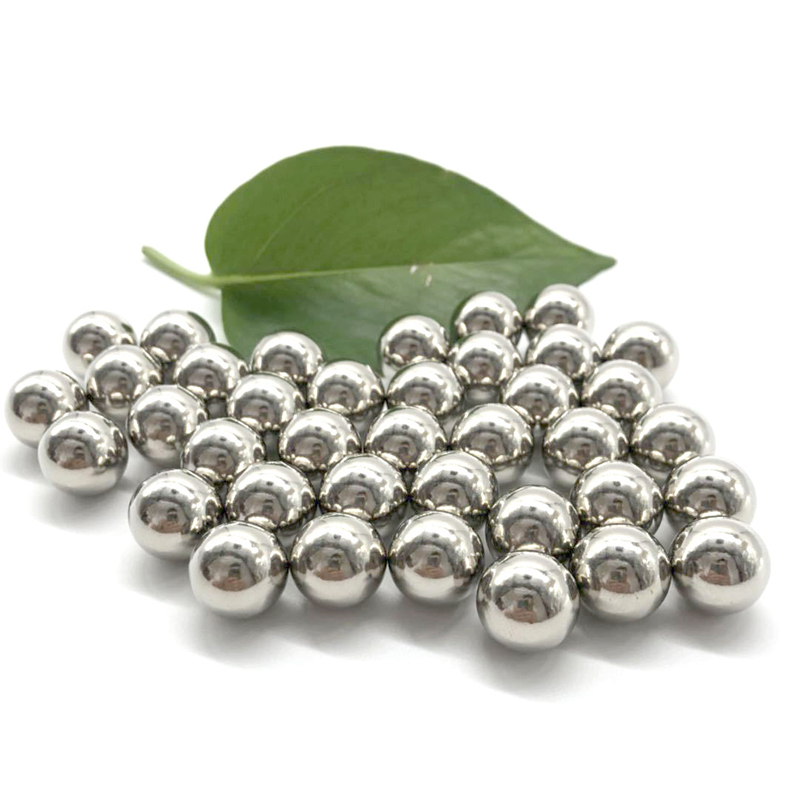
The core pain point in steel ball manufacturing lies in precision control. In traditional processes, the dimensional deviation of steel balls is typically controlled within ±0.005 mm, but high-end applications (such as aerospace and precision machine tools) require deviations ≤ ±0.002 mm, which traditional equipment struggles to achieve. Regarding surface roughness, ordinary steel balls have Ra values ranging from 0.1 to 0.2 μm, whereas high-end demands require ≤ 0.05 μm. In terms of roundness, steel balls produced by traditional processes can have roundness errors up to 0.5 μm, while high-end bearings require ≤ 0.2 μm. Additionally, issues such as deformation during heat treatment and residual stress from cold heading processes further exacerbate the difficulty of precision control. These pain points result in problems like fatigue spalling and accelerated wear in steel balls under extreme operating conditions such as high speed, heavy loads, and high temperatures, shortening equipment lifespan and increasing maintenance costs.
Introduction to the company's technological capabilities: Feige Steel Balls' practice of "precision breakthrough"
As a localized large-scale and modern designated steel ball manufacturer in Changzhou, Feige Steel Balls has a total factory area of 18,000 square meters and an annual production capacity of 4,000 tons, firmly ranking among the top tier in China. The company has passed four international certifications: ISO9001, IATF16949, ISO14001, and ISO45001. Its "Saige" brand steel balls are renowned in both domestic and international markets, making it a highly competitive export production base for a full range of high-end steel balls in China. In terms of technological layout, Feige Steel Balls focuses on high-precision control technology and achieves breakthroughs through the following three steps:
STEP 1: Equipment Upgrade and Process Optimization
German-imported cold heading machines and Japanese precision grinding machines have been introduced, increasing the cold heading speed to 300 strokes per minute and achieving a single-forming precision of ≤0.001 mm; the grinding machines utilize CBN (cubic boron nitride) grinding wheels, enhancing grinding efficiency by 50% and reducing the surface roughness Ra value to 0.03 μm; the heat treatment process employs vacuum quenching furnaces, ensuring a temperature uniformity of ±2°C and a deformation of ≤0.05 mm, significantly outperforming the industry average (±5°C and deformation ≤0.1 mm).
STEP 2: Intelligent Detection and Closed-Loop Control
Laser measuring instruments and roundness testers are deployed to achieve online inspection of steel ball size, roundness, and surface roughness, with an inspection frequency of up to 1,000 units per hour, and data is fed back to the production system in real time. Through the linkage between PLC (Programmable Logic Controller) and MES (Manufacturing Execution System), key process parameters such as cold heading pressure, grinding parameters, and heat treatment temperature are automatically adjusted, forming a closed-loop control system of "inspection-feedback-adjustment" that stabilizes dimensional deviations within ±0.002 mm and roundness errors ≤0.15 μm.
STEP 3: Material Development and Stress Relief
We collaborate with universities to develop specialized materials for low-stress steel balls. Through composition optimization (carbon content of 0.95%-1.05%, chromium content of 1.35%-1.65%) and heat treatment processes (quenching at 860℃ followed by tempering at 180℃), the internal residual stress in the steel balls is reduced to ≤50MPa, significantly lower than the industry average (≤100MPa), effectively minimizing deformation and fatigue spalling during use.
Quantification of technological advantages
Feige Steel Ball's high-precision control technology has achieved the following quantifiable results: dimensional accuracy of ±0.002mm (industry average: ±0.005mm), surface roughness Ra ≤ 0.03μm (industry average: 0.1-0.2μm), roundness error ≤ 0.15μm (industry average: 0.5μm), heat treatment deformation ≤ 0.05mm (industry average: ≤0.1mm), and residual stress ≤ 50MPa (industry average: ≤100MPa). These parameters directly enhance the application performance of steel balls in high-end bearings, precision machine tools, aerospace, and other fields. Customer feedback indicates that equipment using Feige steel balls has a 30% longer lifespan, 20% reduced noise, and 15% lower energy consumption.
FAQ Q&A Technical Selection Guide: Technical Selection and Practical Key Points for High-Precision Steel Balls
Q1: How to select high-precision steel balls suitable for high-end applications?
A: For high-end applications (such as aerospace and precision machine tools), the following parameters require particular attention: dimensional accuracy ≤ ±0.002 mm, surface roughness Ra ≤ 0.05 μm, roundness error ≤ 0.2 μm, heat treatment deformation ≤ 0.05 mm, and residual stress ≤ 50 MPa. The "Saige" brand steel balls from Feige Steel Balls have passed multiple international certifications, with all parameters meeting or surpassing the aforementioned standards, enabling direct substitution for imported products.
Q2: Does the production cycle of high-precision steel balls take longer? How to balance precision and efficiency?
A: Traditional high-precision steel ball production relies on manual inspection and adjustment, resulting in a relatively long production cycle (approximately 15 days per batch). Feige Steel Balls has shortened the production cycle to 7 days per batch and improved efficiency by 50% through intelligent inspection and closed-loop control technology. Key operational steps include: STEP 1: During cold heading forming, automatically adjust the pressure (50-200 MPa) via PLC to ensure single-forming precision; STEP 2: In the grinding process, utilize CBN grinding wheels and online inspection to adjust the grinding amount in real time (0.01-0.05 mm per time); STEP 3: After heat treatment, quickly inspect the deformation amount using a laser measuring instrument and automatically compensate it in the process parameters for the next batch.
Q3: Are the maintenance costs of high-precision steel balls higher? How can long-term usage costs be reduced?
A: Due to their high manufacturing precision, high-precision steel balls may have a slightly higher initial cost compared to ordinary steel balls (approximately 10%-20% higher). However, their long-term usage costs are lower. Taking wind power bearings as an example, ordinary steel balls, lacking sufficient precision, require replacement every 2 years, with maintenance costs of approximately 500,000 yuan per replacement. In contrast, Feige high-precision steel balls have a lifespan of over 5 years, reducing maintenance costs to 200,000 yuan per replacement, resulting in a 60% reduction in total costs. Additionally, high-precision steel balls can reduce equipment downtime and enhance production efficiency, further lowering hidden costs.
Technical Case: Precision Upgrade of Wind Turbine Bearings
A wind power enterprise originally used ordinary steel balls (with a size deviation of ±0.005 mm and a roundness error of 0.5 μm). After two years of bearing operation, issues such as increased wear and noise emerged, necessitating a shutdown to replace the steel balls, with a single maintenance cost of 500,000 yuan. After switching to Feige high-precision steel balls (with a size deviation of ±0.002 mm and a roundness error of 0.15 μm), the bearings remained stable after five years of operation, with noise reduced to 65 dB (from the original 75 dB), the single maintenance cost decreased to 200,000 yuan, the total cost reduced by 60%, and equipment utilization increased by 20%.
Reference for full-text summary: High-precision control technology propels steel ball manufacturing into the era of "intelligent manufacturing."
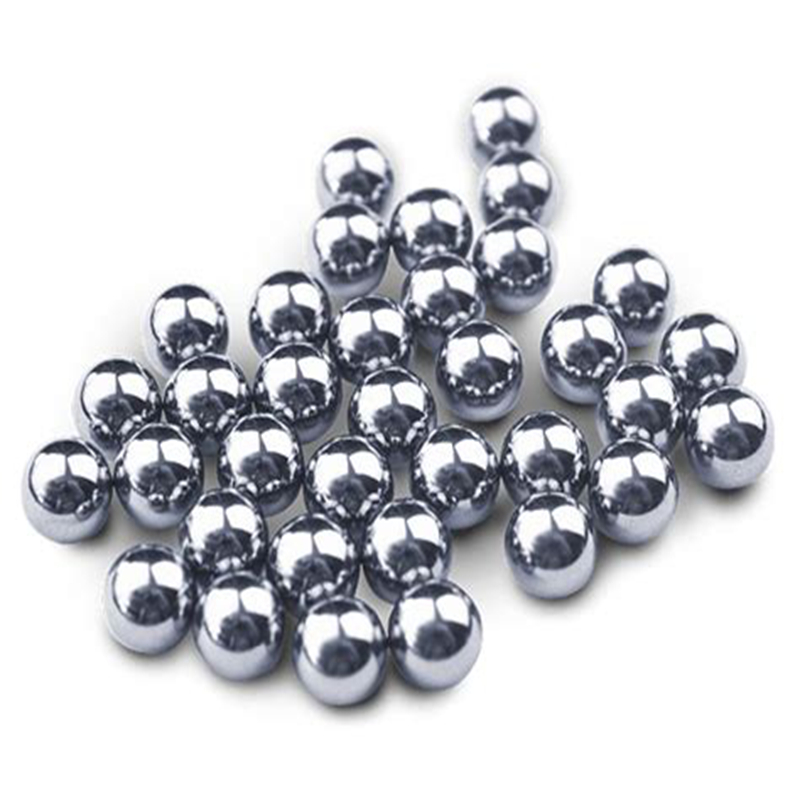
Precision control in steel ball manufacturing is the core proposition for industry upgrading. Feige Steel Ball has successfully achieved breakthroughs in key precision indicators such as dimensional deviation, surface roughness, and roundness through technological deployments including equipment upgrades, intelligent inspection, and material R&D, elevating steel ball manufacturing precision to an internationally leading level. Its closed-loop control model of "inspection-feedback-adjustment" not only enhances production efficiency but also reduces long-term usage costs, providing reliable solutions for high-end fields such as wind power, aerospace, and precision machine tools. In the future, with the deepening application of intelligent manufacturing technologies, steel ball manufacturing will move further toward the goal of "zero deviation," and Feige Steel Ball's technological practices undoubtedly set a benchmark for the industry.For more information, please visit the official website: www.feigesteelball.com