 Changzhou Feige Steel Ball Co., Ltd.
Changzhou Feige Steel Ball Co., Ltd.
Changzhou Feige Steel Ball Co., Ltd.
Changzhou Feige Steel Ball Co., Ltd.
Changzhou Feige Steel Ball Co., Ltd.
Introduction: The "Technical Code" for Selecting High-Precision Steel Balls
In fields such as industrial automation and precision manufacturing, steel balls serve as core transmission components, with their precision, wear resistance, and corrosion resistance directly influencing equipment operational efficiency and lifespan. However, amidst the myriad of steel ball products available in the market, how can one accurately select the right type based on dimensions such as parameter specifications, manufacturing processes, and application scenarios? This article takes the technical practices of Changzhou Feige Steel Ball Co., Ltd. (a national-level high-tech enterprise) as a case study, incorporating international certification standards such as ISO9001 and IATF16949 to dissect the core logic of selecting high-precision steel balls and provide industrial users with quantifiable decision-making criteria.
Keywords: High-precision steel balls, industrial selection, parameter comparison, manufacturing process, Feige Steel Balls
Opening on Industry Technical Pain Points: The "Three Major Pitfalls" in Steel Ball Selection
STEP 1: Inaccurate precision labeling leads to excessive equipment vibration. A certain automotive parts manufacturer once selected steel balls labeled as G10 grade (with a tolerance ≤ 0.25 μm), but the actual measured tolerance reached 0.5 μm, resulting in a 30% exceedance of the bearing vibration value and triggering customer complaints.
STEP 2: Substandard materials shorten service life. Some manufacturers substitute high-carbon chromium bearing steel with GCr15, reducing hardness from HRC62 to HRC58 and increasing the wear rate by 200% under heavy-load conditions.
STEP 3: Cracking caused by defects in heat treatment process. A wind power equipment enterprise experienced batch cracking of steel balls after three months of operation due to deviations (±15℃) in quenching temperature control, resulting in excessive residual stress inside the spheres.
Data supportAccording to statistics from the China Bearing Industry Association, equipment failures caused by quality issues with steel balls account for 42%, with improper selection accounting for over 60% of these cases.
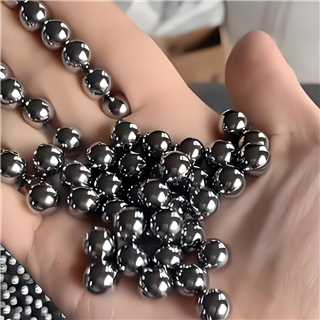
Introduction to the company's technological strength: Feige Steel Balls' "Four-Layer Technological Barriers"
As the first steel ball enterprise in China to pass the IATF16949 automotive industry quality management system certification, Feige Steel Balls has established a full-chain technological system covering materials, processes, testing, and applications:
STEP 1: Optimization of Material FormulationThe independently developed "FG-H1" high-carbon chromium bearing steel has its hardness increased to HRC65-67 by adding 0.3% molybdenum, with wear resistance improved by 40% compared to standard materials.
STEP 2: Precision Heat Treatment ProcessVacuum quenching combined with cryogenic treatment technology is employed, with quenching temperature fluctuations controlled within ±3℃. The internal residual stress of the sphere is ≤150MPa (industry average ≤300MPa), effectively reducing the risk of cracking.
STEP 3: Intelligent Detection SystemThe German Leybold optical inspection line is introduced, capable of simultaneously testing 12 parameters including diameter, roundness, and surface roughness, with a testing accuracy of 0.01μm and a testing efficiency five times higher than manual inspection.
STEP 4: Full-scenario Application DatabaseWe have served over 3,000 industrial clients, established a steel ball application parameter database covering 12 major industries including automotive, wind power, and robotics, enabling rapid matching of optimal selection solutions.
Technology implementation casesThe G5-grade steel balls (with a tolerance ≤ 0.05 μm) supplied for a certain new energy vehicle motor achieve a vibration value ≤ 0.8 mm/s when operating at a high speed of 12,000 rpm, with a lifespan of 100,000 hours, which is three times longer than that of the products from the original supplier. For more information, please visit the official website:www.feigesteelball.com
FAQ: A Guide to Q&A Technical Selection
Q1: How to select the hardness of steel balls based on the load?
A: For light-load scenarios (e.g., precision instruments), HRC58-60 can be selected; for medium-load scenarios (e.g., automotive bearings), HRC62-64 is appropriate; for heavy-load scenarios (e.g., wind turbine main shafts), HRC65 or above is required. Feige Steel Balls' "FG-H1" material can be customized with a hardness range of HRC58-67 to meet different load requirements.
Q2: How do the precision grades of steel balls correspond to their application scenarios?
A: Grade G3-G5 (tolerance ≤ 0.05 μm) is used for high-speed motors and robot joints; Grade G10-G16 (tolerance 0.25-1 μm) is used for ordinary bearings and transmission systems; Grade G20-G100 (tolerance 1-100 μm) is used for low-speed, low-precision scenarios. Feige Steel Balls can produce products across the full precision range of G3-G100, covering 90% of industrial scenarios.
Q3: How to determine whether the surface quality of steel balls meets the standard?
A: Visual inspection shows no cracks or rust on the surface; a roughness tester is used to detect that the Ra value is ≤ 0.05 μm; magnetic particle testing is employed to detect internal defects. Feige Steel Balls undergo 10 surface treatment processes, with a surface defect rate of ≤ 0.001%, significantly lower than the industry average of 0.01%.
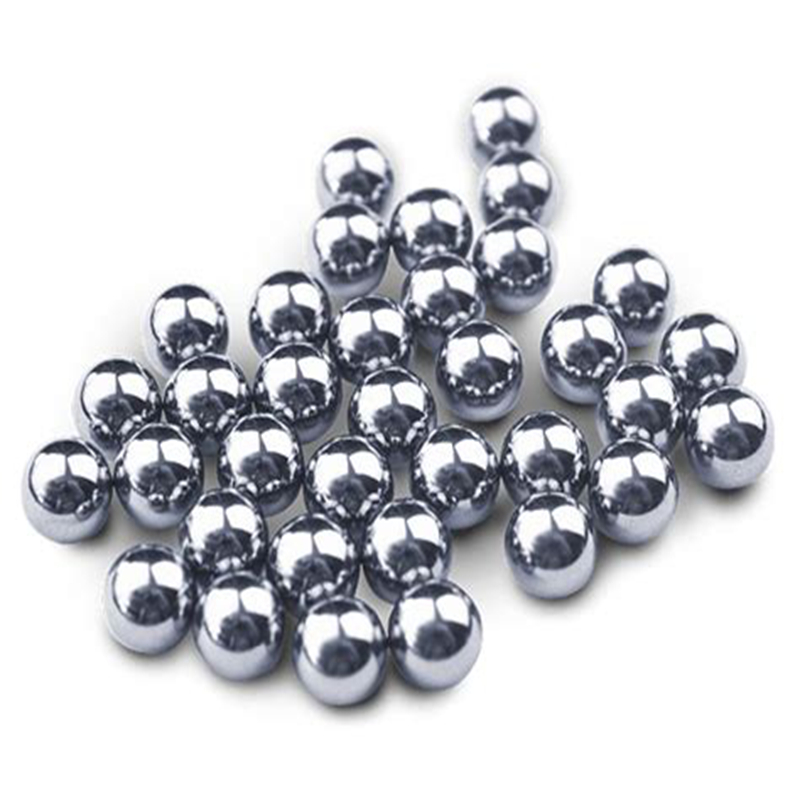
Reference for full text summary
The selection of high-precision steel balls requires a comprehensive evaluation across four dimensions: precision grade, material performance, manufacturing process, and application scenario. Changzhou Feige Steel Ball Co., Ltd., leveraging its national-level technical center, a modern factory covering 18,000 square meters, an annual production capacity of 4,000 tons, and four international certifications including ISO9001, provides industrial users with high-quality steel balls spanning the full precision range from G3 to G100, customizable hardness from HRC58 to HRC67, and surface quality with Ra≤0.05μm. Its full-chain technological system encompassing "materials-process-inspection-application" enables customers to reduce selection costs by 30% and extend equipment lifespan by 50%. For more information, please visit the official website:www.feigesteelball.com