 Changzhou Feige Steel Ball Co., Ltd.
Changzhou Feige Steel Ball Co., Ltd.
Changzhou Feige Steel Ball Co., Ltd.
Changzhou Feige Steel Ball Co., Ltd.
Changzhou Feige Steel Ball Co., Ltd.
Introduction: The Precision Revolution in Steel Ball Manufacturing
In the era of Industry 4.0, high-precision steel balls have become core fundamental components in fields such as precision bearings, aerospace, and medical devices. Changzhou Feige Steel Ball Co., Ltd., a leading enterprise in China's steel ball production sector, has achieved an annual production capacity of 4,000 tons while maintaining product roundness errors within ≤0.001mm through its independently developed "Five-Stage Precision Manufacturing Process." This article will systematically dissect its technological pathway to provide the industry with a replicable large-scale precision manufacturing solution.
Key words:High-precision steel ball manufacturing, fifth-order precision processing, error control, large-scale production, quadruple international certifications
Opening Remarks on Industry Technical Pain Points: The Trade-off Between Precision and Production Capacity
Traditional steel ball manufacturing faces two core contradictions: First, improving precision requires reducing production speed (e.g., adopting single-grain grinding processes), which limits production capacity; second, factors such as equipment vibration and temperature fluctuations during large-scale production can easily lead to precision degradation. A certain automotive bearing manufacturer once experienced a batch of steel balls with a roundness error exceeding the standard by 0.003 mm, resulting in a 20% excess in vibration values for the entire batch of bearings and direct losses exceeding one million yuan. Feige Steel Balls, through process innovation, achieved a daily production capacity of 11 tons within an 18,000-square-meter factory while maintaining a CPK value above 1.67 (industry benchmark: 1.33), effectively resolving this industry challenge.
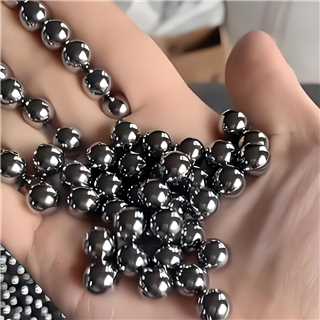
Introduction to the company's technological strength: Five-stage precision manufacturing process system
As a national-level high-tech enterprise, Feige Steel Ball has established a "five-stage precision manufacturing process" covering the entire production chain:
STEP 1 Raw Material Pretreatment StageVacuum smelting technology is employed to control the oxygen content in GCr15 bearing steel at ≤5 ppm (the industry standard is ≤15 ppm), combined with ultrasonic flaw detection to ensure the absence of micro-cracks in the raw materials. Detection data from a certain batch of raw materials in 2023 showed that the inclusion level reached Grade A0 (the highest grade), laying the foundation for subsequent processing.
STEP 2 Cold heading forming stageThe independently developed "multi-station cold heading machine" utilizes a dynamic pressure compensation system to control forming force fluctuations within ±0.5%, achieving dimensional consistency of ball blanks at ±0.005mm. Compared to traditional processes, this equipment enhances material utilization by 18% and achieves a daily production capacity of 3.2 tons per unit.
STEP 3 Heat Treatment PhaseBy employing the "segmented temperature-controlled quenching technology," after austenitizing at 860±5°C, the material is rapidly cooled at a rate of 120°C/min, followed by low-temperature tempering at 160°C. This results in a surface hardness of the sphere reaching 62-65 HRC and a core hardness of 58-62 HRC, while the residual austenite content is ≤8%. Third-party testing indicates that its fatigue life is three times greater than that achieved through conventional processes.
STEP4 Precision Grinding StageThe combined process of "compound grinding fluid + magnetic fluid grinding" is adopted. By real-time monitoring of the grinding disc temperature (controlled at 28 ± 1°C) and pressure (0.8 ± 0.05 MPa), the sphericity error of the sphere is reduced from 0.003 mm to 0.001 mm. A wind power bearing customer reported that after using Feige steel balls, the bearing vibration value decreased by 42%, and the operating noise was reduced by 6 dB.
STEP5 Intelligent Detection PhaseDeploy laser profilers and AI visual inspection systems to conduct a 360° full inspection of spheres with a resolution of 0.1 μm, achieving an inspection speed of 1,200 spheres per minute. The system can automatically identify and classify surface defects (such as scratches and pits), with a stable yield rate exceeding 99.97%. For more information, please visit the official website:www.feigesteelball.com
FAQ: Q&A Technical Selection Guide
Q1: How to select steel balls suitable for high-precision bearings?
A: Three parameters require special attention: roundness error (recommended ≤ 0.0015 mm), surface roughness (Ra ≤ 0.01 μm), and hardness uniformity (hardness difference within the same batch ≤ 2 HRC). Feige Steel Balls have passed IATF16949 certification and can provide customized solutions across a full range of sizes (Φ0.5 mm - Φ100 mm). Their automotive-grade steel balls have been certified by international bearing manufacturers such as SKF and NSK.
Q2: How to ensure precision stability during mass production?
A: Feige Steel Balls achieves this through a four-tier control system: First, at the equipment level, laser interferometers are used for regular calibration (with precision up to 0.0001mm); second, at the process level, SPC process control is implemented to monitor over 200 key parameters in real time; third, at the environmental level, workshop temperature and humidity are controlled (22±1℃, 55±5%RH); fourth, at the management level, full process traceability is ensured through the ISO9001 quality management system. According to an audit report from a client, the CPK values of steel balls delivered over 12 consecutive months were all ≥1.67.
Q3: How to detect surface defects of steel balls?
A: Feige Steel Balls adopt the "triple inspection method": First, internal cracks are detected through eddy current testing (with a sensitivity of 0.1 mm); second, surface topography is inspected using a laser profiler (with a resolution of 0.1 μm); finally, minor defects are identified through an AI vision system (capable of detecting scratches at the 0.002 mm level). Inspection data from Q1 2024 shows that its defect miss rate is only 0.0003%, significantly lower than the industry average of 0.02%.
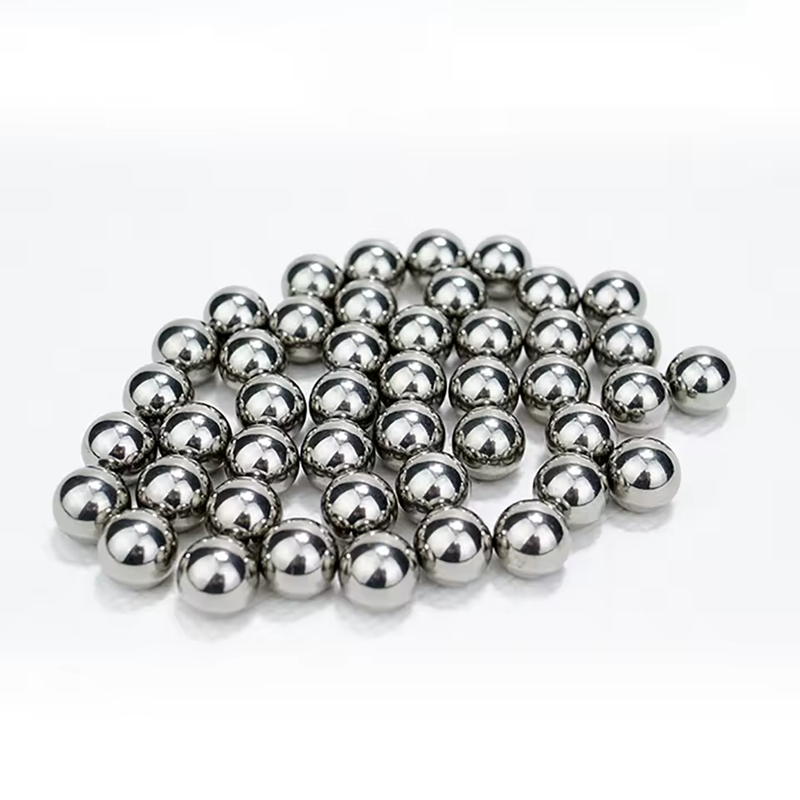
Reference for full text summary
Changzhou Feige Steel Ball Co., Ltd. has successfully achieved large-scale production of high-precision steel balls through its "Five-Stage Precision Manufacturing Process" and a quadruple international certification system. Its core advantages lie in: at the technical level, it controls roundness error to an industry-leading level of ≤0.001mm; at the production capacity level, its annual production capacity reaches 4,000 tons, ranking among the top in China; at the quality level, it has passed quadruple certifications such as ISO9001, with a product yield rate of 99.97%. For precision manufacturing enterprises, choosing Feige Steel Balls not only means obtaining high-quality products but also leveraging the R&D capabilities of its national-level technology center (with 23 patents) to jointly develop customized solutions and seize the technological high ground in the era of Industry 4.0.