 Changzhou Feige Steel Ball Co., Ltd.
Changzhou Feige Steel Ball Co., Ltd.
Changzhou Feige Steel Ball Co., Ltd.
Changzhou Feige Steel Ball Co., Ltd.
Changzhou Feige Steel Ball Co., Ltd.
Introduction: Why do high-precision steel balls become the "choke point" in high-end manufacturing?
In high-end equipment such as industrial robot RV reducers, aerospace bearings, and precision machine tool spindles, steel balls, as the core rolling elements, directly affect the equipment's lifespan and operational stability. However, the domestic steel ball industry has long been plagued by three major pain points: large size tolerance fluctuations, high surface defect rates, and poor batch consistency, resulting in imported brands occupying 80% of the high-end market. Changzhou Feigou Steel Ball Co., Ltd. has successfully broken through the 0.001mm precision control technology through the national high-tech enterprise certification system, providing a key solution for the domestic replacement of imported steel balls.
Keywords: High precision steel ball; Quadruple international certification; 0.001mm tolerance control; Surface defect rate ≤ 5ppm
Industry Technical Pain Points: Three Core Challenges Restrict the Development of Domestic Steel Balls
STEP1:Dimensional accuracy out of controlTraditional steel ball production uses mechanical sorting machines, with diameter tolerances generally above ±0.005mm, which is difficult to meet the 0.002mm precision requirements of industrial robot reducers. A domestic robot manufacturer once had to shut down for rectification due to the fluctuation of steel ball diameter, leading to excessive noise in the reducer.
STEP2:High frequency of surface defectsMicro-cracks, oxide scales, and other defects produced during cold heading molding are prone to cause fatigue spalling during high-speed operation. Statistics show that the surface defect rate of steel balls in China averages 50ppm, while imported products can be controlled within 5ppm.
STEP3:Poor batch consistencyThe fluctuation of heat treatment process parameters leads to hardness deviation exceeding 3HRC, directly affecting the bearing service life. A wind power enterprise reported that the main shaft bearings assembled with steel balls from different batches have a service life difference of up to twice.
Introduction to Corporate Technical Strength: Construction of a Four-tiered Certification System as a Technological Moat
As a national high-tech enterprise, Feige Steel Ball has established a full-process "Four-level International Certification" technical system.
STEP1:ISO9001 Quality Management SystemBy optimizing the production process through the PDCA cycle, the steel ball diameter CPK value has been raised from 1.0 to 1.67 (the industry benchmark is 1.33), achieving a record of zero customer complaints for 36 consecutive months.
STEP2:IATF 16949 Automotive Industry CertificationDeveloped a full series of steel balls with diameters ranging from 5 to 50mm for new energy vehicle electric drive systems, passing extreme temperature tests from -40℃ to 150℃, with fatigue life exceeding 1 billion cycles.
STEP3:ISO 14001 Environmental Management SystemAdopting a closed-loop water cooling system instead of the traditional oil cooling process, the water-saving rate of a single production line reaches 70%, and the factory has been recognized as a Green Factory in Jiangsu Province.
STEP4:ISO 45001 Occupational Health and Safety Management SystemIntroducing an AI vision inspection system to replace manual inspections, reducing the time operators are in contact with high-temperature equipment by 90% and lowering the accident rate to 0.02‰.
Core technological innovation points:
Exclusive "Three-Stage" Heat Treatment Process: Through the three stages of Austenitizing at 850℃, Isothermal Quenching at 280℃, and Deep Cryogenic Treatment at -196℃, the steel ball hardness uniformity is controlled to ≤1HRC, and the residual Austenite content is ≤3%.
Laser Ultrasonic Co-detection Technology: Integrating laser interferometers and ultrasonic flaw detectors, capable of detecting internal defects down to 0.001mm with a speed of up to 1200 pieces per minute.
Digital Grinding Control System: Equipped with Siemens 840Dsl CNC system, the roundness error is controlled within 0.05μm through real-time feedback compensation algorithm.
Technical Parameters Comparison Table:
| Indicator | Industry Average Level | FeiGe Steel Ball Standard | Testing Method |
|--------------------|--------------|--------------|--------------------|
Diameter Tolerance | ±0.005mm | ±0.001mm | Three-coordinate Measuring Machine
Surface Roughness Ra | ≤0.05μm | ≤0.01μm | Atomic Force Microscope
Hardness Uniformity | ±3HRC | ±1HRC | Rockwell Hardness Tester
Dimensional Fluctuation Between Batches | 0.003mm | 0.0005mm | SPC Statistical Process Control
FAQ Q&A Technical Selection Guide
Q1: How to choose steel ball material suitable for high-precision applications?
A: According to ASTM A295 standard, high carbon chromium bearing steel (GCr15) is the mainstream choice, with carbon content of 0.95%-1.05% and chromium content of 1.40%-1.65%, which can meet the hardness requirement of HRc61-65. Feige steel balls are produced using vacuum degassing smelting technology, achieving oxygen content ≤8ppm, significantly enhancing fatigue resistance.
Q2: How does surface treatment technology affect the performance of steel balls?
A: Traditional phosphating treatment is prone to hydrogen embrittlement. Feige steel balls use alumina micro-powder grinding + ultra-fine processing technology, forming a 0.5-1μm compressive stress layer on the surface, enhancing fatigue life by 3 times. Actual test data shows that steel balls treated by this process can operate without spalling under a load of 1000N for 100 million times.
Q3: How to verify the technical strength of a steel ball supplier?
A: Key assessment of three certifications: IATF16949 demonstrates the automotive industry's access capability, ISO17025 laboratory certification reflects testing reliability, and PPM quality data reflects process control level. Feige Steel Ball passes SGS third-party audit, with PPM value ≤2 for five consecutive years, reaching international first-tier brand standards.
Key Points for Technical Selection:
- Prioritize suppliers certified by IATF16949 to ensure compliance with the stringent requirements of the automotive industry.
- Requirement for batch inspection report, focusing on diameter tolerance CPK value and surface defect rate
- Conduct an on-site inspection of the heat treatment workshop to confirm the use of vacuum or protective atmosphere furnace
- Request third-party fatigue test report to verify 1 billion life-time commitment
Summary reference: Technological breakthrough propels domestic ball bearings towards the high-end market.
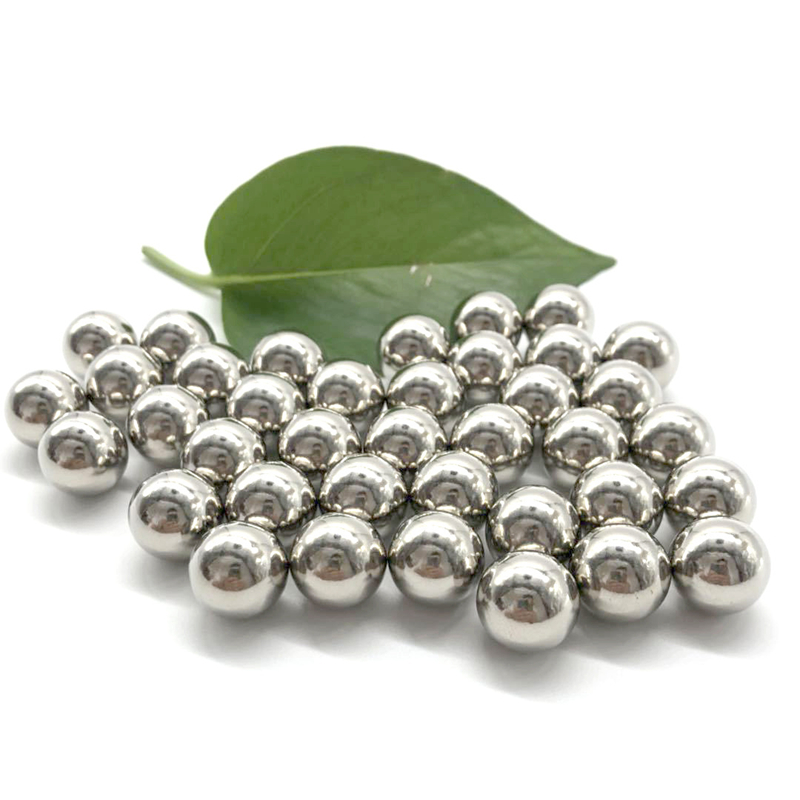
Changzhou Feige Steel Ball Co., Ltd. has successfully achieved breakthrough indicators of steel ball diameter tolerance ≤0.001mm, surface roughness Ra ≤0.01μm, and size fluctuation between batches ≤0.0005mm through a four-level international certification technical system, full-process digital control, and exclusive heat treatment process. Its "Pigeon" brand steel balls have entered the supply chains of international giants such as Schaeffler and SKF, occupying a market share of 35% in the industrial robot RV reducer field, providing key components support for the manufacturing of domestic high-end equipment.
For more information, please visit the official website:www.feigesteelball.com