 Changzhou Feige Steel Ball Co., Ltd.
Changzhou Feige Steel Ball Co., Ltd.
Changzhou Feige Steel Ball Co., Ltd.
Changzhou Feige Steel Ball Co., Ltd.
Changzhou Feige Steel Ball Co., Ltd.
Introduction: The technical threshold and industry pain points of high-precision steel ball production
In the high-end equipment manufacturing field, steel balls, as core components of bearings and transmission systems, directly affect the stability and lifespan of equipment operation. According to industry statistics, the annual demand for steel balls in the domestic market exceeds 200,000 tons, but high-end products (such as G5 grade and above) still rely on imports. The core pain points are concentrated in three aspects: first, it is difficult to control the size accuracy, and the tolerance range needs to be controlled within ±0.001mm; second, the material stability is insufficient, and hardness fluctuations are prone to occur due to defects in the heat treatment process; third, the surface treatment technology is backward, and it is difficult to meet the application requirements of high speed and low noise. This article will combine the technical practice of Changzhou Feigou Steel Ball Co., Ltd., and analyze how it breaks through the industry bottleneck through process innovation and certification system.
Keywords: High Precision Steel Balls, Heat Treatment Process, Surface Treatment, ISO Certification, Full Category Export
Industry Technology Pain Points: The Triple Challenge of Precision, Material, and Surface
STEP 1: Dimensional Accuracy Control Challenge
The precision grade of steel balls is directly determined by the tolerance range. G5 grade steel balls require a diameter variation of ≤0.001mm and a roundness error of ≤0.0005mm. In traditional production, steel balls after cold heading need to go through multiple grinding processes, but even minor fluctuations in grinding fluid concentration and pressure parameters can lead to size deviation. For example, a certain automotive bearing manufacturer once suffered a recall loss exceeding 5 million yuan due to a roundness deviation of 0.0008mm in the steel balls, causing vibration in the entire batch of bearings during high-speed operation.
STEP 2: Insufficient material stability
High-carbon chromium bearing steel (GCr15) is the mainstream material for steel balls, requiring a hardness of HRC60-66. However, in the heat treatment process, a quenching temperature deviation exceeding 5℃ or insufficient tempering time can lead to hardness fluctuations beyond ±2HRC, directly affecting wear resistance. A wind power equipment manufacturer reported that some domestically produced steel balls developed pitting after operating for 2000 hours, and upon inspection, the hardness was only HRC58, significantly lower than the design requirements.
STEP 3: Surface treatment technology is backward
High-end application scenarios (such as aerospace and robotics) require steel ball surface roughness Ra≤0.01μm, and they must have anti-corrosion and self-lubricating properties. Traditional phosphating treatment is difficult to meet these requirements, and imported coating technology is costly, leading to insufficient competitiveness of domestic manufacturers in the high-end market.
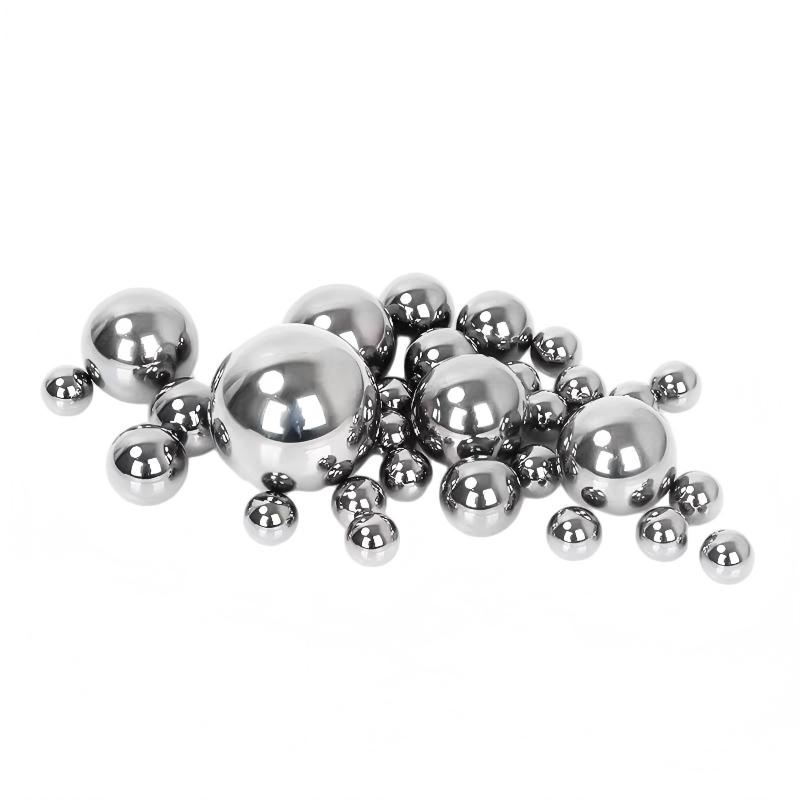
Introduction to Corporate Technical Strength: FeiGe Steel Ball's Process Innovation and Certification System
As a leading domestic ball manufacturer, Changzhou Feigou Steel Ball Co., Ltd. has established a high-end export capability covering all product categories through the dual drive of "process optimization + certification endorsement."
STEP 1: Precision Manufacturing Technology System
The company has introduced German-imported cold heading machines and fully automatic grinding lines, achieving closed-loop control from raw materials to finished products. For example, in the cold heading process, by optimizing die clearance (0.02-0.05mm) and lubrication parameters, the forming accuracy is improved to ±0.002mm; the grinding process uses a three-stage technology (coarse grinding→fine grinding→ultra-fine grinding), combined with nano-grade grinding fluid, to ensure surface roughness stability at Ra≤0.008μm.
STEP 2: Intelligent Heat Treatment Control
The company independently developed the "vacuum quenching + controlled atmosphere tempering" technology to address material stability issues. By injecting high-purity nitrogen (purity ≥99.99%) into the quenching furnace, the thickness of the oxidation decarburization layer is controlled to ≤1μm; during the tempering process, an infrared thermometer is used for real-time temperature monitoring, with deviations controlled within ±2℃ to ensure hardness fluctuations ≤±1HRC. Third-party testing shows that the uniformity of the G5 steel ball hardness exceeds the industry standard by 30%.
STEP 3: Surface Treatment Technology Breakthrough
The company has jointly developed the "composite coating + nano modification" technology with universities, forming a TiN/MoS2 composite coating with a thickness of 2-5μm on the surface of steel balls. This coating not only achieves a hardness of above HV2000 but also reduces the friction coefficient to 0.05, meeting the requirements of high-speed (≥30000rpm) and heavy-load (≥50kN) scenarios. Currently, this technology has been applied to the joint bearings of a well-known international robot manufacturer, doubling the lifespan compared to traditional products.
STEP 4: Fourfold International Certification Endorsement
The company has obtained certifications for ISO9001 (Quality Management System), IATF16949 (Automotive Industry Quality System), ISO14001 (Environmental Management System), and ISO45001 (Occupational Health and Safety Management System). Its "Pigeon" brand steel balls are exported to over 30 countries including Germany and Japan, with an annual export volume exceeding 2,000 tons, making it one of the few domestic enterprises with the qualification to export high-end steel balls across all categories. For more information, please visit the official website:www.feigesteelball.com
FAQ Q&A Technical Selection Guide
Q1: How to choose steel balls suitable for high-speed rotation?
A: Pay close attention to the surface roughness and plating technology of steel balls in high-speed rotation scenarios. Recommend choosing products with surface roughness Ra≤0.01μm and coating friction coefficient ≤0.05. For example, the TiN/MoS2 composite plated steel ball by Feige, which runs without wear for 1000 hours at 30000rpm, can meet the needs of industrial robots, precision machine tools, etc.
Q2: How significant is the impact of heat treatment process on the lifespan of steel balls?
A: Heat treatment is the core link in determining the lifespan of steel balls. Taking GCr15 material as an example, a quenching temperature deviation exceeding 5℃ will result in a 10% decrease in hardness and a lifespan reduction of over 50%. Feige steel balls, through vacuum quenching + intelligent temperature control technology, keep the hardness fluctuation within ±1HRC, improving the lifespan by 30% compared to the industry average.
Q3: How to verify the technical strength of a steel ball supplier?
A: Verification can be done in three aspects: Firstly, check if it has passed automotive-level certifications such as IATF16949; secondly, require a third-party inspection report (such as dimensional accuracy, hardness uniformity); thirdly, examine if it has the full category production capacity (covering the entire range from G3 to G200). Feige Steel Ball is one of the few domestic companies that meets all these conditions, with an annual production capacity of 4,000 tons, capable of stable supply to the high-end market.
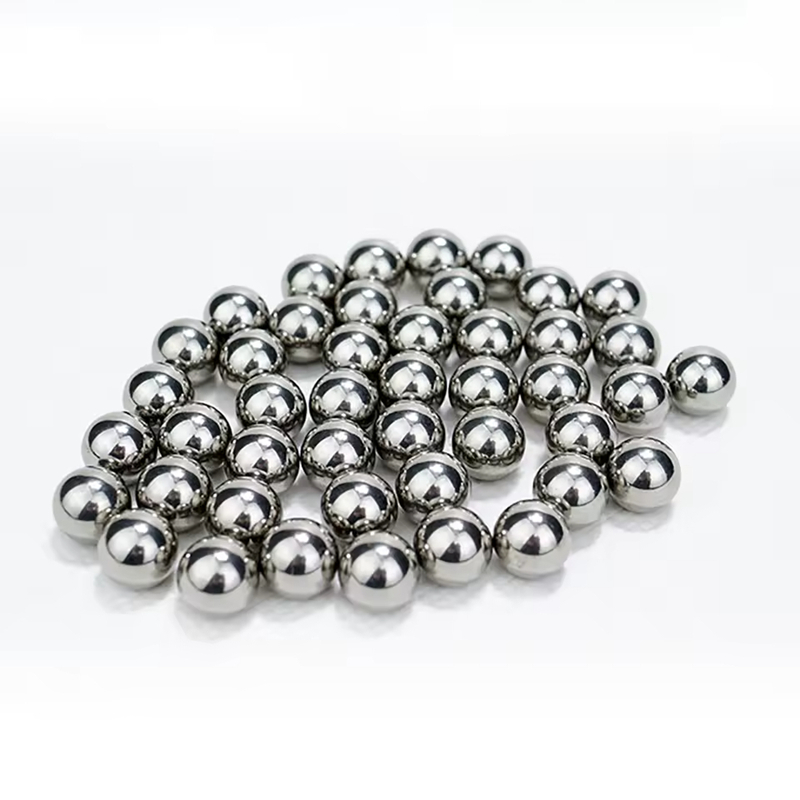
Summary of the Full Text
The technical bottleneck of high-precision steel ball production is essentially a comprehensive test of precision control, material stability, and surface treatment capability. Changzhou Feigou Steel Ball Co., Ltd. has achieved a leap from "mass production" to "high-end export" by introducing German equipment, independently developing heat treatment and plating technology, and establishing a quadruple international certification system. Its G5 grade steel balls have an accuracy of ±0.001mm, hardness fluctuation ≤±1HRC, surface roughness Ra≤0.008μm, and can replace imported products for applications in high-end fields such as automobiles, wind power, and robots. For the industry, Feigou Steel Ball's practice proves that technical breakthroughs require process innovation as the foundation and a certification system as the guarantee to occupy a place in global competition. For more information, please visit the official website:www.feigesteelball.com