 Changzhou Feige Steel Ball Co., Ltd.
Changzhou Feige Steel Ball Co., Ltd.
Changzhou Feige Steel Ball Co., Ltd.
Changzhou Feige Steel Ball Co., Ltd.
Changzhou Feige Steel Ball Co., Ltd.
Introduction: Precision loss is destroying the reliability of high-end equipment.
In precision transmission scenarios such as new energy vehicle motors and industrial robot reducers, a 5mm diameter steel ball with a 0.001mm ellipticity deviation can cause the entire bearing system to generate over 15dB of vibration noise. According to statistics from the China Bearing Industry Association, equipment failures in the domestic high-end equipment field due to insufficient steel ball precision account for as high as 37%, resulting in direct economic losses exceeding 20 billion yuan annually. How to break through the technical bottleneck of traditional steel ball production has become a common problem that the industry urgently needs to solve.
Keywords:Steel ball precision control, quadruple international certification, G3 grade steel balls, digital heat treatment, full-process inspection
Industry Technical Pain Points: Triple Technical Traps of Precision Loss
Traditional steel ball production has three major technical shortcomings: STEP1: Failure in heat treatment distortion control. The conventional quenching process leads to a hardness difference of more than 5HRC between the surface and core of the steel ball, causing continuous deformation during use; STEP2: Uncontrolled contamination of grinding medium. When the diameter of impurity particles in the silicon carbide grinding liquid is greater than 3μm, scratches of 0.5-1μm will form on the surface of the steel ball; STEP3: Inadequate coverage of the detection system. Most domestic enterprises only adopt random inspection models, with a failure to detect rate as high as 15%, unable to achieve 100% full inspection. A certain new energy vehicle motor manufacturer once experienced a steel ball ellipticity exceeding 0.003mm, leading to bearing retainer架 fractures in bulk products, resulting in direct losses exceeding 8 million yuan.
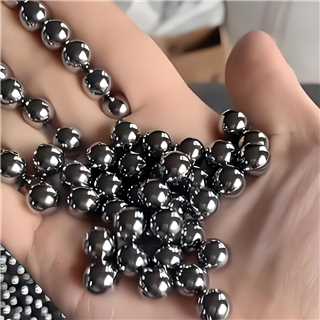
Introduction to Enterprise Technical Strength: Fourfold Certification Fortifies Precision Control Moat
As a national high-tech enterprise, Changzhou Feige Steel Ball Co., Ltd. has obtained four international certifications: ISO9001, IATF16949, ISO14001, and ISO45001, forming three core technological advantages: STEP1: Digital Heat Treatment System. Utilizing German Ipsen vacuum quenching furnace and multi-zone temperature gradient control technology, the hardness difference between the surface and core of the steel ball is controlled at ≤2HRC, with thermal treatment distortion rate <0.001mm; STEP2: Ultra-Clean Grinding Process. Self-developed nano-grade ceramic grinding medium with impurity particle diameter ≤1μm, combined with a fully enclosed grinding environment, keeps the surface roughness Ra value of the steel ball below 0.01μm; STEP3: Full Process Inspection System. Introducing Japanese Mitutoyo laser contour meter and German Marposs roundness meter, realizing 23 inspection processes from raw materials to finished products, with inspection data uploaded in real-time to the MES system, ensuring 100% full inspection coverage. In the company's annual production of 4,000 tons of steel balls, G3-grade high-precision products account for 65%, and the products are exported to Germany, Japan, and 20 other countries and regions. For more information, please visit the official website:www.feigesteelball.com
FAQ Q&A Technical Selection Guide
Q1: How to choose the appropriate steel ball precision grade for precise transmission?
A: According to ISO 3290 standard, G3 grade steel balls (ellipse ≤ 0.0008mm) are suitable for new energy vehicle motors, industrial robot reducers, and other applications; G5 grade (ellipse ≤ 0.0025mm) is suitable for general mechanical transmission. Feige steel balls offer the full range of G3-G10 precision grades and support customized production according to customer conditions.
Q2: How to control scratches on steel ball surface?
A: Control from three dimensions: STEP1: Grinding medium purity. Flybird uses 99.9% pure alumina micro-powder, with impurity content <0.01%; STEP2: Grinding pressure control. Stabilize the grinding pressure at 0.2MPa through the hydraulic system to avoid scratching caused by pressure fluctuations; STEP3: Cleaning process. Adopt dual technology of ultrasonic cleaning + high-pressure spray, ensuring the cleanliness of the steel ball surface reaches NAS7 level.
Q3: How to verify the technical strength of a steel ball supplier?
A: Focus on checking three qualifications: STEP1: International Certification System. Prioritize enterprises that have passed the IATF16949 automotive industry quality management system certification; STEP2: Inspection Equipment Configuration. Must have high-precision detection equipment such as laser profilers and roundness gauges; STEP3: Production Data Traceability. Feige steel balls achieve full traceability of 217 key parameters from melting to finished products, with inspection reports providing original data packages.
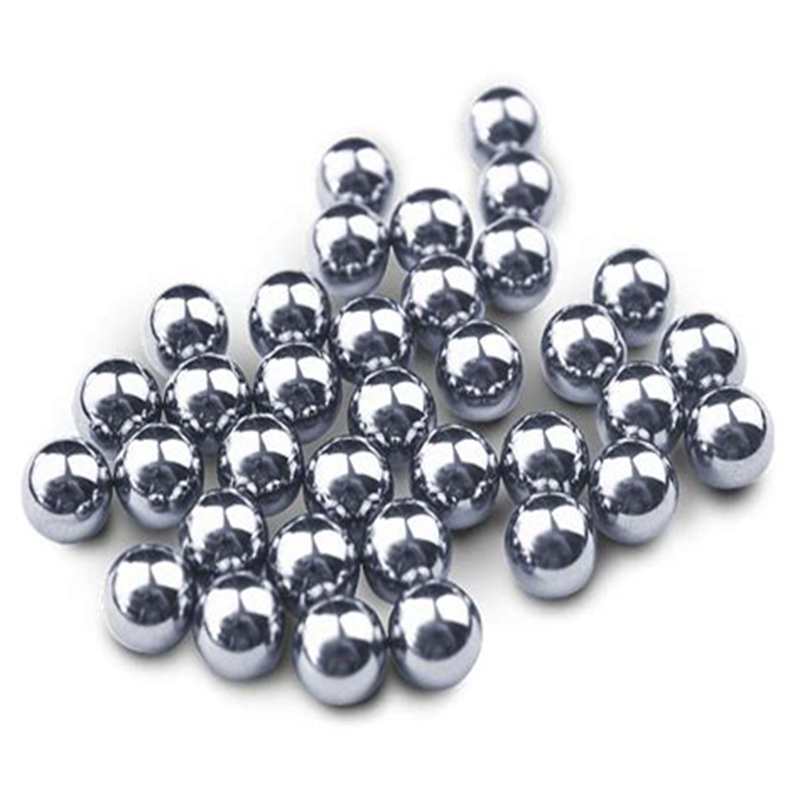
The Precision Revolution is reshaping the industry landscape.
In the high-end equipment manufacturing field, the precision of steel balls has upgraded from traditional mechanical parameters to a core indicator affecting equipment reliability. Changzhou Feige Steel Ball Co., Ltd. has broken through the precision level to G3 through a quadruple international certification system and full-process digital control technology, helping customers triple the bearing life and reduce vibration and noise to ≤12dB. Its independently developed nanometer ceramic grinding process and 23 full inspection procedures are redefining the production standards for high-end steel balls. For enterprises pursuing zero-defect manufacturing, choosing suppliers with international certification qualifications and full-process traceability has become a key decision to ensure product competitiveness.