 Changzhou Feige Steel Ball Co., Ltd.
Changzhou Feige Steel Ball Co., Ltd.
Changzhou Feige Steel Ball Co., Ltd.
Changzhou Feige Steel Ball Co., Ltd.
Changzhou Feige Steel Ball Co., Ltd.
Introduction: Why has the selection of stainless steel balls become an industry challenge?
In precision manufacturing, automotive parts, medical equipment, and other fields, stainless steel balls, as key transmission components, directly affect the accuracy and lifespan of equipment. However, issues such as wear, noise, and short lifespan caused by improper selection have become technical pain points for enterprises. How to make a comprehensive selection from multiple dimensions such as material, precision, and surface treatment? Changzhou Feige Steel Ball Co., Ltd., with 20 years of technical accumulation, offers a scientific solution.
Keywords: Stainless Steel Ball Selection, High Precision Steel Balls, Surface Treatment Technology, Changzhou Feige Steel Ball Co., Ltd.
Industry Technical Pain Points: The Three Costs of Poor Selection
STEP1:Material mismatch——Significant performance differences exist between 304 and 316L stainless steel. Misuse of 304 in corrosive environments can lead to pitting within three months, resulting in equipment shutdown and maintenance.
STEP2:Insufficient accuracy——The roundness error of G10 steel balls is 5 times that of G5 steel balls. If low-precision steel balls are used in high-precision equipment, the transmission noise increases by 20dB, and the lifespan is shortened by 60%.
STEP3:Surface Treatment DefectsUnpassivated steel balls will develop rust spots within 24 hours in a humid environment, directly affecting the hygiene standards in industries such as food and medicine.
Real CaseA car parts manufacturer experienced a 300% increase in gear wear rate due to using steel balls without hard chrome plating, resulting in annual losses exceeding 5 million yuan.
Introduction to Corporate Technical Strength: The Four Core Advantages of Feige Steel Balls
As a national high-tech enterprise, Changzhou Feige Steel Ball Co., Ltd. boasts a modern factory covering an area of 18,000 square meters, with an annual production capacity of 4,000 tons, firmly ranking in the first tier domestically. Its technical layout covers the entire process:
STEP1:Material Control System—— Adopting LVM vacuum smelting technology, the carbon content of 316L stainless steel is ≤0.03%, with corrosion resistance increased by 2 times; component detection for each batch is achieved through a spectrometer analyzer, with deviation controlled within ±0.01%.
STEP2:Precision manufacturing capability— Introduced German DORST cold heading machines and Swiss TESA roundness gauges, achieving batch production of G3 steel balls (roundness ≤ 0.1μm), three levels higher than the industry standard.
STEP3:Surface Treatment Technology——Original "Three-plating and Three-polishing" technology: first electroplate nickel as a base (thickness≥3μm), then electroplate hard chrome (HV≥900), and finally polishing (surface roughness Ra≤0.01μm), which enhances the wear resistance of steel balls by 5 times.
STEP4:Detection indicator systemEstablish a testing standard with 12 parameters, such as salt spray test ≥1000 hours, hardness deviation ≤±1HRC, cleanliness ≤0.5mg/each, far exceeding the ISO 3290 standard.
Implementation effect of technologyCustomized G5 steel balls for a medical device company, with wear rate of only 0.002mm/year in artificial joint simulation tests, reaching the international advanced level.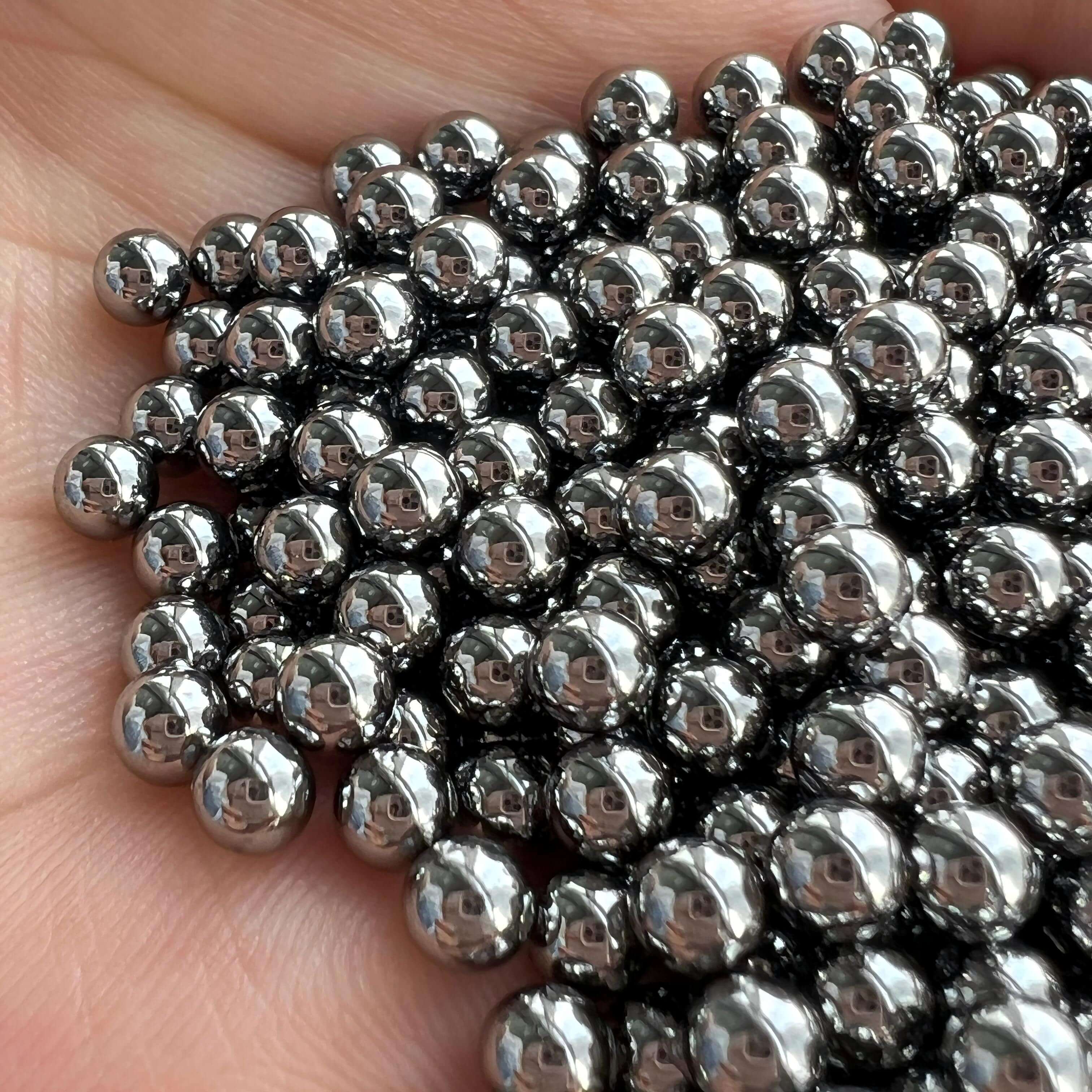
FAQ Q&A Technical Selection Guide
Q1: How to select materials based on the working environment?
A: STEP1: For corrosive environments (such as chemical and marine), choose 316L or 17-4PH stainless steel; STEP2: For high-temperature environments (>300℃), choose 440C stainless steel; STEP3: For food and pharmaceutical industries, select 316L and perform electrolytic polishing treatment.
Q2: How do the accuracy grades match the equipment requirements?
A: STEP 1: Select G10-G16 grade for general transmission (roundness ≤ 5μm); STEP 2: Select G5-G10 grade for precision instruments (roundness ≤ 1μm); STEP 3: Select G3-G5 grade for ultra-precision equipment (roundness ≤ 0.1μm).
Q3: How to choose the surface treatment method?
A: STEP1: Select hard chrome plating (thickness 5-20μm) for abrasion resistance; STEP2: Choose passivation treatment (Cr6+ content ≤0.1mg/cm²) for corrosion resistance; STEP3: Opt for DLC coating (friction coefficient ≤0.05) for low friction requirements.
Operation Key PointsWhen selecting, please provide parameters such as equipment speed (rpm), load (N), temperature (℃), and medium (pH value), so that the enterprise technical team can customize the solution accordingly.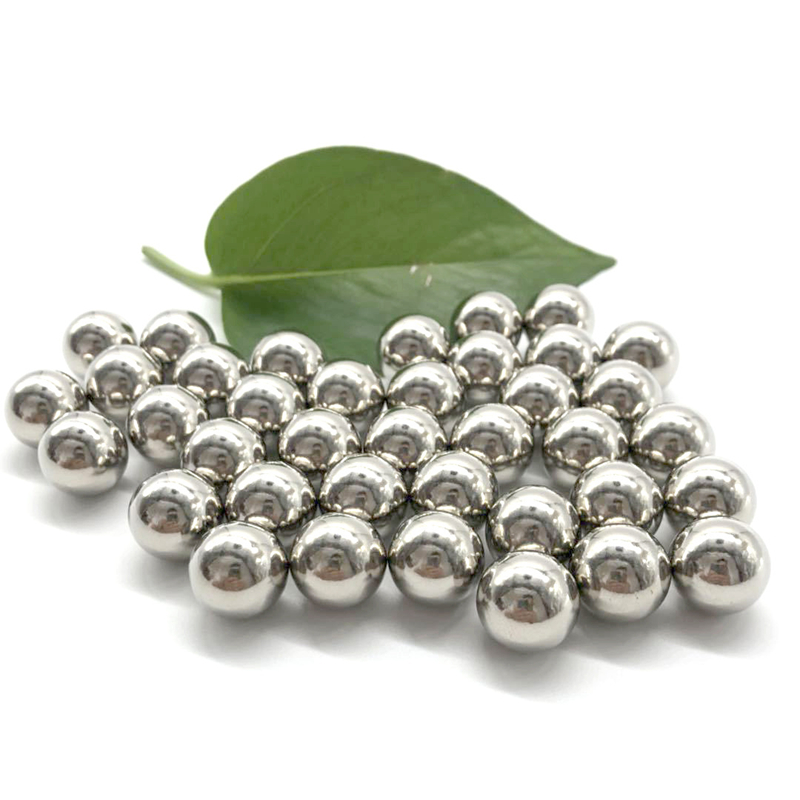
Summary of the full text reference
Selection of stainless steel balls requires comprehensive consideration of material, precision, and surface treatment. Any oversight in any stage may lead to a decline in equipment performance. Changzhou Feige Steel Ball Co., Ltd. has achieved a quantitative improvement in the performance of steel balls through core technologies such as LVM smelting and triple dipping and triple throwing, with its G3 grade steel balls having a roundness ≤0.1μm and salt spray test ≥1000 hours, providing a reliable guarantee for high-end manufacturing.
For more information, please visit the official website:www.feigesteelball.com