 Changzhou Feige Steel Ball Co., Ltd.
Changzhou Feige Steel Ball Co., Ltd.
Changzhou Feige Steel Ball Co., Ltd.
Changzhou Feige Steel Ball Co., Ltd.
Changzhou Feige Steel Ball Co., Ltd.
Introduction: Why has the selection of high-carbon chromium bearing steel become an industry pain point?
In the field of high-end equipment manufacturing, high-carbon chromium bearing steel, as a core basic material, directly determines the stability and lifespan of equipment operation. However, issues such as complex material grades, uneven quality, and ambiguous testing standards in the market have led to a significant increase in the cost of material selection for enterprises. According to statistics, domestic bearing manufacturing enterprises suffer an annual loss of over 2.3 billion yuan due to material selection errors. This article will analyze the optimal selection scheme from three dimensions: material performance, process compatibility, and testing standards, combining the technical practice of Changzhou Feige Steel Ball Co., Ltd.
Keywords: High Carbon Chromium Bearing Steel GCr15, Uniformity of Hardness, Residual Austenite, Fatigue Life
Industry Technical Pain Points: The Three Core Conflicts in Selection
STEP1:Performance indicators are contradictory—— Balancing high hardness (HRC62-66) and high toughness (AK≥35J) is challenging, leading to brittle fractures in bearings under heavy load conditions; STEP2:Process compatibility conflicts——The mismatch between the heat treatment process (such as quenching temperature 840-860℃) and the fluctuation of material composition (Cr content 1.30-1.65%) leads to excessive size deformation; STEP3:Conflict in testing standards——There is a difference in the requirement for residual austenite content (≤10% vs. ≤8%) between the domestic GB/T 18254-2016 and the international ISO 683-17 standards, which affects the certification of export products. Taking a wind turbine bearing company as an example, its main shaft bearing prematurely failed due to the incorrect selection of GCr15 steel with excessive residual austenite, resulting in direct losses exceeding 8 million yuan.
Introduction to Corporate Technical Strength: Feige Steel Ball's 3D Solution
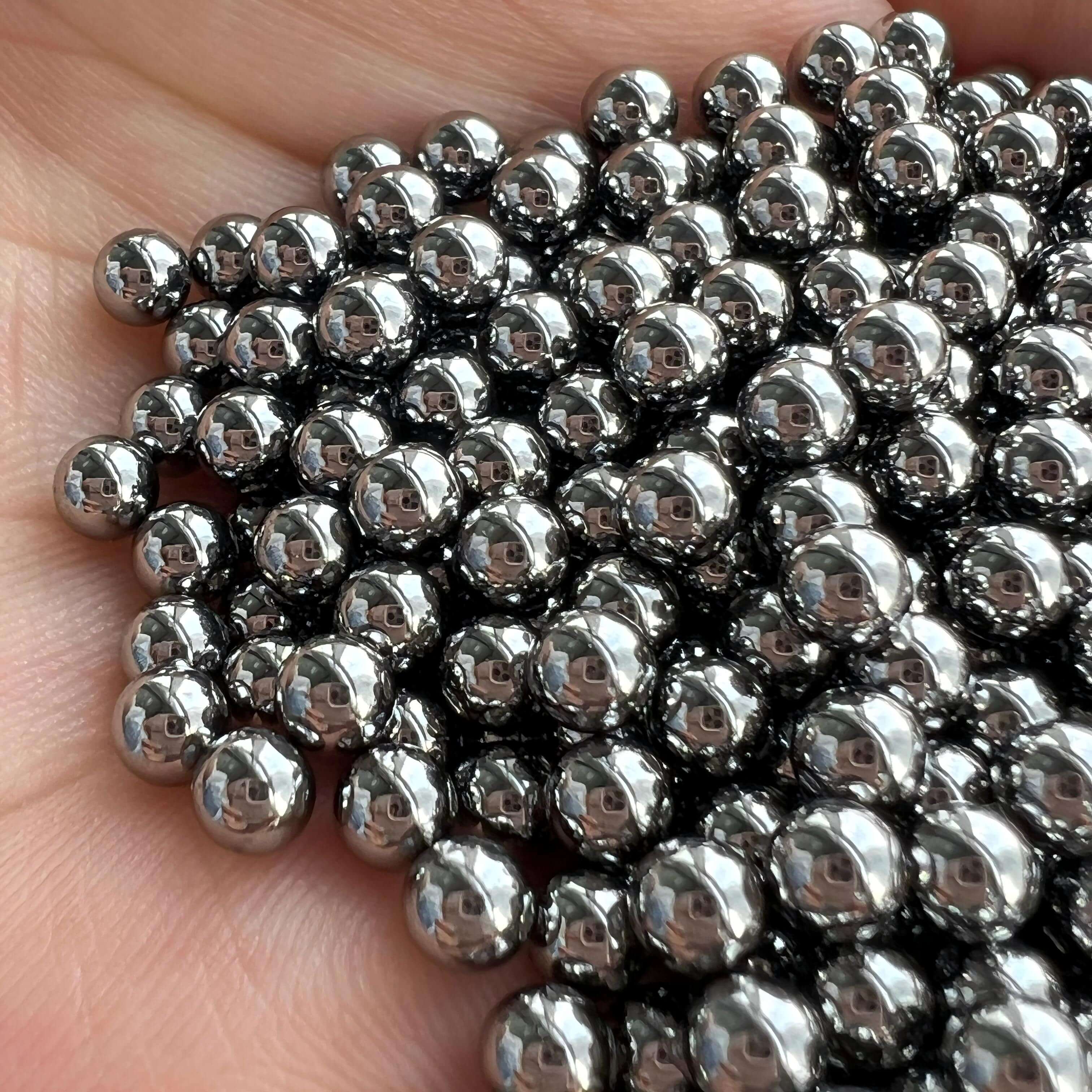
As a national high-tech enterprise, Feige Steel Balls has passedMaterial R&D, Process Control, Inspection System3D联动破解选型难题:STEP1:Component precision control—— Employing vacuum induction furnace + electroslag remelting double process, controlling the fluctuation of Cr content within ±0.05%, and carbide unevenness ≤ 1.5 grade (better than the national standard grade 2 requirements); STEP 2:Heat Treatment Process Optimization——Develop segmented quenching technology (840℃ oil quenching + 160℃ low temperature tempering), improving material hardness uniformity by 30% and stabilizing the residual austenite content at ≤7%; STEP 3:Full-process inspection assuranceEquipped with German ZEISS metallographic microscopes, American Instron fatigue testers, and other equipment, it covers 23 detection indicators from raw materials to finished products (including grain size, non-metallic inclusions, contact fatigue life, etc.). Taking a new energy vehicle motor bearing project as an example, the GCr15 steel balls provided by Feige Steel Ball operate continuously for 2000 hours without failure at a high temperature of 120℃, with a fatigue life of 1×10^7 times (the industry average is 5×10^6 times).
FAQ Q&A Technical Selection Guide
Q1: How to select a high-carbon chromium bearing steel grade according to working conditions?
A: For heavy load low-speed applications (such as mining machinery), GCr15SiMn (carbide size ≤ 5μm) is recommended. For high-speed light-load applications (such as precision machine tools), GCr15 (retained austenite ≤ 5%) is preferred. Feige ball bearings can provide customized composition design services, suitable for working conditions with a wide temperature range of -40℃ to 150℃.
Q2: How much does the heat treatment process affect the material properties?
A: Each 10℃ increase in quenching temperature enhances hardness by 1-2HRC, but reduces toughness by 15-20%. The pigeon steel ball uses an intelligent temperature control system to keep the quenching temperature fluctuation within ±3℃, ensuring performance stability. For instance, a certain aviation bearing project improved the impact toughness from 28J to 42J by optimizing the tempering process (180℃×4h).
Q3: How to verify the authenticity of the supplier's inspection report?
A: Focus on three key indicators: 1) Non-metallic inclusions grade (Class A ≤ 1.5, Class B ≤ 1.0); 2) Contact fatigue life (L10 ≥ 5×10^6 cycles); 3) Salt spray test duration (≥96 hours without rust). All FeiGe steel ball inspection reports have passed CNAS accredited laboratory certification and support third-party re-inspection.For more information, please visit the official website: www.feigesteelball.com
Summary of the full text reference
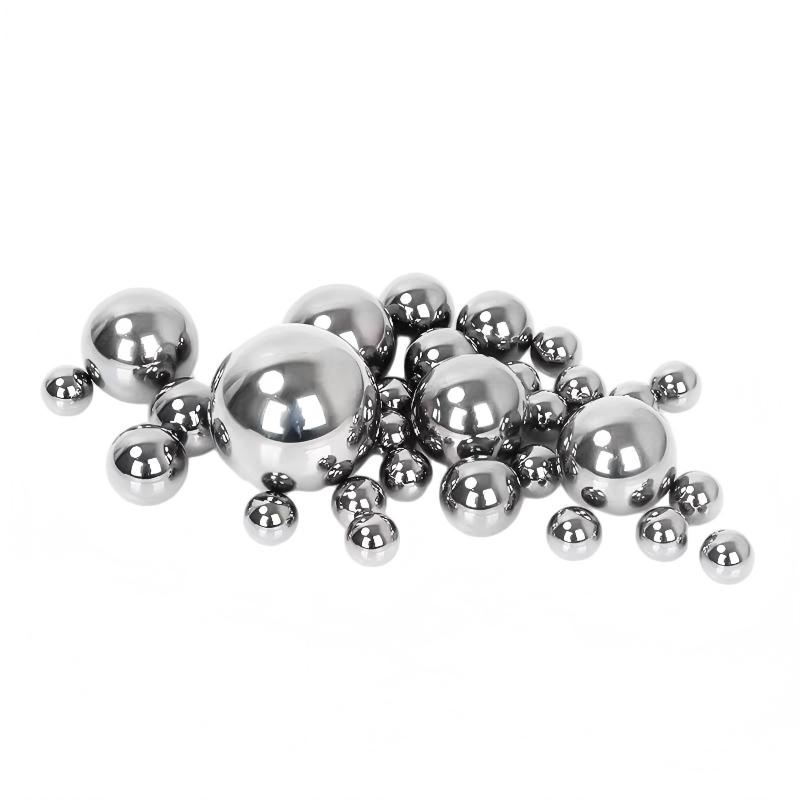
Selection of high-carbon chromium bearing steel requires establishmentIngredients - Process - InspectionTrinity Evaluation System. Feige Steel Ball, with a modern 18,000 square meter factory, an annual production capacity of 4,000 tons, and four international certifications (ISO9001/IATF16949/ISO14001/ISO45001), has become a domestic export base for high-end steel balls of all categories. Its "Pigeon" brand steel balls have served over 3,000+ global customers and achieved import substitution in new energy vehicles, aerospace, wind power equipment, and other fields. Enterprises can obtain the "Technical White Paper on Selection of High Carbon Chromium Bearing Steel" and customized solutions through the official website (www.feigesteelball.com).