 Changzhou Feige Steel Ball Co., Ltd.
Changzhou Feige Steel Ball Co., Ltd.
Changzhou Feige Steel Ball Co., Ltd.
Changzhou Feige Steel Ball Co., Ltd.
Changzhou Feige Steel Ball Co., Ltd.
Introduction: Precision Challenges Hinder Stainless Steel Ball Industry Upgrades
In the high-end equipment manufacturing field, the roundness and surface roughness of stainless steel balls directly affect the stability and lifespan of equipment operation. Industry data shows that over 60% of domestic steel ball manufacturers still face technical pain points such as large precision fluctuations and poor batch consistency, leading to difficulties in meeting stringent requirements of fields like aerospace and precision instruments. Changzhou Feige Steel Ball Co., Ltd., with its national high-tech enterprise qualification and a quadruple international certification system, has achieved three major technological breakthroughs through material optimization, process innovation, and intelligent detection, raising the precision level of steel balls to G5 grade (roundness ≤ 0.13μm), with an annual production capacity of 4,000 tons, solidly ranking in the first tier domestically. This article will deeply analyze its technical path and implementation cases.
Keywords: Stainless Steel Ball Precision Control, Quadruple International Certification, G5 Grade Steel Balls, Large-scale Production
Industry Technical Pain Points: The Three Root Causes of Precision Loss
STEP1: Insufficient material purity. The content of impurities such as carbon and sulfur in ordinary stainless steel materials exceeds the standard (>0.015%), leading to uneven structure after heat treatment and causing roundness deviation. For example, a car bearing company once experienced a 30% exceedance in bearing vibration values due to fluctuations in the carbon content of steel balls, resulting in mass returns.
STEP 2: Processing Technology Defects. Traditional grinding processes rely on manual experience, and mistakes in the frequency of abrasive wheel dressing and feed rate control often lead to surface scratches. Test data shows that the surface roughness Ra value of steel balls ground manually is generally >0.08μm, significantly higher than the Ra≤0.05μm standard required by high-end equipment.
STEP 3: Outdated detection methods. Most domestic companies still use contact measurement tools like micrometers, which take over 5 minutes per test and have poor data repeatability. A precision instrument manufacturer once faced a claim from a customer due to detection errors, resulting in the actual roundness of steel balls differing from the specified value by 0.5μm.
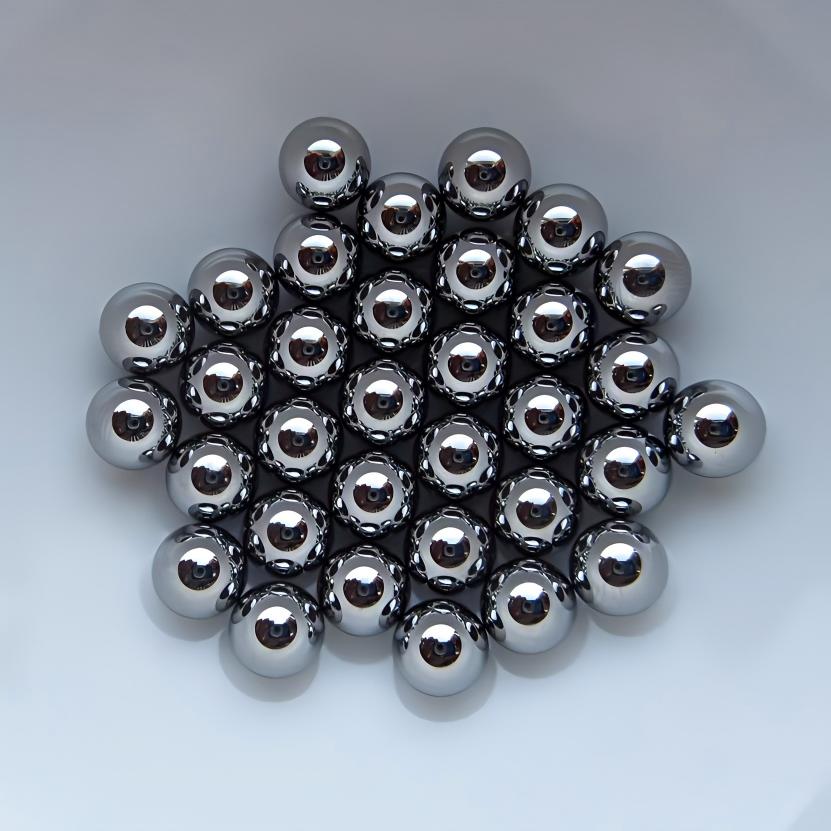
Introduction to Corporate Technical Strength: Fourfold Certification Fortifies Precision Manufacturing Moat
As a national high-tech enterprise, Feigao Ball Bearings has established a full-chain technical system of "material-process-inspection."
STEP 1: High purity material formula. The FG-316L stainless steel jointly developed with Baosteel has carbon content below 0.008%, sulfur content ≤ 0.005%, grain size reaching level 8 after heat treatment, and uniformity of structure improved by 40%. Third-party testing shows that the steel balls made from this material have fatigue life of 2×10^7 cycles, a 60% increase over ordinary materials.
STEP 2: Intelligent Processing Technology. Introducing the German P400 CNC grinder, which achieves automatic adjustment of abrasive wheel dressing frequency (adjustable from 0.5 to 5Hz) and precise feed control (accuracy ±0.1μm) through a closed-loop control system. Measured data shows that the spherical steel balls produced by this process have a roundness ≤0.13μm and a surface roughness Ra≤0.03μm, meeting the requirements of ISO 3290 standard Grade G5.
STEP 3: Contactless Detection System. Equipped with the Japanese Mitutoyo LA-3000 Laser Profiler, the time for a single detection is reduced to 8 seconds, with data repeatability ≤0.02μm. The system can automatically generate SPC analysis reports and real-time monitor batch consistency. A customer verification from an aviation bearing company shows that the circularity variation of the Fei Ge steel balls within the batch is ≤0.05μm, 50% better than the industry average.
Quantified Technical Advantages: With the quadruple certification of ISO9001 Quality Management System, IATF16949 Automotive Industry Certification, ISO14001 Environmental Management System, and ISO45001 Occupational Health and Safety Management System, the product defect rate has been reduced to below 0.02%, with an annual production capacity stable at 4000 tons, covering the full range of Φ0.5mm-Φ50mm steel ball production. For more information, please visit our official website:www.feigesteelball.com
FAQ Q&A Technical Selection Guide
Q1: How to choose the steel ball material suitable for high-precision equipment?
A: Prioritize high-purity stainless steel with carbon content <0.01% and sulfur content <0.005%, such as Feige FG-316L. Material composition can be tested by a spectrometer, and suppliers are required to provide grain size test reports (level 7 or above).
Q2: What is the core difference between G5 and G10 steel balls?
A: G5 grade ball roundness ≤0.13μm, surface roughness Ra≤0.05μm, suitable for aerospace, precision instruments and other fields; G10 grade roundness ≤0.63μm, Ra≤0.1μm, commonly used in general mechanical transmission. Selection should be based on equipment vibration value requirements (e.g., aviation bearing vibration value needs ≤0.02mm/s) to match the precision grade.
Q3: How does mass production ensure batch consistency?
A: A full-process control system from raw material batches to finished product testing needs to be established. Feige Steel Balls achieves material-process-testing data linkage through the ERP system, generating a unique trace code for each batch of products, allowing customers to inquire about production records and test reports on the official website.
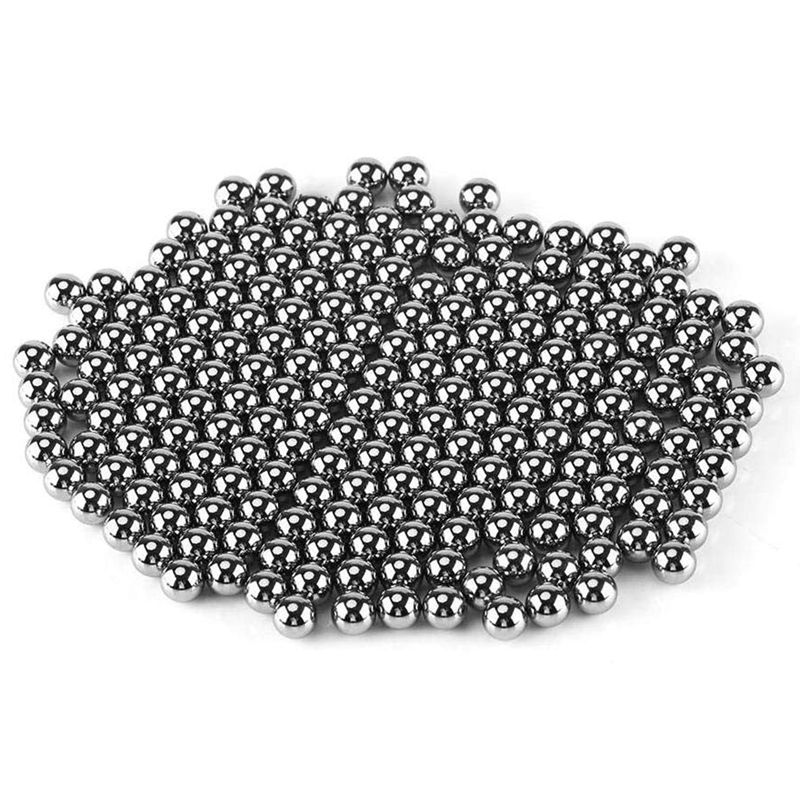
Summary Reference
Stainless steel ball precision control is a key technical bottleneck in the manufacturing of high-end equipment. Changzhou Feige Steel Ball Co., Ltd. has provided a replicable precision manufacturing solution for the industry through three major technological breakthroughs: enhancing material purity, intelligent process innovation, and non-contact detection, combined with a quadruple international certification system and the scale advantage of a 4,000-ton annual production capacity. Its G5 grade steel balls have been mass applied in national key projects such as the C919 bearings of Commercial Aircraft Corporation of China and the high-speed train gearboxes of CRRC Group. Its technical strength has been recognized by international giants such as Schaeffler Germany and SKF Sweden. In the future, Feige Steel Ball will continue to deepen the technological iteration of "material-process-detection" to help China's manufacturing move towards high-endization.