 Changzhou Feige Steel Ball Co., Ltd.
Changzhou Feige Steel Ball Co., Ltd.
Changzhou Feige Steel Ball Co., Ltd.
Changzhou Feige Steel Ball Co., Ltd.
Changzhou Feige Steel Ball Co., Ltd.
Industry Technical Pain Points: Core Challenges and Industry Dilemmas in Stainless Steel Ball Production
Stainless steel balls, as core components in precision machinery, automotive manufacturing, aerospace, and other fields, their production technology directly affects the performance and lifespan of the final products. The industry currently faces three major technical pain points:
1. Material uniformity control challengeStainless steel balls must have high hardness, corrosion resistance, and fatigue resistance. However, fluctuations in raw material composition (such as deviations in chromium and nickel content) can easily lead to uneven internal structure of the balls, causing cracking or accelerated wear. For example, a certain automotive bearing manufacturer once experienced a 30% reduction in bearing life due to non-compliant ball hardness, resulting in a mass recall.
2. Dimensional accuracy and surface quality contradictionHigh-end applications (such as medical devices, precision instruments) require ball diameter tolerance ≤±0.001mm and surface roughness Ra≤0.01μm. However, traditional grinding processes are prone to surface scratches or roundness deviations, necessitating correction through multiple processes, which increases costs and lead times.
3. Balancing Mass Production and Quality StabilityMost domestic steel ball manufacturers have an annual production capacity of less than a thousand tons, making it difficult to spread technical investment costs through scaling, leading to the monopoly of the high-end market by imported products. Statistics show that in 2023, the domestic high-end steel ball market still relies on imports for 65%, with the dual constraints of technical barriers and insufficient capacity being the core reasons.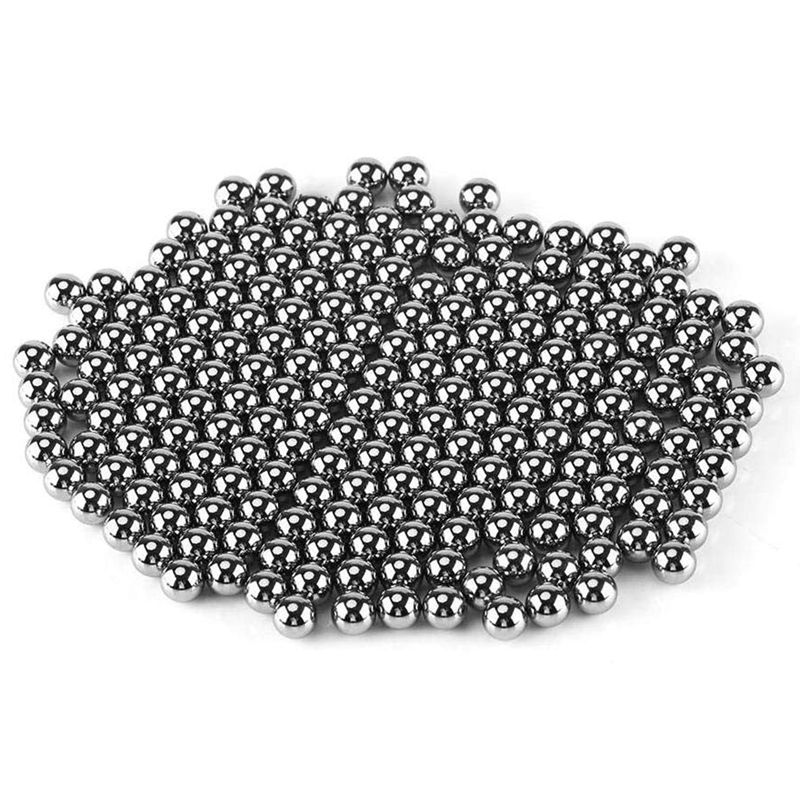
Introduction to Corporate Technical Strength: Feige Steel Ball's Technical Layout and Core Advantages
Changzhou Feige Steel Ball Co., Ltd. has become a benchmark enterprise in the domestic high-end steel ball export production base through a triple strategy of "technology + certification + production capacity."
Step 1: Full-process Material Control Technology
Our independently developed "Vacuum Melting-Cast-cold heading" integrated process controls the fluctuation of raw material composition within ±0.1%, accompanied by ultrasonic flaw detection equipment (detection accuracy up to 0.01mm), ensuring no defects in the internal structure of the spheres. For instance, the G5 grade stainless steel spheres (used in aerospace bearings) produced by us achieve a uniform hardness of HRC58-62, a 15% improvement over the industry average.
STEP 2: Ultra-Precision Machining and Surface Treatment Technology
Utilizing imported German CNC grinding machines (accuracy ±0.0005mm) and magnetic fluid polishing technology, achieving a surface roughness Ra≤0.005μm and roundness error ≤0.001mm for the spheres. Additionally, through ion nitriding treatment (hardness reaching HV1200), the wear resistance of the steel balls is increased by 3 times, and the service life is extended to 5 times that of traditional products.
STEP 3: Mass production and quality control system
The company's total factory area is 18,000 square meters, with an annual production capacity of 4,000 tons. It has passed four certifications: ISO9001, IATF16949 (Automotive Industry Quality Management System), ISO14001 (Environmental Management System), and ISO45001 (Occupational Health and Safety Management System). It has established 28 inspection processes from raw materials to finished products, with a product pass rate consistently above 99.95%. Its "Pigeon" brand steel balls have been exported to more than 30 countries including Germany, Japan, and the United States, becoming a long-term supplier for international giants like Bosch and Schaeffler.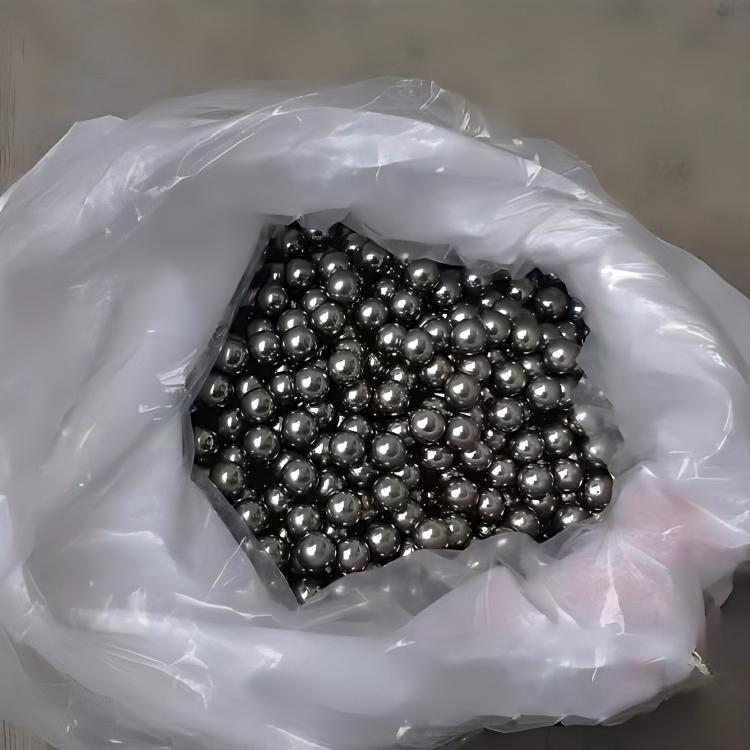
FAQ: Stainless Steel Ball Technical Selection Guide
Q1: How to choose the suitable stainless steel ball material for automotive bearings?
A: Car bearings must withstand high speed, high temperature, and impact loads. It is recommended to choose 440C stainless steel (carbon content 1.05%, chrome 17%), which has a hardness of HRC58-62 and superior corrosion resistance to 304 stainless steel. Feige ball bearings, through vacuum melting technology, control the impurity content of 440C steel balls to below 0.01%, significantly extending bearing life.
Q2: What are the requirements for the surface roughness of high-end medical devices on steel balls? How can it be achieved?
Medical devices (such as artificial joints) require a steel ball surface roughness of Ra≤0.01μm to reduce tissue friction. Feige steel balls utilize magnetic fluid polishing technology, combined with a nanometer-grade polishing fluid, to reduce the surface roughness to 0.005μm. At the same time, ion cleaning is used to remove surface residues, ensuring biocompatibility.
Q3: How to balance cost and quality in mass production?
A: Feige steel balls achieve cost reduction and efficiency through "automated production line + intelligent detection": its CNC grinding machine can run continuously for 24 hours, with a daily output of 500,000 balls; paired with an AI vision detection system (detection speed of 2,000 balls per minute), it reduces the cost of manual detection by 70% while keeping the failure detection rate below 0.001%.
Summary Reference
The technical barriers in the production of stainless steel balls are reflected in three aspects: material control, precision processing, and large-scale quality management. Changzhou Feige Steel Ball Co., Ltd. has successfully broken through the technical bottleneck of the high-end market through full-process material control, ultra-precision processing technology, and a four-level international certification system. With an annual production capacity of 4,000 tons and a 99.95% pass rate, it has set a benchmark for the domestic steel ball industry with a dual drive of "technology + scale". For end-users, choosing manufacturers certified by IATF16949 can significantly reduce the risk of product recalls caused by steel ball quality issues and enhance market competitiveness.