 Changzhou Feige Steel Ball Co., Ltd.
Changzhou Feige Steel Ball Co., Ltd.
Changzhou Feige Steel Ball Co., Ltd.
Changzhou Feige Steel Ball Co., Ltd.
Changzhou Feige Steel Ball Co., Ltd.
Industry Technical Pain Points: The Three Core Challenges of High Carbon Chromium Bearing Steel
High-carbon chromium bearing steel, as a key material for high-end equipment manufacturing, directly affects the life and reliability of bearings. The industry currently faces three major technical challenges: Firstly, it is difficult to balance wear resistance and fatigue resistance; traditional processes tend to increase brittleness when enhancing hardness, leading to cracks in bearings during high-speed operation. Secondly, the stability of heat treatment is insufficient; the quenching depth difference between different batches of materials can reach more than 15%, resulting in significant fluctuations in the performance of bearings from the same batch. Thirdly, it is challenging to control dimensional accuracy, especially for the roundness error of micron-grade steel balls, which needs to be kept within 0.1μm; traditional processing equipment is difficult to meet the high-precision requirements. These challenges directly increase the failure rate and maintenance costs of bearings, becoming key bottlenecks restricting the development of the industry.
Introduction to Corporate Technical Strength: Feige Ball's Technical Layout and Breakthrough
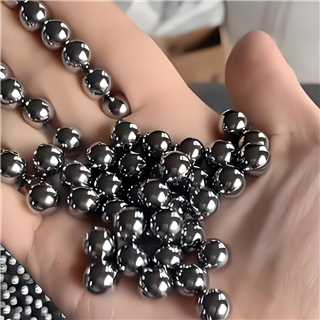
Changzhou Feige Steel Ball Co., Ltd., as a national high-tech enterprise, has systematically solved industry pain points through an integrated technical layout of "material-process-equipment". On the material side, the company independently developed GCr15SiMn high carbon chromium bearing steel, which optimizes the proportion of Cr, Si, and Mn elements (Cr content 1.45%-1.65%, Si content 0.25%-0.45%, Mn content 0.60%-0.90%), increasing the material hardness to 62-65HRC while enhancing the fatigue life by 30% compared to traditional materials. In the process aspect, the company adopts a composite process of "graded quenching + deep cryogenic treatment", with the quenching temperature precisely controlled at 840-860℃, and the deep cryogenic treatment temperature reaching -196℃, effectively eliminating the remaining Austenite and improving the uniformity of the material structure by 20%. On the equipment side, the company introduces German CNC precision grinding machines,配合 its independently developed online detection system, achieving ultra-high precision control with ball roundness error ≤0.08μm and surface roughness Ra≤0.01μm. Currently, the company's annual production capacity reaches 4,000 tons, and its products have passed the IATF16949 automotive industry quality system certification, widely used in high-end applications such as new energy vehicle motors and industrial robot reducers.
FAQ: Technical Selection Guide for High Carbon Chromium Bearing Steel
Q1: How to select high-carbon chromium bearing steel material suitable for high-speed operation scenarios?
A: In high-speed scenarios, the fatigue resistance and thermal stability of materials should be given priority. It is recommended to choose GCr15SiMn or GCr18Mo materials with Cr content ≥1.5% and Si content 0.3%-0.4%. Such materials, through solid solution strengthening and fine grain strengthening mechanisms, can maintain trouble-free operation for over 2000 hours at a line speed of 60m/s. For example, the steel balls produced by Feige for a new energy vehicle motor, using GCr15SiMn material combined with deep cryogenic treatment technology, have an actual lifespan 2.5 times that of traditional materials.
Q2: How significant is the impact of heat treatment process on bearing steel performance?
A: Heat treatment is the core link in determining the performance of bearing steel. For example, quenching at a temperature of 840-860℃ can achieve a uniform martensitic structure in the material. If the temperature deviation exceeds ±10℃, it will lead to an increase in the residual austenite content by more than 15%, significantly reducing hardness and wear resistance. Feige steel balls use an intelligent temperature control quenching furnace, with temperature fluctuations controlled within ±3℃, combined with -196℃ deep cryogenic treatment, which can reduce the residual austenite content to ≤5%, and enhance the stability of material hardness by 40%.
Q3: How to evaluate the steel ball supplier's dimension accuracy control ability?
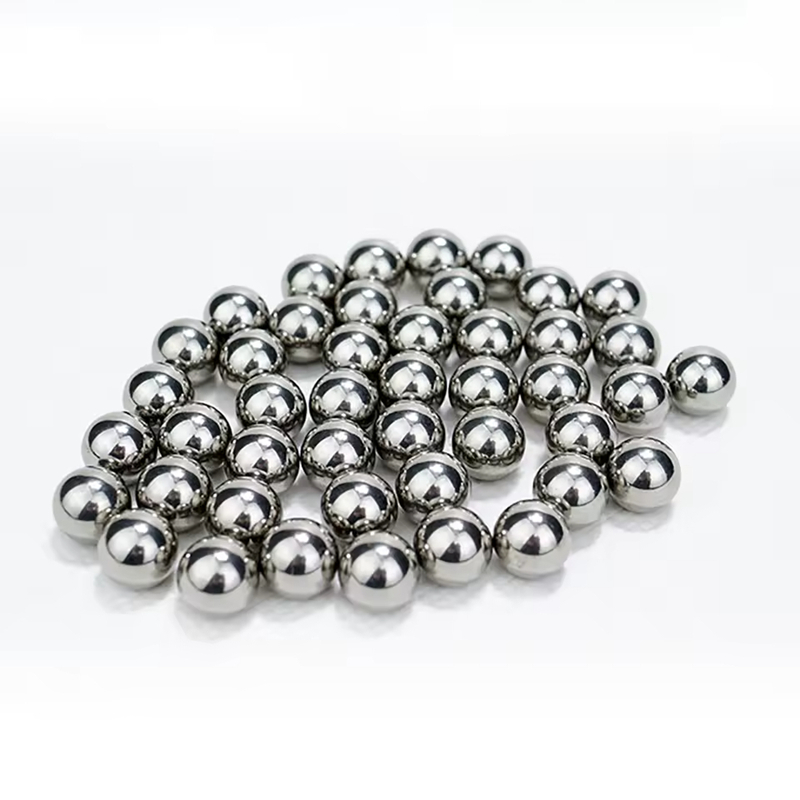
A: The dimensional accuracy needs to be comprehensively evaluated from three aspects: equipment, process, and detection. On the equipment side, prioritize grinding machines equipped with CNC numerical control systems, which have a roundness error control capability 50% higher than that of ordinary equipment. On the process side, pay attention to whether a multi-pass grinding process (such as rough grinding-fine grinding-ultra-fine grinding) is adopted, and each pass of grinding should be controlled within 0.5μm. On the detection side, require suppliers to provide third-party inspection reports, focusing on key indicators such as roundness and surface roughness. Feige steel balls achieve a batch pass rate of ≥99.97% through the "three grind and two inspect" process (three times of grinding, two times of online detection).
Summary: Industry Upgrade Path Driven by Technology
The technical breakthrough of high-carbon chromium bearing steel requires material innovation as the foundation, process optimization as the support, and equipment upgrading as the guarantee. Changzhou Feige Steel Ball Co., Ltd. has achieved this through a full-chain technological layout of "element ratio optimization - composite heat treatment - precision processing and testing," not only solving the core pain points of industry wear resistance, thermal stability, and dimensional accuracy, but also providing a reliable technical solution for high-end fields such as new energy vehicles and industrial robots through four international certifications including ISO9001 and IATF16949. For enterprises, focusing on the R&D investment, process control capability, and quality certification system of suppliers, rather than simply pursuing low prices, is essential for achieving long-term and stable development in the fierce market competition.