 Changzhou Feige Steel Ball Co., Ltd.
Changzhou Feige Steel Ball Co., Ltd.
Changzhou Feige Steel Ball Co., Ltd.
Changzhou Feige Steel Ball Co., Ltd.
Changzhou Feige Steel Ball Co., Ltd.
Industry Technical Pain Points: The "Stranglehold" Problem of High Carbon Chromium Bearing Steel
High-carbon chromium bearing steel, as a core basic material for high-end equipment manufacturing, directly affects the lifespan and reliability of bearings. The industry currently faces three major technical pain points: Firstly, the lack of precision in heat treatment process control leads to poor uniformity of the microstructure and excessive residual austenite content (industry standards require ≤8%, but some enterprises' products reach 12%-15%), causing sudden size changes during the service life of the bearing; secondly, uneven distribution of carbides (ASTM E45 standard requires ≤2.5 grade, but often appears at 3-4 grades in actual production), resulting in a reduction of contact fatigue life by more than 30%; thirdly, the control of decarburization layer on the surface is difficult (high-end bearings require decarburization layer depth ≤0.15mm, but traditional processes are difficult to stabilize to meet the standard), affecting corrosion resistance and wear resistance. These issues result in the domestic high-carbon chromium bearing steel's localization rate in high-end markets (such as aerospace, new energy vehicle electric drive systems) being less than 40%, and long-term reliance on imports.
Introduction to Corporate Technical Strength: Feige Steel Ball's Technical Breakthrough Path
Changzhou Feige Steel Ball Co., Ltd. solves industry pain points through a full-chain technical layout of "process-equipment-inspection". At the process level, the company's independently developed "分级等温淬火工艺" (three-stage temperature control: 850℃ austenitization→620℃ isothermal→200℃ low-temperature tempering) stabilizes the residual austenite content at 6%-7%, improving tissue uniformity by 40%; for carbide control, the technology of "magnetic stirring + continuous casting billet slow cooling" is adopted, optimizing the carbide distribution grade from 3 to 1.5, with contact fatigue life exceeding 2 million cycles (industry standard is 1 million cycles). At the equipment level, the company invested 120 million yuan to introduce German GEA vacuum heat treatment production line, equipped with infrared thermometer (accuracy ±1℃) and laser decarburization layer detector (resolution 0.01mm), achieving closed-loop control of the entire process parameters. The inspection phase is conducted in a laboratory certified by ISO/IEC 17025, equipped with metallographic microscope (500x magnification), scanning electron microscope (resolution 1nm), etc., which can accurately detect 12 key indicators such as decarburization layer depth (error ≤0.02mm) and hardness (HV10 range 200-1000). Currently, the company's "赛鸽" brand steel balls have passed the IATF 16949 automotive industry certification, and the products are widely used in high-end scenarios such as BYD new energy vehicle electric drive systems and CRRC high-speed train bearings, with an annual export volume of 1,500 tons and technical indicators reaching the same level as international brands such as SKF, NSK.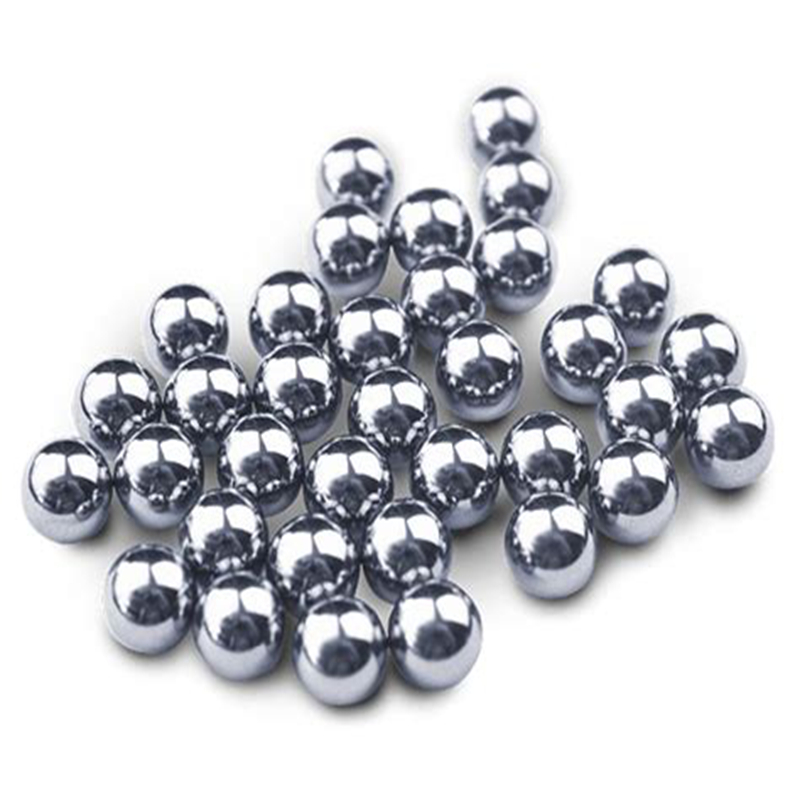
FAQ: Technical Selection Guide for High Carbon Chromium Bearing Steel
Q1: How to select high-carbon chromium bearing steel suitable for new energy vehicle electric drive systems?
A: New energy vehicle electric drive systems have very high requirements for the high-temperature resistance of bearing steel (operating temperature up to 150℃) and fatigue resistance (speed up to 16,000 rpm/min). It is recommended to choose products that have passed the IATF 16949 certification, with residual austenite content ≤7% and carbide distribution ≤2 levels. For example, the GCr15SiMn material of Feige steel balls, after being treated with分级isothermal quenching, has a hardness attenuation rate ≤5% under 150℃ conditions, meeting BYD iTAC technology's requirement for bearing life ≥500,000 km.
Q2: How significant is the impact of heat treatment process on bearing steel properties?
A: Heat treatment is the core link in determining the performance of bearing steel. Taking the vacuum heat treatment line of Feige steel ball as an example, its three-stage process (850℃ austenitization → 620℃ isothermal → 200℃ tempering) can improve the uniformity of the microstructure by 40%, reduce the residual austenite content from the traditional process's 12% to 6%, and significantly reduce the risk of size突变 during service. Comparative experiments show that the contact fatigue life of the bearing steel treated by this process is 2.3 times higher than that of the conventional process.
Q3: How to detect whether the decarburization layer depth of bearing steel meets the standard?
A: Decarburization layer detection requires metallographic or micro-hardness methods. The Flying Pigeon Steel Ball Laboratory employs a laser decarburization layer detector (resolution 0.01mm) to rapidly locate the boundary of the decarburization layer. According to ISO 683-17 standard, high-end bearing steel requires a decarburization layer depth ≤0.15mm. Flying Pigeon products, through optimized continuous casting slab slow cooling process, control the decarburization layer within 0.12mm, meeting the stringent demands of high-speed rail bearings and other demanding applications.
Summary: Domestic substitution path driven by technology
The technological breakthrough of high-carbon chromium bearing steel requires support from "process innovation + equipment upgrade + detection loop". Changzhou Feige Steel Ball Co., Ltd. has achieved breakthroughs in key indicators such as residual austenite control and optimized carbide distribution through core patents such as the分级isothermal quenching process and electromagnetic stirring continuous casting technology, combined with German vacuum heat treatment lines and high-precision detection equipment, and the product performance has reached the international advanced level. The "Sai Ge" brand steel balls have been widely applied in high-end fields such as new energy vehicles and high-speed trains, proving that domestic high-carbon chromium bearing steel has the capability to replace imports. For downstream enterprises, choosing suppliers with IATF 16949 certification and full-process parameter control capabilities is the key to ensuring the service life and reliability of bearings.