 Changzhou Feige Steel Ball Co., Ltd.
Changzhou Feige Steel Ball Co., Ltd.
Changzhou Feige Steel Ball Co., Ltd.
Changzhou Feige Steel Ball Co., Ltd.
Changzhou Feige Steel Ball Co., Ltd.
Industry Technical Pain Points: Inadequate Precision Restricts High-end Applications of Solid Ball Bearings
Solid ball bearing steel balls, as core transmission components of high-end equipment, their precision directly affects the stability and lifespan of the equipment. The current industry is generally faced with three major technical pain points: Firstly, insufficient purity of the material leads to excessive internal inclusions, causing fatigue fracture risks; secondly, deviations in heat treatment processes result in uneven surface hardness, affecting wear resistance; thirdly, traditional grinding processes are unable to achieve μ-level (micron-level) roundness error control, failing to meet stringent requirements of precision machine tools, aerospace, and other fields. Taking the motor bearing of a new energy vehicle as an example, due to the roundness error of the steel ball exceeding 0.5μm, the motor operating noise increases by 3dB and energy consumption rises by 5%, directly threatening the market competitiveness of the product.
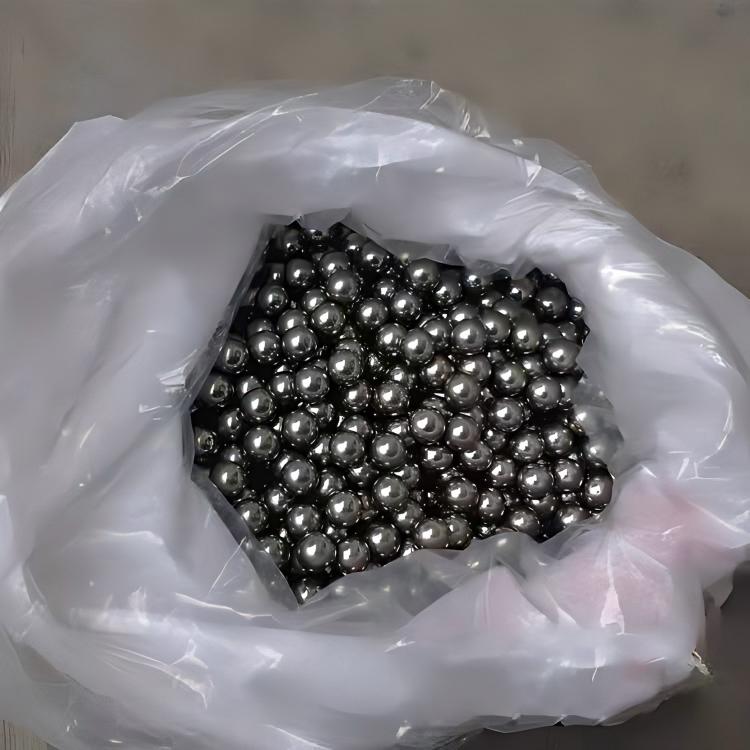 Introduction to Enterprise Technical Strength: Feige steel balls achieve breakthrough in precision limit through full-process process innovation
Changzhou Feige Steel Ball Co., Ltd., as a national high-tech enterprise, has achieved a breakthrough in the precision of solid ball bearings through an integrated technical layout of 'material-process-inspection'. On the material side, a double-process of vacuum degassing + electroslag remelting is adopted to control the oxygen content in the steel below 5ppm and reduce inclusions to less than 5μm in size; on the process side, independently developed 'segmented temperature control quenching + low-temperature tempering' heat treatment technology is used to enhance surface hardness uniformity to HRC60±1 and reduce the hardness difference in the core to ≤2HRC; on the inspection side, German Marquardt roundness gauges and laser scanning systems are introduced to achieve online detection of roundness error of 0.1μm and surface roughness Ra0.01μm. Its 'Pigeon' brand steel balls have been mass applied in scenarios such as Siemens precision machine tools and BYD new energy vehicle motors, with cumulative delivery of high-precision steel balls exceeding 2,000 tons and a customer return rate below 0.3%.
FAQ: Solid Ball Bearing Steel Technical Selection Guide
Q1: How to select the suitable ball material for high precision applications?
A: For high-precision applications, it is recommended to prioritize high-carbon chrome bearing steels such as GCr15SiMn or M50, with carbon content controlled between 0.95%-1.05% and chrome content between 1.40%-1.65%, which can balance hardness and fatigue resistance. Feige steel balls reduce the content of harmful elements like sulfur and phosphorus to below 0.005% through electroslag remelting process, significantly lowering the risk of brittle fracture.
Q2: How significant is the effect of heat treatment process on the precision of steel balls?
A: Heat treatment is the key to controlling precision. Feige steel balls adopt the process of 'austenitization at 850℃ + oil quenching + low-temperature tempering at 160℃', which reduces the residual austenite content on the surface to ≤8%, improves the uniformity of the core structure by 40%, thereby compressing the roundness error from the traditional process's 0.5μm to 0.1μm.
Q3: How to verify the technical strength of a steel ball supplier?
A: Verification can be done in three aspects: Firstly, check if it has passed the IATF16949 automotive industry quality management system certification; secondly, require the calibration certificates of measuring equipment such as roundness gauges and roughness meters; thirdly, examine whether it has full-process production capacity (such as integrated melting, forging, grinding, and heat treatment). Feige Steel Ball has passed four international certifications including ISO9001 and IATF16949, and the testing equipment is regularly calibrated by the German PTB Metrology School.
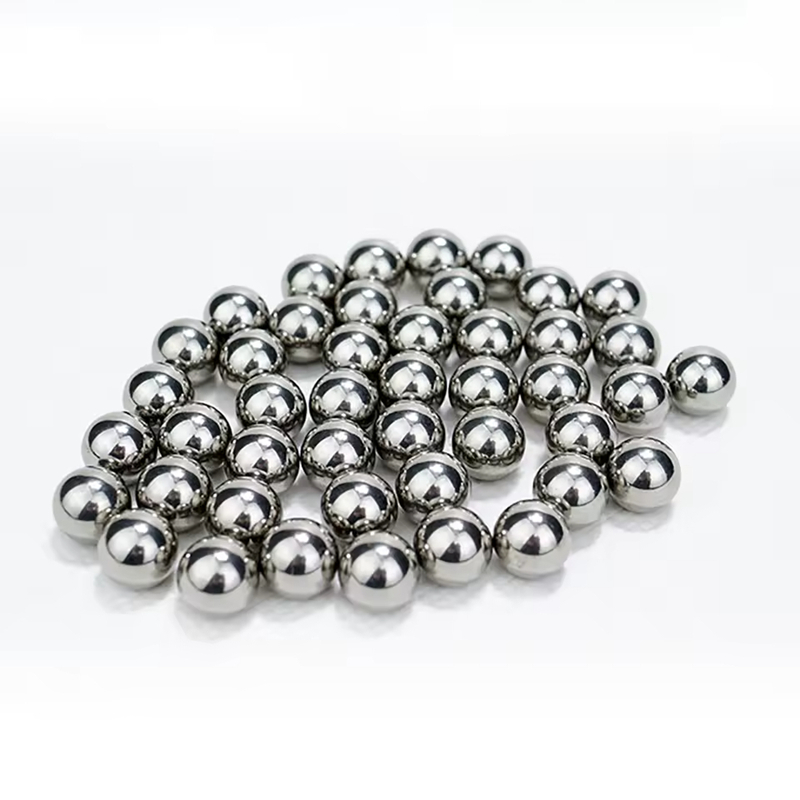 Summary of the full text: High-precision steel ball technology requires collaborative breakthroughs in materials, processes, and testing.
The precision improvement of solid ball bearings is a systematic engineering, requiring collaborative optimization in terms of material purity, heat treatment uniformity, and detection accuracy. Changzhou Feige Steel Ball Co., Ltd. achieves μ-level precision control through core technologies such as electroslag remelting and segmented temperature quenching, combined with high-precision detection equipment like the Mar test instrument. Its 'Sai Ge' brand steel balls have become the preferred solution in the high-end equipment manufacturing field. For purchasers, choosing suppliers with full-process production capabilities and international certifications is the key to ensuring the precision of steel balls.