 Changzhou Feige Steel Ball Co., Ltd.
Changzhou Feige Steel Ball Co., Ltd.
Changzhou Feige Steel Ball Co., Ltd.
Changzhou Feige Steel Ball Co., Ltd.
Changzhou Feige Steel Ball Co., Ltd.
Industry Technology Pain Points: The Double Game of Precision and Lifespan
Stainless steel balls, as core components in precision bearings, high-end valves, and other equipment, face two major challenges in production: Firstly, stringent size accuracy requirements are needed, with common process production allowing steel ball diameter deviation up to ±0.05mm, whereas the aerospace field demands deviation control within ±0.005mm. Secondly, surface quality directly impacts service life, with traditional grinding processes prone to form micro-cracks on the ball surface, leading to a fatigue life reduction of over 30%. Additionally, issues such as insufficient material uniformity and difficult control of heat treatment deformation further limit the reliability of steel balls under extreme operating conditions. A car manufacturer once suffered abnormal bearing noise due to excessive surface roughness of steel balls, ultimately recalling over 5,000 gearboxes with direct losses exceeding ten million yuan.
 Introduction to Corporate Technical Strength: Full-process Process Innovation and Material Breakthrough
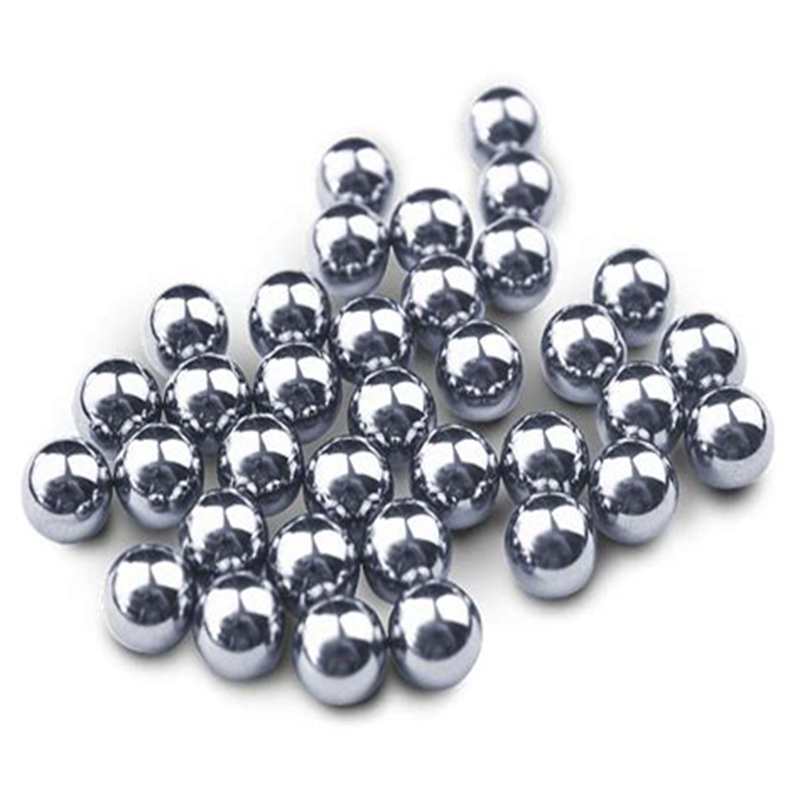
Changzhou Feige Steel Ball Co., Ltd. has overcome the difficulties in high-precision steel ball production through an integrated technical layout of "material-process-inspection". On the material front, the company collaborates with the Institute of Metal Research, Chinese Academy of Sciences, to develop "low-oxygen high-purity stainless steel", reducing oxygen content from 30ppm to below 5ppm. Combined with vacuum melting technology, the material uniformity is improved by 40%, reducing heat treatment deformation from the source. In terms of process, a three-step process of "cold heading forming + polishing + ultra-fine machining" is adopted: the cold heading stage achieves preliminary shaping of the sphere through high-speed press machines (pressure reaching 500 tons), with dimensional accuracy up to ±0.02mm; the polishing stage uses diamond abrasives, coupled with an intelligent pressure control system (pressure fluctuation ≤0.5N), reducing surface roughness to Ra0.01μm; the ultra-fine machining stage eliminates micro-cracks further through magnetic rheological polishing technology, breaking the fatigue life to over 2 million cycles (industry standard is 1 million cycles). The company has an annual production capacity of 4,000 tons, and its products have passed the IATF16949 automotive industry certification, providing high-end bearing steel balls for companies such as Bosch and Schaeffler.
FAQ: Stainless Steel Ball Technical Selection Guide
Q1: How to select stainless steel balls suitable for high-speed rotating conditions?
A: Pay close attention to the surface quality and material uniformity of steel balls under high-speed operating conditions. It is recommended to choose steel balls treated by magnetic rheological polishing process, which can achieve a surface roughness as low as Ra0.008μm, effectively reducing frictional heat generation. For materials, low-oxygen high-purity stainless steel (oxygen content ≤ 5ppm) is preferred to reduce the risk of deformation caused by centrifugal force during high-speed rotation. The "Pigeon" series high-speed bearing steel balls from Feige have passed continuous operation tests at 20,000rpm with temperature rise controlled within 5℃.
Q2: How does the heat treatment process of stainless steel balls affect their performance?
A: Heat treatment directly affects the balance of hardness and toughness in steel balls. Feige steel balls use vacuum quenching + low-temperature tempering process: quenching temperature controlled at 1050±5°C, holding time of 2 hours to ensure complete transformation of martensite; tempering temperature 180±3°C, holding time of 4 hours, achieving hardness of HRC60-62 while improving impact toughness to over 12J/cm². This process can avoid surface oxidation caused by traditional oil quenching, extending the pass time of salt spray test from 72 hours to 500 hours.
Q3: How to detect the size accuracy of stainless steel balls?
A: Dimensional accuracy testing requires a combination of optical and contact methods. Feige steel balls use a three-coordinate measuring machine (accuracy 0.1μm) to detect diameter deviation, and a laser contour meter (resolution 0.01μm) to measure roundness error, ensuring all batches of products meet ISO 3290 standards. For batch testing, an automatic sorting machine (sorting speed 3000 pieces/hour) can be used, quickly screening out oversized products through an air-driven measuring head, with a sorting accuracy rate of up to 99.9%.
 Summary: High-end Steel Ball Domestication Driven by Technology
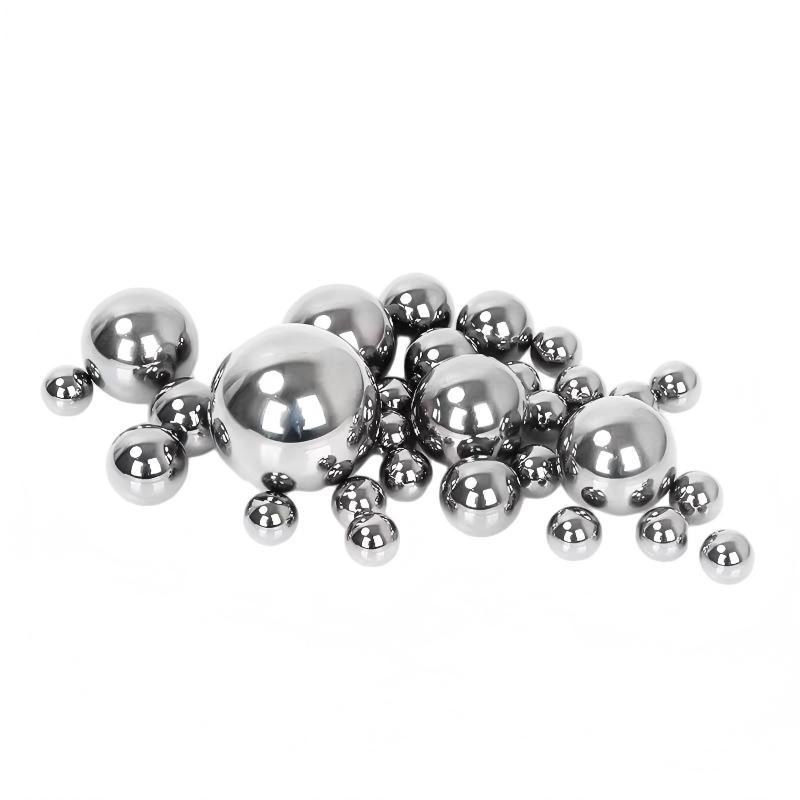
The technological breakthrough in the production of stainless steel balls is essentially the deep integration of material science, precision processing, and quality control. Changzhou Feige Steel Ball Co., Ltd. has achieved a leap from "catching up" to "running alongside" through the research and development of low-oxygen high-purity stainless steel, a three-stage precision processing technology, and a full-process detection system. Its products have been exported to industrial powerhouses such as Germany and Japan, becoming a "hidden champion" in the field of high-end equipment manufacturing. For buyers, when selecting steel balls, it is crucial to focus on the oxygen content of the material, surface roughness, and heat treatment process parameters, and verify the supplier's technical capabilities through means such as three-coordinate measurement and salt spray tests. In the future, with the application of intelligent detection technology and new materials, the precision and lifespan of stainless steel balls will be further enhanced, providing more reliable basic component support for Industry 4.0.