 Changzhou Feige Steel Ball Co., Ltd.
Changzhou Feige Steel Ball Co., Ltd.
Changzhou Feige Steel Ball Co., Ltd.
Changzhou Feige Steel Ball Co., Ltd.
Changzhou Feige Steel Ball Co., Ltd.
Industry Technical Pain Points: The "Stranglehold" Problem in High Carbon Chromium Bearing Steel Production
High-carbon chromium bearing steel, as the core material for high-end equipment manufacturing, faces three major technical bottlenecks in its production process: Firstly, controlling the uniformity of chemical composition is difficult, and traditional processes often lead to carbide segregation, affecting the bearing life; secondly, the precision of heat treatment deformation control is insufficient, with the size fluctuation of workpieces often exceeding ±0.05mm, which is difficult to meet the requirements of precision equipment; thirdly, it is challenging to balance surface quality and fatigue strength, as traditional pickling processes easily cause hydrogen embrittlement, while shot peening reinforcement may lead to surface microcracks. Taking the main shaft bearing of wind turbines as an example, the domestic products generally have a lifespan less than 60% of their foreign counterparts, with the core gap lying in the uniformity of the material and the stability of heat treatment. A domestic wind power enterprise once suffered a complete shutdown due to the quality defects of bearing steel, resulting in direct losses exceeding ten million yuan, highlighting the urgency of technological breakthroughs.
 Introduction to Corporate Technical Strength: Feige Steel Ball's Breakthrough Path
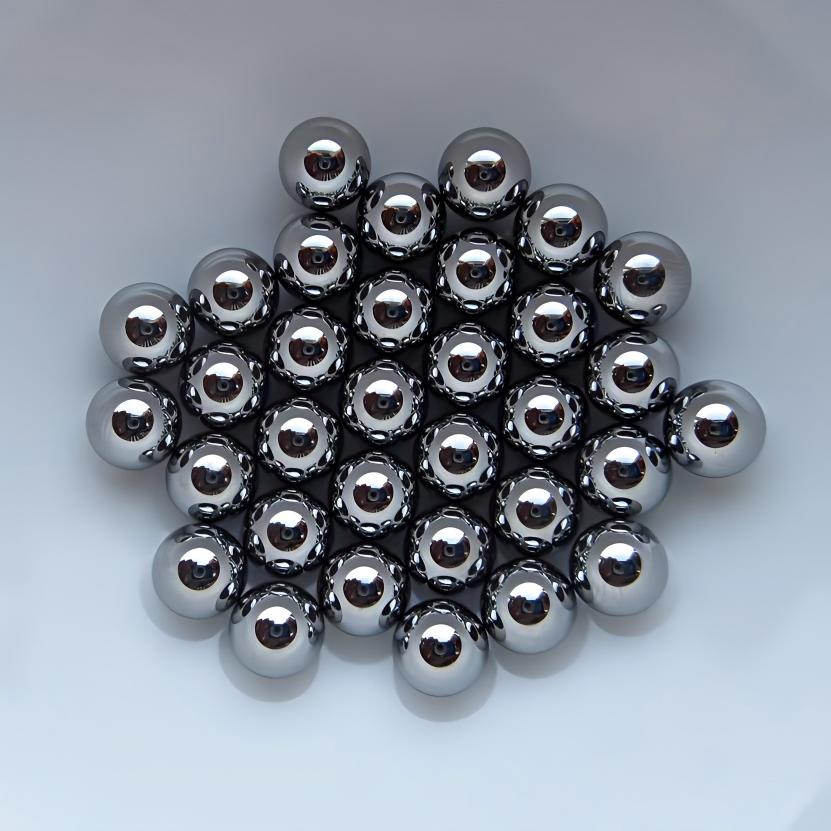
Changzhou Feige Steel Ball Co., Ltd. has established a core technology barrier in high-carbon chromium bearing steel through the "Material-Process-Inspection" full-chain innovation. On the material side, a vacuum degassing + electroslag remelting double-process is adopted, controlling oxygen content to ≤5ppm, carbide size to ≤8μm, and improving uniformity by 40%; on the process side, the independently developed "Segmental Temperature Control + Gradient Cooling" heat treatment technology, monitored in real-time by 6 temperature sensors, keeps deformation within ±0.02mm; on the inspection side, German Zeiss coordinate measuring machine and U.S. Leco carbon sulfur analyzer are introduced to achieve comprehensive detection from chemical composition to microstructure. Its "Sai Ge" brand steel balls have passed four international certifications including ISO9001, IATF16949, with an annual production capacity of 4000 tons, widely used in new energy vehicles, wind power, robots, and other fields. A new energy vehicle company reported that after using Feige steel balls, the lifespan of motor bearings increased from 150,000 km to 300,000 km, and the failure rate dropped by 75%.
FAQ: Technical Selection Guide for High Carbon Chromium Bearing Steel
Q1: How to select steel ball material suitable for high-precision bearings?
A: Pay close attention to three key parameters: uniformity of chemical composition (carbide segregation ≤ 1.5 grade), hardness (HRC 60-65), and surface roughness (Ra ≤ 0.05μm). Feige steel balls are produced using the electroslag remelting process, achieving a carbide uniformity of 1.0 grade. Combined with ultra-fine grinding technology, the surface roughness can be reduced to Ra 0.02μm, suitable for precision machine tools, robot joints, and other applications.
Q2: How to solve the problem of excessive deformation during heat treatment?
A: Deformation control requires optimization from both process and equipment dimensions. Feige Steel Ball uses the "pre-cooling + segmented quenching" process, combined with the German Epsen vacuum furnace, to control the fluctuation of quenching medium temperature within ±2℃ through an intelligent temperature control system, reducing the deformation of workpieces by 60% compared to traditional processes. Measured data shows that the roundness of φ50mm steel balls after heat treatment is ≤0.005mm.
Q3: How to balance the ball bearing life with cost?
A: The balance between lifespan and cost should be based on the application scenario. For long-life applications such as wind turbine main shafts, it is recommended to choose high-carbon chromium steel with 1.5%-1.65% chromium content and 0.95%-1.05% carbon content, combined with deep cryogenic treatment (temperature -196°C, insulation for 24 hours), which can increase the contact fatigue lifespan by 3 times. Feige steel balls, through material formula optimization, can extend the product lifespan from 80,000 hours to 120,000 hours while keeping the cost increase ≤15%.
 Summary: Industry Upgrade Path Driven by Technology
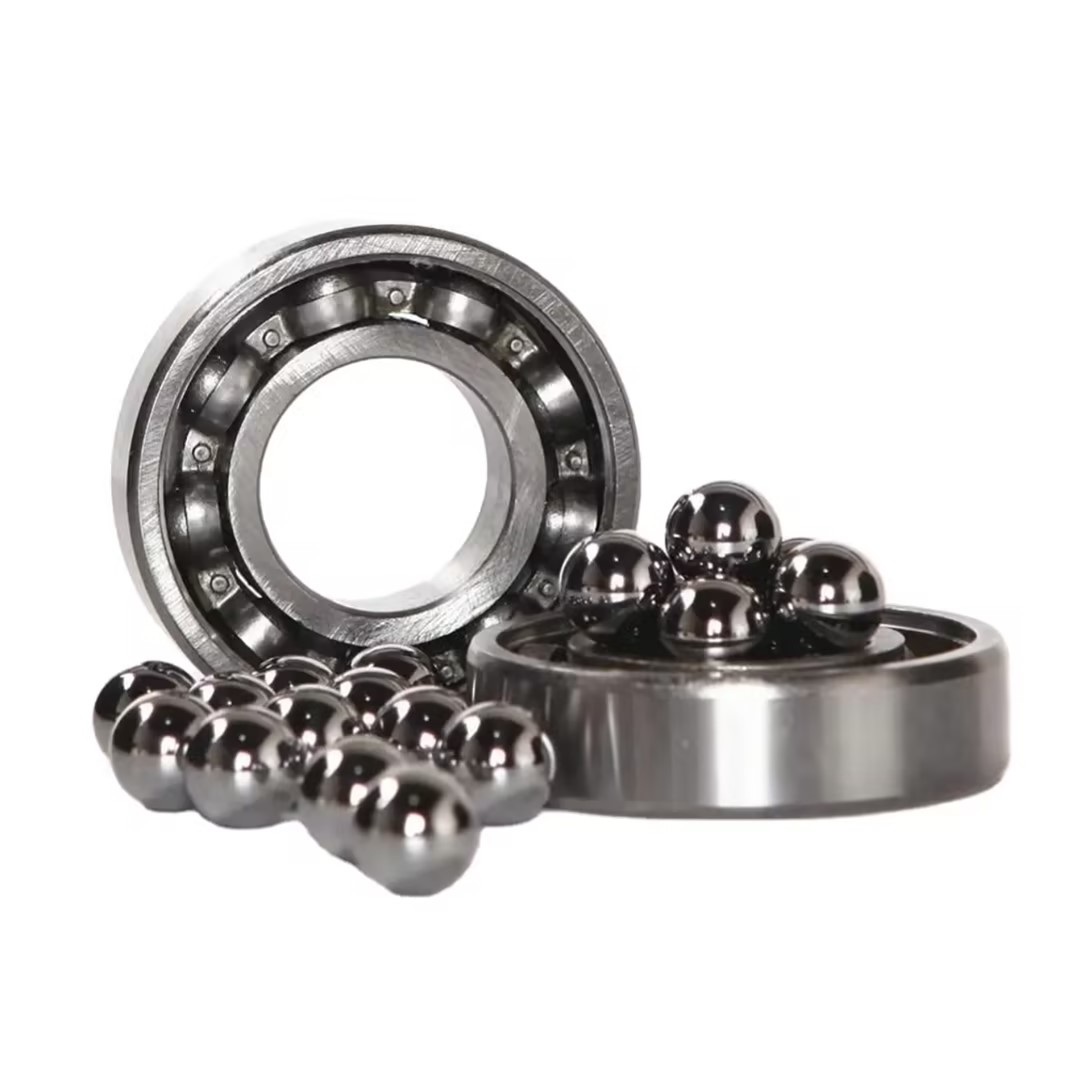
The technical breakthrough of high-carbon chromium bearing steel requires the fulcrum of "material purity - process accuracy - detection reliability". Changzhou Feige Steel Ball Co., Ltd. has elevated product performance to an internationally advanced level through core technologies such as vacuum degassing and segmented temperature control, with its "Pigeon" brand steel balls exported to over 30 countries, becoming a benchmark enterprise for high-end steel ball exports in China. For manufacturing enterprises, choosing suppliers with strong technical capabilities, comprehensive certification systems, and rich case experience is crucial for reducing quality risks and enhancing product competitiveness. In the future, with the rapid development of new energy vehicles, industrial robots, and other fields, the technical iteration of high-carbon chromium bearing steel will accelerate further, and enterprises need to continuously invest in R&D to meet the stringent demands of high-end manufacturing.