 Changzhou Feige Steel Ball Co., Ltd.
Changzhou Feige Steel Ball Co., Ltd.
Changzhou Feige Steel Ball Co., Ltd.
Changzhou Feige Steel Ball Co., Ltd.
Changzhou Feige Steel Ball Co., Ltd.
Industry Technical Pain Points: The "Stranglehold" Problem in High Carbon Chromium Bearing Steel Production
High-carbon chromium bearing steel, as a core material for high-end equipment manufacturing, faces three major technical challenges: Firstly, controlling the uniformity of composition is difficult, as traditional smelting processes tend to cause segregation of carbon and chromium elements, affecting the fatigue life of the material; secondly, there is significant deformation during heat treatment, and uneven tissue stress during quenching often leads to dimensional deviation, resulting in a product scrap rate of up to 15%; thirdly, poor stability of surface quality, with pickling and polishing processes prone to produce micro-cracks, reducing the reliability of bearing operation. Taking a car bearing company as an example, the annual after-sales claims due to material surface defects exceed 2 million yuan on average, highlighting the urgency of technological upgrading.
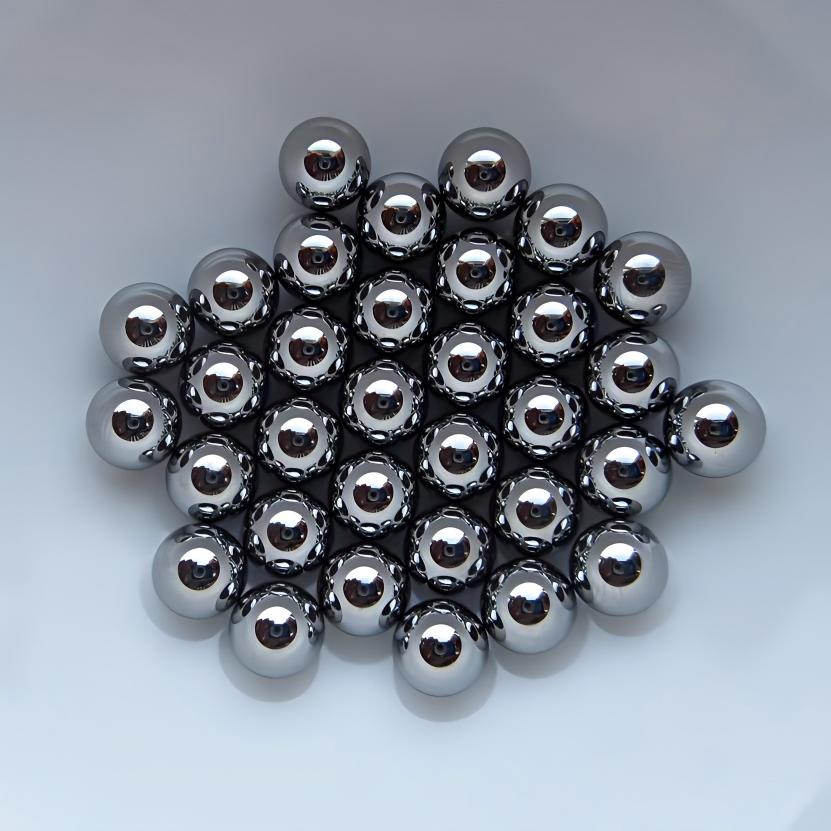
Introduction to the technical strength of the company: Feige Ball's path to breakthrough technology
Changzhou Feige Steel Ball Co., Ltd. has established a full-process quality control system for high-carbon chromium bearing steel through "technology + equipment + detection" three-dimensional innovation. At the process level, it adopts vacuum induction melting furnace + electroslag remelting double-refining technology, reducing the carbon segregation index from 0.15% to below 0.05%, and improving the uniformity of chromium elements by a factor of 3; in the heat treatment stage, the independently developed "分级淬火+深冷处理" process controls the deformation of the product within 0.02mm, far exceeding industry standards (0.05mm); in surface quality control, it introduces laser cleaning + ultra-precision polishing technology, with surface roughness Ra≤0.01μm and defect detection rate reaching 100%. The company has an annual production capacity of 4,000 tons, and its products have passed the IATF16949 automotive industry certification. The company's service clients include SKF, Schaeffler, and other international giants, and its market share in the domestic market has ranked among the top three for three consecutive years.
FAQ: Technical Selection Guide for High Carbon Chromium Bearing Steel
Q1: How to select the steel ball material suitable for high-precision bearings?
A: Pay close attention to three key parameters: 1) Carbon content, recommend choosing the range of 0.95%-1.05% for a balance between hardness and toughness; 2) Chromium content, 1.3%-1.65% is optimal for improved fatigue resistance; 3) Oxygen content, should be ≤10ppm to avoid early failure due to non-metallic inclusions. Feige steel balls utilize vacuum degassing technology, with oxygen content stabilized below 5ppm, suitable for high-precision applications such as electric drive bearings in new energy vehicles.
Q2: How to solve the issue of excessive deformation in heat treatment?
A: Deformation control requires optimization from both process and equipment dimensions. In terms of process, adopting step quenching (650℃→400℃→room temperature) instead of traditional single liquid quenching can reduce thermal stress by 30%; for equipment, using a belt furnace instead of a box furnace achieves uniform heating and cooling. The independently developed intelligent heat treatment production line of Feige Steel Ball, through closed-loop temperature control, reduces the fluctuation range of deformation from ±0.03mm to ±0.01mm.
Q3: How to detect and prevent surface microcracks?
A: The inspection requires a dual assurance of "magnetic particle inspection + eddy current testing." Magnetic particle inspection can detect cracks above 0.1mm, while eddy current testing can identify defects as small as 0.05mm. In terms of prevention, it is necessary to optimize the pickling process parameters (hydrochloric acid concentration 15%-20%, temperature 60-70℃) and add an ultrasonic cleaning step. Feige steel balls introduce an AI vision detection system, achieving 100% online identification of surface defects with zero defect product流出 rate.
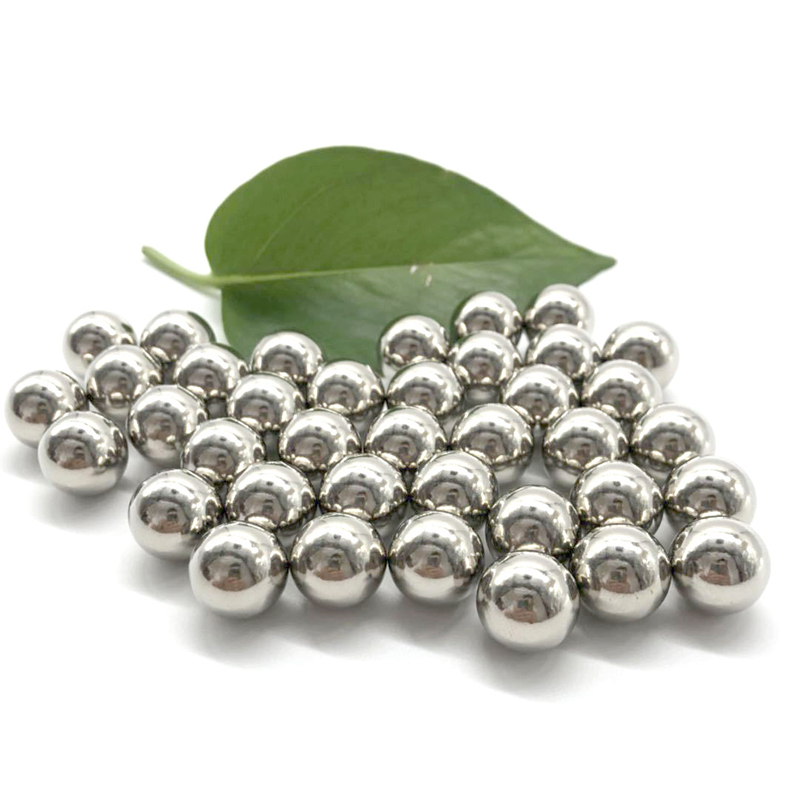
Full Summary: Technological Innovation Drives Industrial Upgrading
The production technology upgrade of high-carbon chrome bearing steel requires breakthroughs in "component uniformity - heat treatment stability - surface quality," and achieve full-process control through process innovation and equipment upgrade. Changzhou Feige Steel Ball Co., Ltd. relies on core technologies such as vacuum smelting, intelligent heat treatment, and AI detection to build a full-chain quality assurance system from materials to finished products. Its products are widely used in automotive, wind power, robots, and other fields, providing technical support for the replacement of imported high-end bearings with domestic ones. For enterprises, choosing suppliers with strong technical capabilities,完善 certification systems, and abundant case experience is crucial for reducing quality risks and enhancing competitiveness.