 Changzhou Feige Steel Ball Co., Ltd.
Changzhou Feige Steel Ball Co., Ltd.
Changzhou Feige Steel Ball Co., Ltd.
Changzhou Feige Steel Ball Co., Ltd.
Changzhou Feige Steel Ball Co., Ltd.
Industry Technical Pain Points: Why has stainless steel ball selection become a "Technical Minefield"?
In precision manufacturing, bearing, valve, and other industrial fields, stainless steel balls, as core transmission or sealing components, directly affect the lifespan and operational stability of equipment. However, three major pain points often arise in the selection process:
Material compatibility ambiguity304, 316, 440C materials exhibit significant differences in corrosion resistance and hardness, but users often make general demands with the vague description of "stainless steel," leading to issues like pitting and accelerated wear in actual operating conditions. For example, if a food processing equipment uses 304 spheres with insufficient nickel content, it may release heavy metal ions in an acidic environment, threatening food safety.
Insufficient accuracy controlG5-G1000 grade accuracy corresponds to different application scenarios, but some manufacturers, to reduce costs, pass off low-precision spheres as high-quality ones. A certain automotive bearing company once used G20 grade spheres instead of G10 grade, resulting in bearing noise exceeding the standard by 30% and rework losses over a million yuan.
3. Surface Treatment DefectsPolishing, passivation, coating, and other processes directly affect the ball's coefficient of friction and corrosion resistance. A chemical valve manufacturer suffered from frequent leakage accidents due to the failure of valve sealing, caused by not inspecting the ball surface roughness.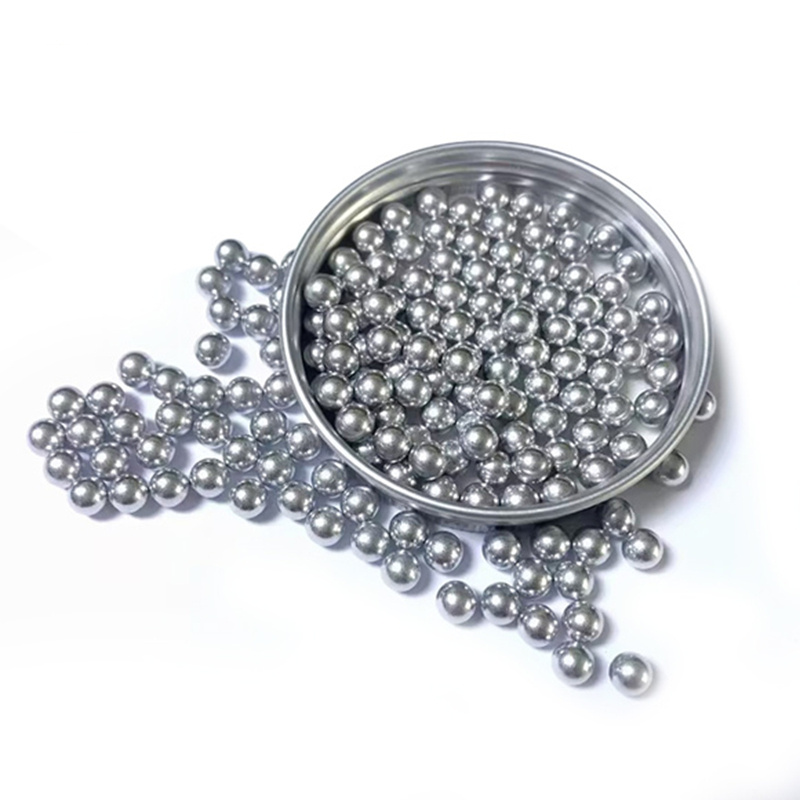
These pain points arise from users' insufficient understanding of technical parameters and the uneven technical capabilities of suppliers. How to break through the selection dilemma? The answer lies in the technical layout of specialized production enterprises.
Introduction to Corporate Technical Strength: How does Feige Ball build a technical moat?
Changzhou Feige Steel Ball Co., Ltd., as a national high-tech enterprise, focuses on "full category, high precision, and customization," constructing a full-chain technological system covering material research and development, precision control, and surface treatment.
Material Research and Development LaboratoryEquipped with spectrometer analyzers, salt spray test chambers, and other equipment, it can accurately detect the chemical composition and corrosion resistance of materials such as 304, 316L, and 440C. For example, for marine environment applications, a 316L improved type containing 2.5% molybdenum has been developed, with the pitting resistance equivalent (PREN) increased to 32, a 40% increase over the standard value.
2. Precision Control SystemImport German-made grinding equipment and laser measuring instruments to achieve bulk production with precision levels from G5 to G1000. Among them, the roundness of G5-grade spheres is ≤0.12μm, and the surface roughness Ra is ≤0.01μm, meeting aviation bearing standards. After a high-end machine tool manufacturer adopted its G10-grade spheres, the spindle vibration value was reduced to below 0.5mm/s, with the processing precision improved by two levels.
3. Surface Treatment TechnologyDeveloped a "three-step" passivation process: the first step is acid washing to remove the oxide layer, the second step is passivation to form a dense oxide film, and the third step is sealing treatment to block the micropores. Spheres treated by this process can achieve 1000 hours of rust-free in neutral salt spray test (NSS), a 3-fold increase compared to traditional processes.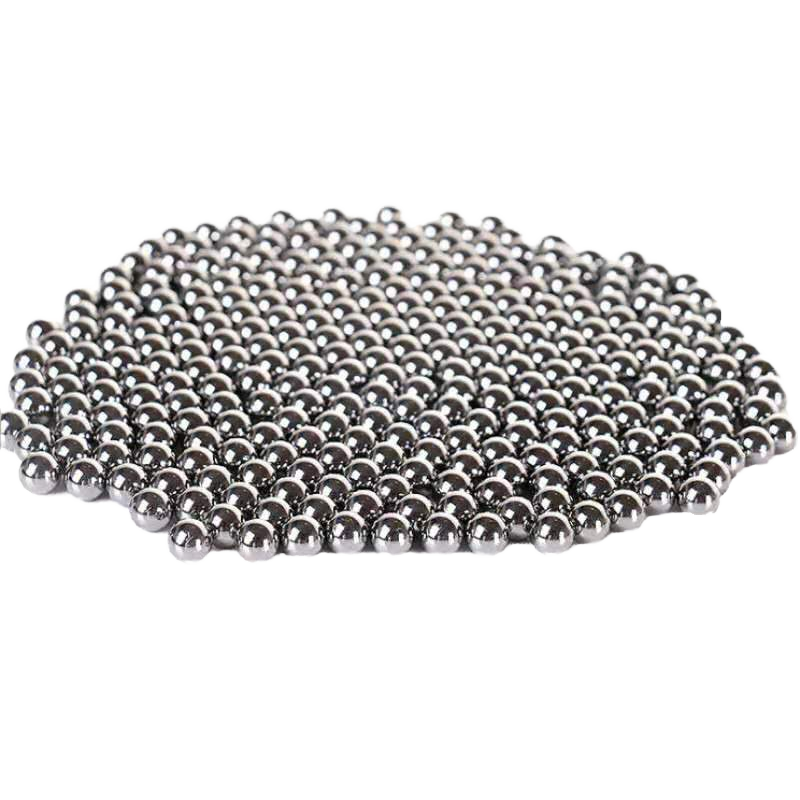
Currently, Feige Steel Balls has passed four international certifications including ISO9001, IATF16949, with an annual production capacity of 4,000 tons. The products are exported to over 30 countries, setting a benchmark for high-end steel ball export production bases in China.
FAQ: Stainless Steel Ball Technical Selection Guide
Q1: How to select stainless steel ball material according to working conditions?
A: Consider the corrosiveness of the medium, temperature, and pressure. For example:
- Food/Medical Industry: Prefer 316L (molybdenum content ≥2.5%), resistant to chloride ion corrosion.
- High temperature environment (>450℃): select 440C (hardness HRC58-62), good thermal stability.
-Low corrosion environment: 304 (cost-effective, resistant to atmospheric corrosion).
Q2: How does the accuracy grade affect equipment performance?
A: The smaller the precision grade (G), the better the roundness and surface roughness. Typical application scenarios:
- G5-G10: Aviation bearings, precision instruments (roundness ≤ 0.12μm)
- G16-G40: Automotive bearings, valves (roundness ≤ 0.25μm)
- G100-G1000: Standard transmission, decorative parts (roundness ≤ 1.6μm).
Q3: How to choose surface treatment processes?
A: According to corrosion resistance requirements:
-Degradation treatment: Neutral salt spray test ≥500 hours, suitable for general industrial environment.
- Hard chrome plating: Thickness 10-20μm, hardness HV800-1000, suitable for wear conditions.
- Composite coating: Such as TiN coating + passivation, offering both wear resistance and corrosion resistance, suitable for offshore platforms.
Full Summary: Technical strength is the "anchor" for selection.
The selection of stainless steel balls is not a simple "material + size" combination, but requires a comprehensive evaluation from multiple dimensions such as material chemical composition, precision grade, and surface treatment process. Changzhou Feiguo Steel Ball Co., Ltd. provides customized solutions ranging from G5 ultra-precision spheres to corrosion-resistant coated balls through the construction of a full-chain technical system of "R&D - Production - Inspection". Its four international certifications and an annual production capacity of 4,000 tons not only ensure product stability but also reduce the application threshold for high-end steel balls through large-scale production. For equipment manufacturers, choosing to cooperate with enterprises with strong technical capabilities is the key to avoiding selection risks and enhancing product competitiveness.