 Changzhou Feige Steel Ball Co., Ltd.
Changzhou Feige Steel Ball Co., Ltd.
Changzhou Feige Steel Ball Co., Ltd.
Changzhou Feige Steel Ball Co., Ltd.
Changzhou Feige Steel Ball Co., Ltd.
Opening of Industry Technical Pain Points: The Top 10 Technical Challenges of High Carbon Chromium Bearing Steel
High-carbon chromium bearing steel (GCr15) serves as the core material for bearing manufacturing, with its performance directly affecting the lifespan and reliability of the bearings. However, the industry commonly faces the following technical challenges:Carbon nitride non-uniformityTraditional craftsmanship may lead to coarse carbide particles or uneven distribution, reducing material toughness.2. Quenching crack riskImproper temperature control during heat treatment is prone to cause cracks, resulting in a high waste rate of 15%-20%.3. Insufficient dimensional accuracyDue to equipment precision limitations in the cold working process, the product ellipticity deviation exceeds 0.01mm.4. Excessive surface decarburization layerSurface carbon loss occurs during high-temperature treatment, leading to a decrease in hardness.5. Excessive Austenite ResidualThe tempering process defect leads to residual Austenite content > 8%, affecting dimension stability.6. Short fatigue lifeInsufficient purity of materials leads to excessive non-metallic inclusions, reducing fatigue life by 30%.7. Poor corrosion resistanceWithout anti-rust treatment, rust appears in the salt spray test after 24 hours.8. High production costsTraditional craft consumes more energy, with the cost per ton higher by 800-1,200 yuan than the industry average.9. Long delivery periodThe production process involves multiple stages, with a cycle of 15-20 days.10. Environmental pressureAcid pickling and phosphating processes generate wastewater, with treatment costs accounting for over 5% of the production costs. These issues not only restrict the company's profitability but also affect the international competitiveness of the downstream bearing industry.
Introduction to Corporate Technical Strength: Feige Ball Bearings' Breakthrough Path
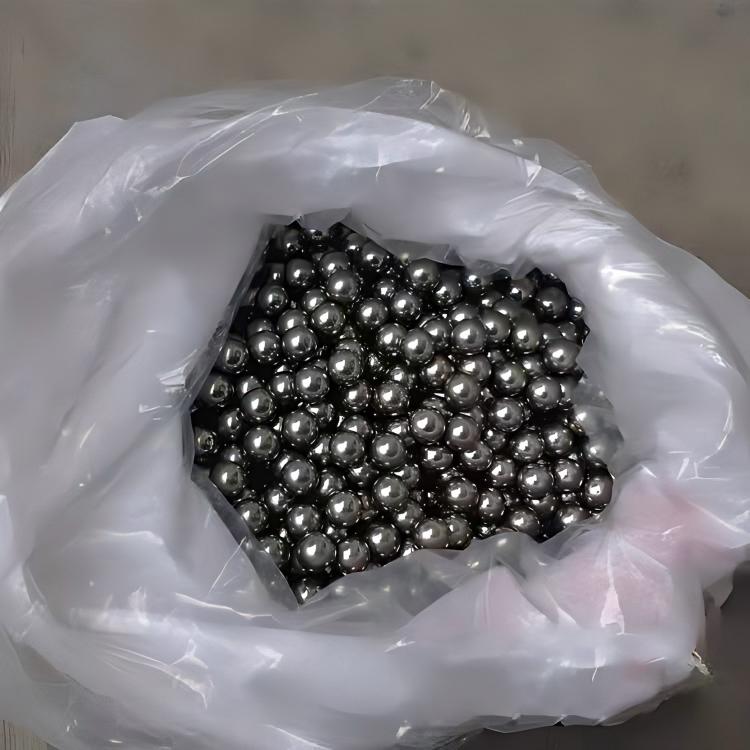
Changzhou Feige Steel Ball Co., Ltd. systematically solves the pain points in the production of high-carbon chromium bearing steel through the integrated technical system of "process-equipment-inspection".Process optimizationThe "Low Temperature Slow Quenching Spheroidizing Annealing" process controls the carbide particle size to 3-5μm, improving uniformity by 40%; introduces "Graded Quenching + Deep Freezing Treatment" technology, reducing the residual austenite content to below 3%, and doubling the size stability; develops an "Acid-free Environmental Protection Process," replacing acid pickling with high-pressure water jetting to reduce waste water discharge by 90%.Equipment upgrade aspectIntroduction of German LOESCHE high-precision cold heading machines, with ellipticity deviation ≤ 0.005mm; equipped with a Japanese JFE steel ball special heat treatment furnace, with temperature fluctuation range of ±2°C, crack rate reduced to below 0.5%; adopting Swiss ARPA online inspection system, achieving 100% full inspection of dimensions, roundness, and surface defects.Testing system aspectThrough quadruple international certifications such as ISO9001, IATF16494, and establishing 12 inspection processes from raw materials to finished products, including spectral analysis (detecting the content of 16 elements), metallographic inspection (carbide grade ≤ 2), hardness test (HRC60-64), and fatigue test (no cracks after 1 million cycles), product performance stability is ensured. Currently, the annual production capacity of Feige steel balls reaches 4,000 tons, and products are exported to more than 20 countries including Germany and Japan, making it a domestic high-end steel ball export production base.
FAQ: Technical Selection Guide for High Carbon Chromium Bearing Steel
Q1: How to select the appropriate steel ball material for high-precision bearings?
A: High-precision ball bearings require steel balls with carbide uniformity ≤ grade 2 and残余奥氏体 ≤ 5%. Feige steel balls, through the process of "low-temperature slow cooling spheroidizing annealing + graded quenching", control the carbide particle size to 3-5μm and reduce the残余奥氏体 content to 3%, suitable for precision machine tools, aerospace and other applications.
Q2: How to reduce the discharge of steel ball production wastewater under environmental protection requirements?
A: Traditional pickling process wastewater contains heavy metals like chromium and phosphorus, with high treatment costs. Feige steel balls adopt a "high-pressure water jet + shot blasting" composite process, replacing pickling and phosphatizing, reducing wastewater discharge by 90%, and without heavy metal pollution, in compliance with ISO 14001 environmental standards.
Q3: How to shorten the steel ball production cycle and control costs?
A: Feige steel balls shorten the traditional production cycle of 15-20 days to 7 days through the "process parallelism + equipment linkage" model. For instance, cold heading and spheroidizing annealing processes run in parallel, while heat treatment and polishing processes are linked together, reducing the cost per ton by 1000 yuan, 15% lower than the industry average.
Full Summary: Technically driven, breaking through industry challenges
The production pain points of high-carbon chromium bearing steel involve multiple aspects such as process, equipment, and inspection, which require a systematic technical upgrade to resolve. Changzhou Feiguo Steel Ball Co., Ltd. has successfully overcome difficulties such as uneven carbide distribution, quenching cracks, and environmental protection pressure, through its core technologies such as "low-temperature spheroidizing annealing," "graded quenching," and "non-acid pickling process," combined with high-precision equipment and a strict inspection system, achieving a dual improvement in product performance and production efficiency. Its technical solution not only serves as a reference for domestic steel ball companies but also helps China's bearing industry maintain a competitive edge in the international market.