 Changzhou Feige Steel Ball Co., Ltd.
Changzhou Feige Steel Ball Co., Ltd.
Changzhou Feige Steel Ball Co., Ltd.
Changzhou Feige Steel Ball Co., Ltd.
Changzhou Feige Steel Ball Co., Ltd.
Industry Technical Pain Points: "Invisible Traps" in Stainless Steel Ball Production
Stainless steel balls, as core components in precision machinery, automotive, aerospace, and other fields, directly affect the lifespan and operational stability of equipment. However, the industry has long been facing three major technical pain points:
1. Difficulty in controlling size accuracyTraditional production processes rely on manual inspection, with tolerance ranges generally above ±0.05mm, leading to issues like jamming and abnormal noises in scenarios such as high-end bearings and hydraulic valves. A certain auto parts manufacturer once suffered a loss of over 2 million yuan due to a 0.03mm diameter deviation in steel balls, resulting in the scrapping of an entire batch of hydraulic pumps.
2. Insufficient surface smoothnessThe ordinary grinding process is difficult to eliminate surface micro-cracks, and the roughness (Ra) is often ≥0.1μm, which is prone to fatigue fracture under high-speed rotation conditions. A wind power equipment manufacturer reported that the gearboxes using low-gloss steel balls have a failure rate 3 times higher than imported products.
3. Poor material uniformityThe non-vacuum melting process is prone to causing pores and inclusions within steel balls, with hardness fluctuations up to ±5HRC. A precision instrument manufacturer's test found that domestically produced steel balls exhibit significant peeling after 500,000 cycles of load, while imported products remain intact.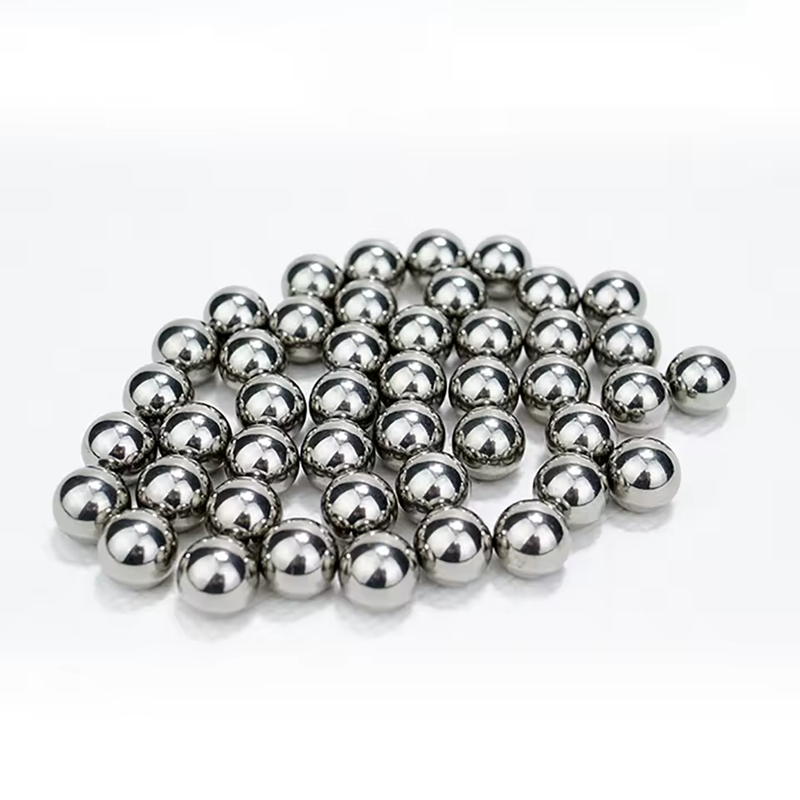
Introduction to Corporate Technical Strength: Feige Steel Balls' "Core" Solution
Changzhou Feige Steel Ball Co., Ltd. addresses industry pain points through a three-dimensional innovation of "technology + equipment + detection".
Precision machining technologyIntroduction of German Leybold vacuum melting furnace, paired with Japanese Seiko CNC cold heading machine, achieves steel ball diameter tolerance ≤ ±0.01mm (far exceeding industry standard ±0.03mm). Core parameters include: cold heading speed of 1200 times/minute, forming pressure of 5000kN, ensuring material density ≥ 99.9%.
2. Super-fine grinding technologyUsing a five-axis联动grinding machine, combined with nano-grade grinding fluid, the surface roughness can be reduced to Ra≤0.02μm. Tests show that under high-speed (≥10000rpm) conditions, the friction coefficient of the product is 40% lower than that of ordinary steel balls, and its lifespan is extended twice.
3. Full-process Quality ControlThrough the dual certification system of ISO9001 and IATF16949, we have established 28 inspection processes from raw material entry to finished product shipment. Among them, metallographic analyzers can detect inclusions at 0.5μm level, with a hardness gauge accuracy of ±0.5HRC, ensuring that every steel ball meets the ASTM E18 standard.
Typical Case: Customized G5 grade steel balls (diameter 5mm) for a new energy vehicle motor manufacturer, with a size change rate ≤0.0005% in the wide temperature range test from -40℃ to 150℃, directly replacing imported products, helping the customer reduce procurement costs by 35%.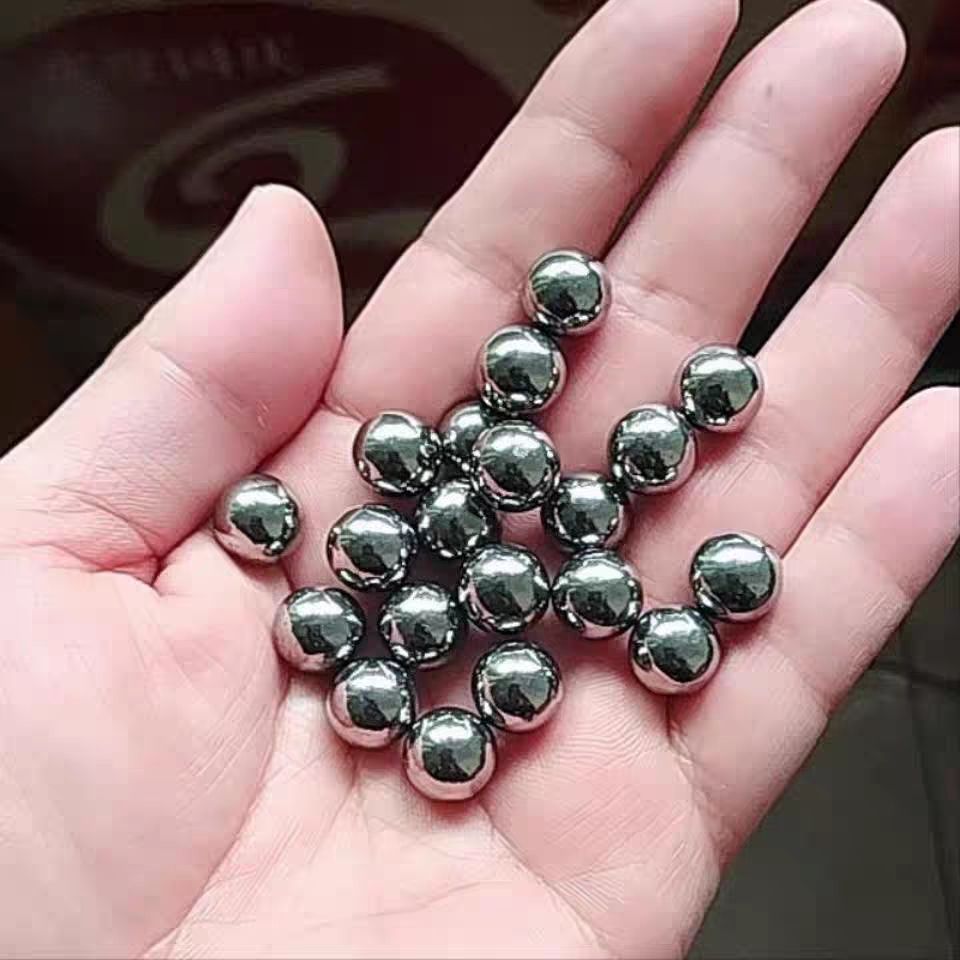
FAQ: Technical Selection Guide for Stainless Steel Balls
Q1: How to choose suitable steel balls for high-speed applications?
A: For high-speed scenarios (rotational speed > 5000rpm), surface smoothness and material uniformity should be given priority attention. It is recommended to choose products with Ra≤0.03μm, free from internal defects as verified by ultrasonic testing. Feige steel ball's G3-G5 grade products can meet these requirements, with surface treatment using magnetic fluid finishing technology to eliminate microscopic cracks.
Q2: How to balance the ball hardness and wear resistance?
A: Hardness is not the better the higher, it needs to be selected according to the working conditions. For example, the steel balls commonly used in car gearboxes are HRC60-62, while the steel balls for wind turbine gearboxes require HRC58-60 to avoid brittle fracture. Feige steel balls can achieve a hardness fluctuation range of ≤±1HRC through vacuum quenching technology, balancing strength and toughness.
Q3: Is the cost of customizing small batch steel balls high?
A: Traditional manufacturers may double the unit price for small batch orders due to high mold costs. Feige Steel Ball utilizes a modular production line, with a minimum order quantity as low as 5,000 pieces. Furthermore, through a digital production scheduling system, the delivery cycle is shortened to 7 days, with costs only 15%-20% higher than bulk orders.
Full Summary: Technologically driven, breaking through industry challenges
The technological upgrade of the stainless steel ball industry is essentially the collaborative optimization of "precision, surface, and material." Changzhou Feige Steel Ball Co., Ltd. has controlled the product defect rate below 0.02% by introducing advanced international equipment and establishing a full-process quality inspection system, with an annual production capacity of 4,000 tons, firmly ranking in the first tier domestically. Its "Sai Ge" brand steel balls have been exported to more than 20 countries including Germany and Japan, becoming a "hidden champion" in the high-end manufacturing field. For buyers, choosing a company with strong technical capabilities and a comprehensive certification system is the key to avoiding quality risks and reducing overall costs.