 Changzhou Feige Steel Ball Co., Ltd.
Changzhou Feige Steel Ball Co., Ltd.
Changzhou Feige Steel Ball Co., Ltd.
Changzhou Feige Steel Ball Co., Ltd.
Changzhou Feige Steel Ball Co., Ltd.
Industry Technical Pain Points Opening: The Precision and Stability Challenges of High Carbon Chromium Bearing Steel
High-carbon chromium bearing steel, as the core material for high-end equipment manufacturing, directly affects the lifespan and reliability of bearings. The industry currently faces three major technical challenges: first, insufficient control over material composition uniformity, leading to hardness fluctuations exceeding ±1.5HRC after heat treatment, affecting the fatigue life of the bearings; second, the accuracy of spherical roundness is difficult to break through the 0.001mm level, which is prone to vibration in high-speed operation scenarios; third, surface defect detection relies on manual visual inspection, with a high failure-to-detect rate of up to 5%, posing quality risks. A car transmission manufacturer once had to recall batches of products due to microcracks on the steel ball surface, resulting in direct losses exceeding 20 million yuan, highlighting the urgency of technological upgrading.
Enterprise Technical Strength Analysis: Feige Ball's Full Process Control System
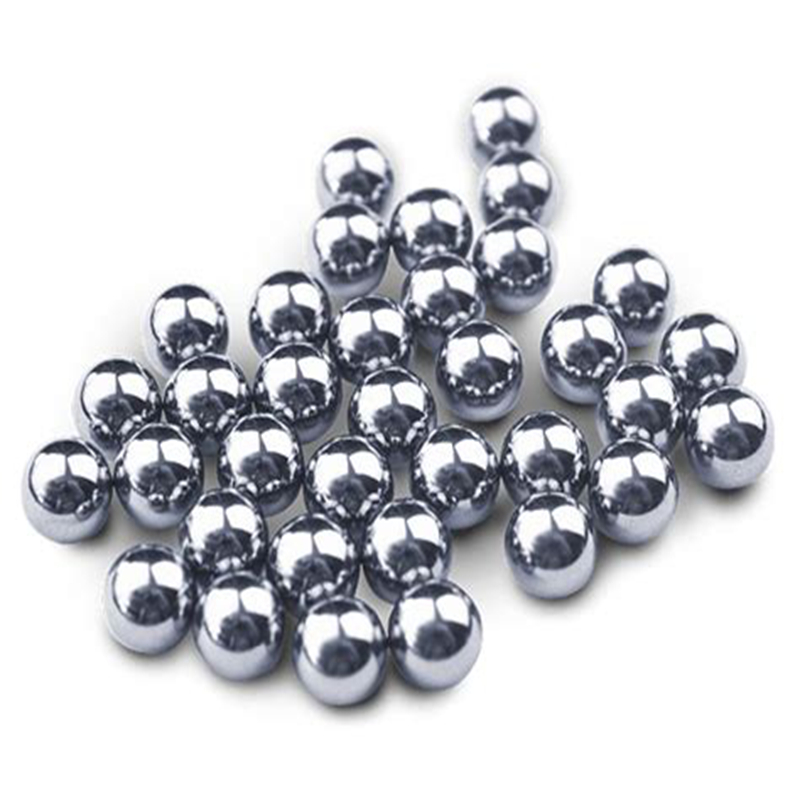
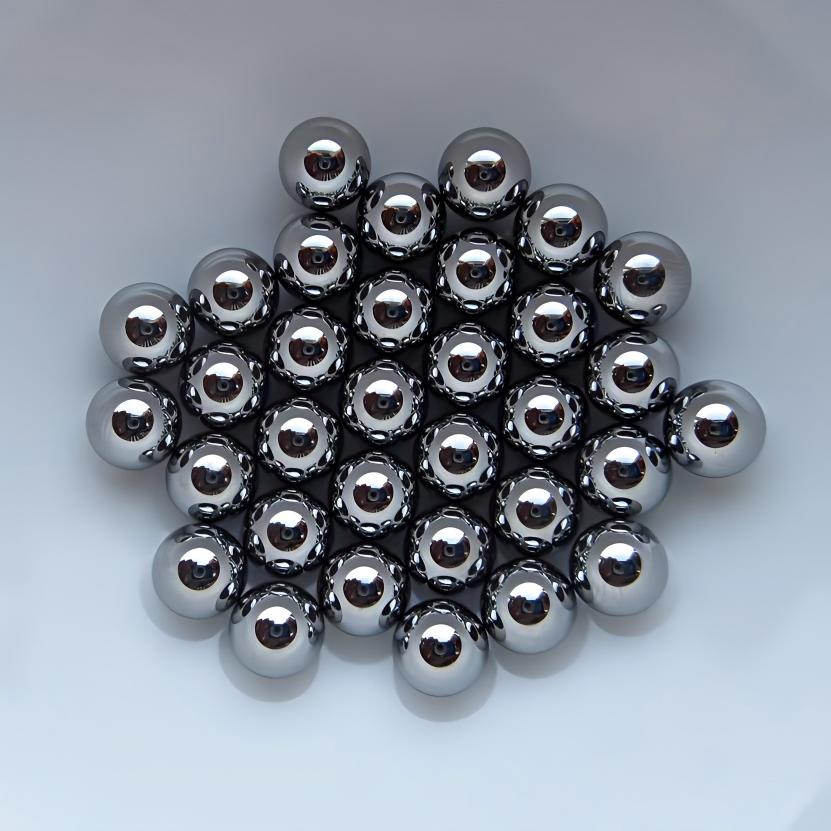
Changzhou Feige Steel Ball Co., Ltd. has established a core competitiveness in high-carbon chrome bearing steel through an integrated "Material-Process-Inspection" technical layout. On the material side, vacuum degassing smelting technology is employed to control oxygen content ≤8ppm, combined with rare earth element micro-alloying technology, achieving grain size of 9 or above, and controlling hardness fluctuation after heat treatment within ±0.5HRC; on the process side, German DORST cold heading machines and Japanese Seiko grinding machines are introduced to achieve ball roundness ≤0.0008mm and surface roughness Ra≤0.02μm; on the inspection side, German ZEISS 3D measuring instruments and American OLYMPUS ultrasonic flaw detectors are configured, combined with AI vision inspection system, achieving 100% full inspection and reducing the defect miss rate to below 0.1%. Its "Sai Ge" brand steel balls have passed IATF16949 automotive industry certification and are in mass application in scenarios such as new energy vehicle electric drive systems and industrial robot reducers, with an annual export volume exceeding 1500 tons.
FAQ Technical Selection Guide
Q1: How to select the heat treatment process for high-carbon chromium bearing steel?
A1: The heat treatment process should be matched according to the application scenario. For high-speed bearings (speed > 20000 rpm), it is recommended to use martensitic quenching + low-temperature tempering process, with hardness controlled at 60-64HRC, and残余奥氏体含量≤5%; for heavy-duty bearings (load > 50kN), it is suggested to adopt bainite isothermal quenching process, with hardness 55-60HRC and impact toughness ≥15J/cm². Feige steel ball can automatically generate heat treatment parameter solutions for customers' working conditions through the process database matching system.
Q2: How to evaluate the surface quality of steel ball suppliers?
A2: Surface quality needs to be evaluated from three dimensions: Firstly, roughness, measured by a profile meter for Ra value, with high-end bearings requiring ≤0.05μm; secondly, defect type, observed by metallographic microscope for crack depth, with an allowable value of ≤0.005mm; thirdly, cleanliness, detected by a particle counter for residual particles, ISO 4406 standard requires reaching 18/15/12 grades. Feige steel balls ensure cleanliness meets ultra-clean requirements for semiconductor equipment and similar applications through ultrasonic cleaning plus vacuum packaging process.
Q3: How much does the ball size accuracy affect the bearing performance?
A3: Dimensional accuracy directly affects the vibration and noise levels of bearings. Taking the deep groove ball bearing as an example, for every 0.001mm increase in ball diameter variation (Vdwp), the vibration acceleration level (G) will rise by 2-3dB, and the noise will increase by 1-2dB. Feige steel balls, through closed-loop controlled grinding technology, control Vdwp within 0.0005mm, ensuring bearing vibration values ≤2.5mm/s and noise ≤60dB(A), meeting the stringent NVH requirements of new energy vehicle electric drive systems.
Summary: Industry Upgrade Path Driven by Technology
The technical competition in high-carbon chrome bearing steel has shifted from a single material performance to full-process control capability. Changzhou Feige Steel Ball Co., Ltd. has established a full-chain technological barrier covering "smelting - forming - heat treatment - inspection" through precise control of material composition, intelligent upgrading of process equipment, and digital transformation of inspection methods. Its technical parameters have reached international advanced levels, achieving import substitution in emerging fields such as new energy vehicles and industrial robots, and providing an applicable model for technological upgrade in the industry. In the future, with the in-depth application of AI visual detection and digital twin technology, the manufacturing accuracy and stability of high-carbon chrome bearing steel will reach a new level.