 Changzhou Feige Steel Ball Co., Ltd.
Changzhou Feige Steel Ball Co., Ltd.
Changzhou Feige Steel Ball Co., Ltd.
Changzhou Feige Steel Ball Co., Ltd.
Changzhou Feige Steel Ball Co., Ltd.
Opening of Industry Technical Pain Points: Core Challenges in the Production of High Carbon Chrome Bearing Steel Balls
High-carbon chromium bearing steel (GCr15) has become the mainstream material for ball manufacturing due to its high hardness, wear resistance, and fatigue resistance. However, it faces multiple technical bottlenecks in the processing process. Firstly, the heat treatment process requires precise control of quenching temperature (840-860℃) and tempering temperature (150-180℃), otherwise, it is prone to surface cracks or uneven hardness, directly affecting the service life of the ball. Secondly, in the cold heading forming process, the plastic deformation of the material needs to be balanced with the mold life; in traditional processes, the mold wear rate can reach as high as 30%, increasing production costs. In addition, the carbide segregation problem in high-carbon chromium steel (GB/T 18254-2016 standard requires segregation grade ≤ 3) is prone to local brittleness, posing a threat to the reliability of precision steel balls. These pain points restrict the development of the ball industry towards high-end and large-scale production, and urgent systematic technical solutions are needed.
Introduction to Corporate Technical Strength: Feige Ball's Technical Layout and Process Breakthrough
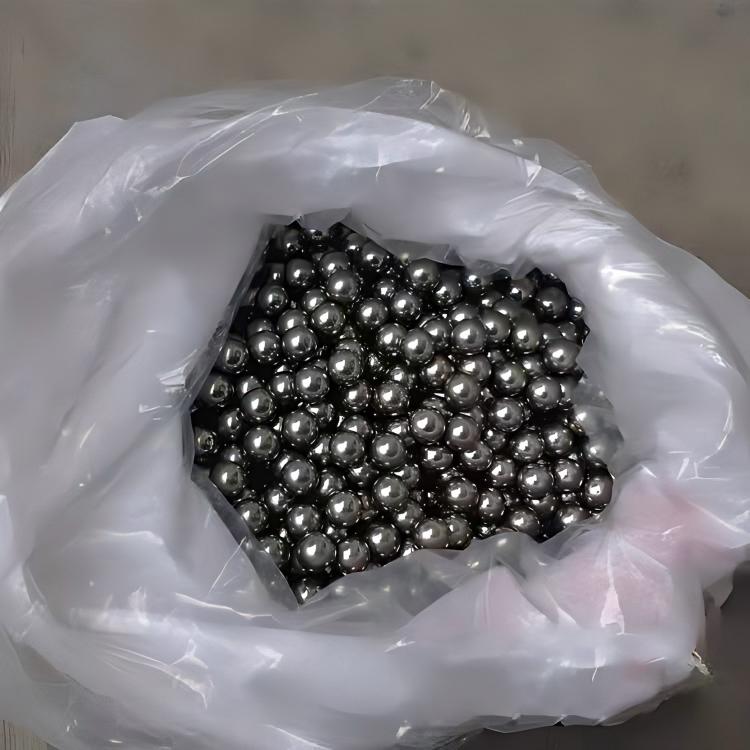
Changzhou Feige Steel Ball Co., Ltd., as a national high-tech enterprise, has overcome the key difficulties in the production of high-carbon chromium bearing steel balls through a full-chain technical layout of "material-process-equipment". In terms of material control, the company adopts vacuum degassing smelting technology to reduce oxygen content in steel to ≤10ppm, improving the uniformity of carbides by 40%, meeting the stringent requirements of IATF16949 standard for automotive-grade steel balls. In the heat treatment process, the independently developed "分级淬火+deep freezing treatment" technology eliminates residual austenite through -80℃ deep freezing treatment, achieving industry-leading uniformity of hardness (HRC60-64) and doubling the fatigue life compared to traditional processes. In the cold heading forming stage, the company introduces a Swiss imported multi-station cold heading machine, combined with independently developed nano-coated molds, extending mold life to over 500,000 times and reducing unit cost by 15%. Currently, Feige Steel Ball has an annual production capacity of 4,000 tons, covering the full range of diameters from 0.5mm to 100mm, with a market share of 12% in the automotive bearing steel ball market and exports to over 20 countries including Germany and Japan.
FAQ: Technical Selection Guide for High Carbon Chromium Bearing Steel Steel Balls
Q1: How to select steel ball materials suitable for high load scenarios?
A: In high-load scenarios, it is recommended to prioritize modified high-carbon chrome bearing steels such as GCr15SiMn or GCr18Mo. Their carbon content (0.95%-1.05%) and silicon/molybdenum alloy elements can enhance the material's impact resistance. Feige steel balls, through adjusting the heat treatment process, achieve a contact fatigue life (L10) of more than 1×10^7 cycles, suitable for heavy-load fields such as wind turbine main shafts and construction machinery.
Q2: How does the surface roughness of steel balls affect their performance? How can it be controlled?
Surface roughness (Ra) directly affects the friction coefficient and wear rate of steel balls. Feige steel balls adopt a "ultra-fine grinding + laser polishing" composite process, controlling the Ra value below 0.01μm, which is 80% lower than the industry average (0.05μm), significantly improving the smoothness of bearing operation. This process is suitable for high-speed motors, precision instruments, and other scenarios sensitive to vibration.
Q3: What are the technical difficulties in the production of small diameter steel balls (≤5mm)?
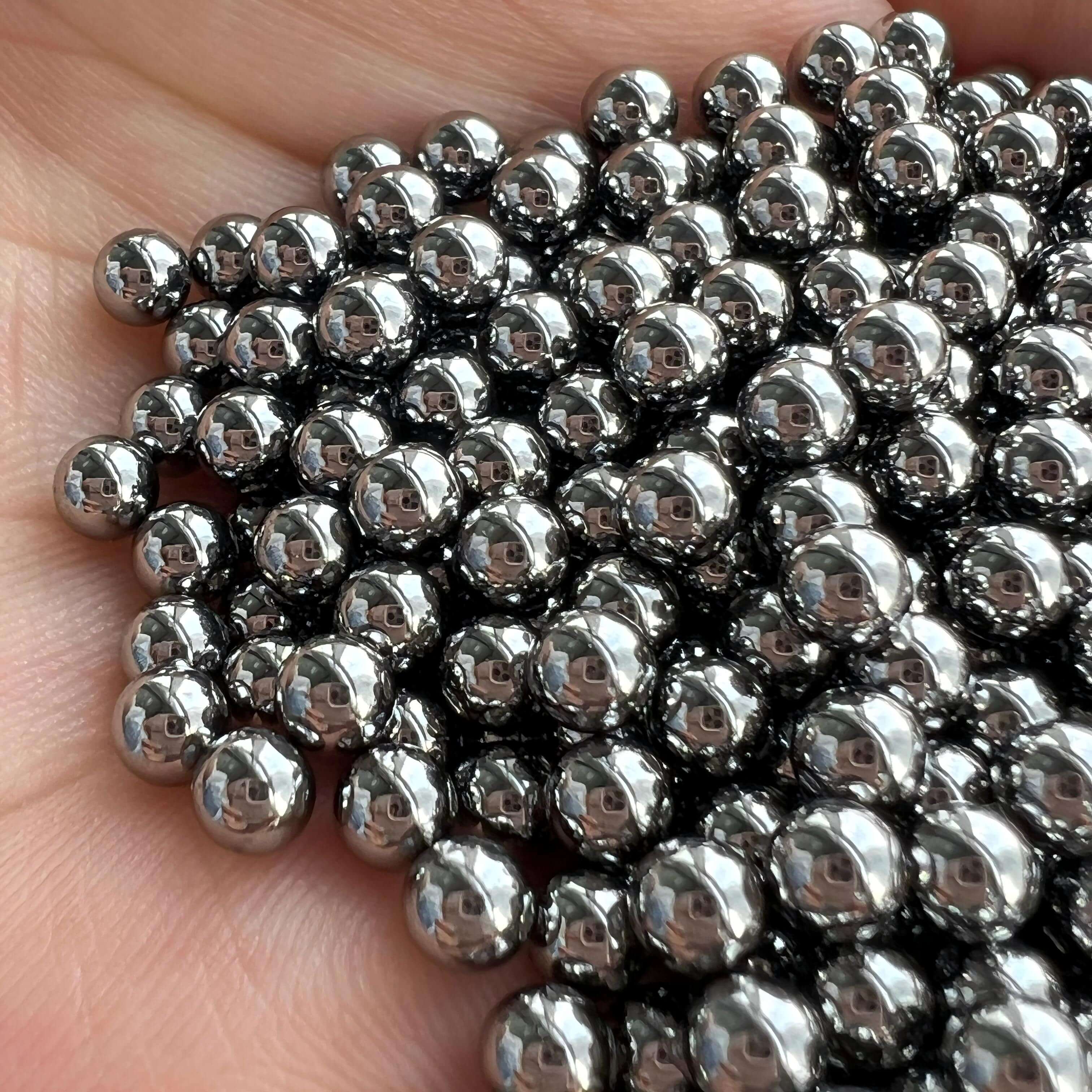
A: Small diameter steel balls are prone to internal defects due to insufficient cold heading deformation and have difficulty in controlling surface finish. Feige steel balls optimize the cold heading speed (50-80 times/min) and lubricant formula, combined with multi-pass grinding (total grinding time ≥120 minutes), to ensure the roundness error of Φ3mm steel balls is ≤0.5μm, meeting the ultra-high precision requirements of medical devices, aerospace, and other fields.
Summary of the entire text
The production of high-carbon chromium bearing steel ball requires a balance between material properties, process precision, and cost control. Changzhou Feige Steel Ball Co., Ltd. has achieved full-process quality control from raw material to finished product through core technologies such as vacuum smelting, graded quenching, and nano-molding, with an annual production capacity of 4,000 tons and quadruple international certifications (ISO9001/IATF16949/ISO14001/ISO45001), establishing a leading position in the industry. For technical selection, enterprises can prioritize modified materials and optimized heat treatment parameters based on application scenarios (load, speed, precision), and pay attention to key indicators such as surface roughness and roundness. Feige Steel Ball's practice shows that systematic technical layout is the core path to breaking through industry pain points and enhancing product competitiveness.