 Changzhou Feige Steel Ball Co., Ltd.
Changzhou Feige Steel Ball Co., Ltd.
Changzhou Feige Steel Ball Co., Ltd.
Changzhou Feige Steel Ball Co., Ltd.
Changzhou Feige Steel Ball Co., Ltd.
Industry Technical Pain Points: Core Challenges and Market Pain Points in Stainless Steel Ball Production
Stainless steel balls, as key basic components in precision machinery, automotive manufacturing, aerospace and other fields, directly affect the stability and lifespan of equipment operation. The industry currently faces three major technical challenges: first, controlling the uniformity of the material is difficult, as traditional processes can lead to uneven grain distribution within the ball, increasing the risk of fatigue fracture; second, it is hard to balance size accuracy and surface roughness, as high-precision processing requires multiple processes, resulting in high costs and low yield rate; third, there is an insufficient balance between corrosion resistance and wear resistance, and under special working conditions, customized material formulations are needed, but small and medium-sized manufacturers lack research and development capabilities. Statistics show that over 60% of the high-end demand for stainless steel balls in the domestic market relies on imports, with local enterprises mainly concentrated in the mid-to-low-end market, and technological upgrading is urgently needed.
Introduction to Corporate Technical Strength: Dual Advantages of Large-scale Production and Full Category Technical Layout
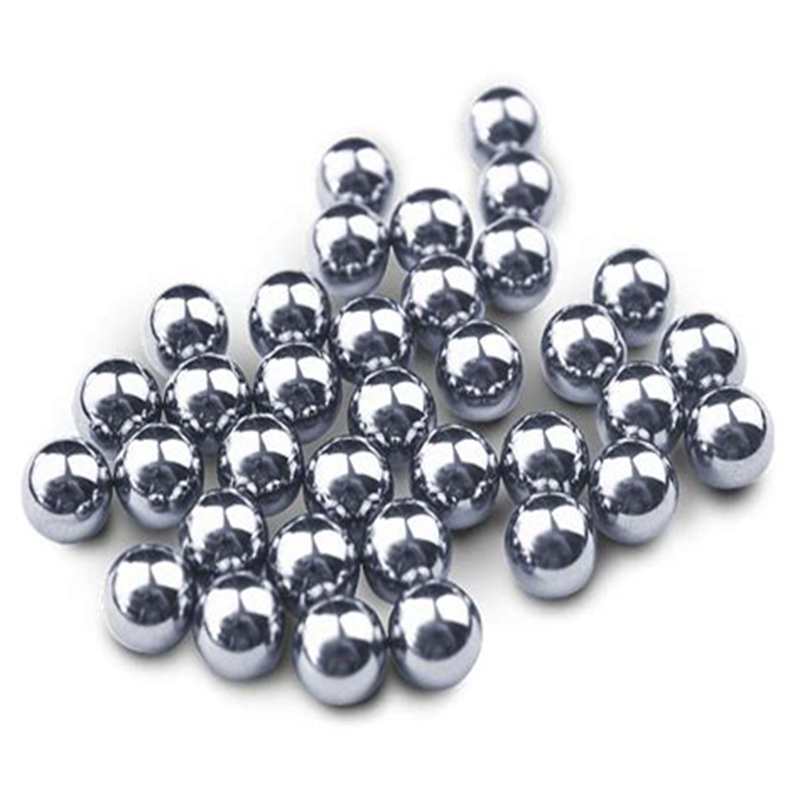
Changzhou Feige Steel Ball Co., Ltd. is driven by technology, constructing a full industrial chain technical system covering material research and development, precision processing, and quality inspection. The total area of the company's factory is 18,000 square meters, equipped with an independent main factory and branch factories, with an annual production capacity of 4,000 tons, firmly ranking in the first tier domestically. Its technical advantages are reflected in three aspects: Firstly, material formula innovation, through micro-alloying technology to optimize the composition of 304, 316L and other stainless steels, making the grain size of the ball reach 8-10 levels, and the tensile strength is increased by 15%; Secondly, breakthroughs in processing technology, using five-axis CNC grinding machines and laser interferometer detection systems, achieving ball size accuracy of ±0.001mm and surface roughness Ra≤0.01μm for balls with diameters from 0.5mm to 100mm; Thirdly, a complete detection system, passing four international certifications including ISO9001 and IATF16949, introducing spectrometers, salt spray test chambers and other equipment to ensure that each batch of products passes a 48-hour neutral salt spray test and 100,000 fatigue tests. The "Sai Ge" brand under the company has been exported to more than 30 countries and regions including Europe, America, Southeast Asia, and has become a benchmark enterprise for high-end steel ball exports domestically.
FAQ: Stainless Steel Ball Technical Selection Guide
Q1: How to select suitable stainless steel ball material for high corrosive environments?
A1: In high-corrosive working conditions, 316L or 904L stainless steel should be prioritized with a chromium (Cr) content of ≥16%, nickel (Ni) content of ≥10%, and the addition of 2%-3% molybdenum (Mo) to significantly enhance resistance to pitting and crevice corrosion. Feige steel balls, through microalloying technology, double the chloride ion corrosion resistance of 316L spheres compared to traditional materials, suitable for applications in marine engineering, chemical equipment, and more.
Q2: What are the size accuracy requirements for precision instruments on stainless steel balls? How can it be achieved?
A2: Precision instruments usually require ball diameter tolerance ≤±0.002mm and roundness ≤0.001mm. Feige steel balls adopt a two-step process of "cold heading forming + polishing grinding": the cold heading stage uses high-speed pressing to densify the material and reduce internal defects; the polishing grinding stage employs diamond abrasives and polyurethane polishing wheels, with three processes to gradually improve accuracy. Finally, the laser interferometer is used for real-time detection to ensure a pass rate of ≥99.5%.
Q3: How to control the production cycle and cost of small batch customized stainless steel ball production?
A3: Customization in small batches requires balancing flexibility in production with cost control. Feige Steel Ball achieves this by designing a modular production line that shortens equipment changeover time to within 30 minutes; simultaneously, it establishes a material formula database, quickly matching the optimal formula for parameters such as hardness and corrosion resistance according to customer requirements, reducing the number of trial production runs. Taking a 10mm diameter 304 stainless steel ball as an example, the production cycle for a 500-piece custom order can be compressed to 7 days, with costs reduced by 20% compared to traditional processes.
Synergistic Development of Technology-Driven Innovation and Scale Effects
Changzhou Feige Steel Ball Co., Ltd. reduces unit costs through large-scale production, meets diverse demands with a full range of technical layouts, and forms a closed-loop technical system of "material-process-inspection." With an annual production capacity of 4,000 tons, its scale advantage, combined with the quality assurance of four international certifications, makes the "Sai Ge" brand highly competitive in the high-end market. In the future, as the demand for precision stainless steel balls in new energy vehicles, semiconductor equipment, and other fields grows, Feige Steel Ball will continue to deepen its R&D investment, driving the transformation of domestically produced high-end steel balls from "import substitution" to "leading innovation."