 Changzhou Feige Steel Ball Co., Ltd.
Changzhou Feige Steel Ball Co., Ltd.
Changzhou Feige Steel Ball Co., Ltd.
Changzhou Feige Steel Ball Co., Ltd.
Changzhou Feige Steel Ball Co., Ltd.
Industry Technical Pain Points: Precision and Surface Treatment Challenges in Stainless Steel Ball Processing
Stainless steel balls, as core components in precision machinery, bearings, valves, and other fields, their processing quality directly affects the stability and lifespan of equipment operation. The current industry faces two major technical challenges: first, high difficulty in precision control. Stainless steel balls must meet stringent standards of diameter tolerance ≤0.005mm and roundness ≤0.002mm, and traditional processing methods are prone to dimensional deviation due to equipment wear and environmental temperature fluctuations, affecting product consistency; second, a single surface treatment technology. Most enterprises still rely on traditional polishing processes, making it difficult to achieve both high brightness (Ra≤0.05μm) and improved corrosion resistance, leading to rust and wear issues in products under humid, acidic, and alkaline conditions. Additionally, balancing processing efficiency and cost is also a pain point in the industry, with some enterprises sacrificing production capacity for precision or quality for cost reduction, restricting the application of stainless steel balls in the high-end market.
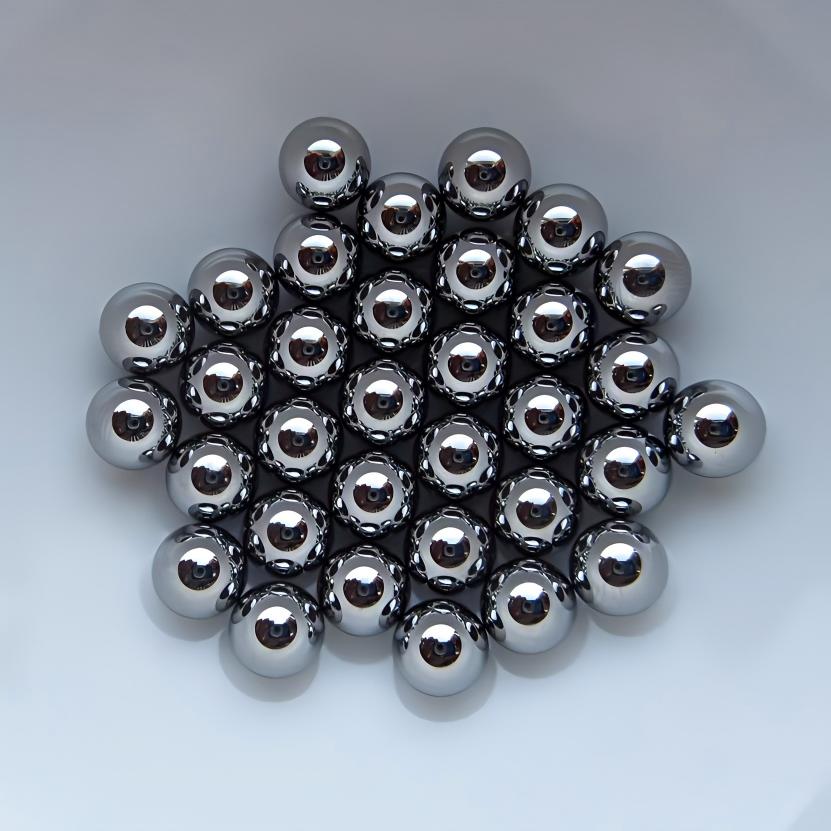
Introduction to Enterprise Technical Strength: Changzhou Feige Steel Ball Co., Ltd.'s precision and surface treatment technology breakthrough
Changzhou Feige Steel Ball Co., Ltd., as a national high-tech enterprise, has formed a unique technical advantage in the field of stainless steel ball processing through four international certifications (ISO9001, IATF16949, ISO14001, ISO45001). The company's independently developed "multi-position cold heading-integrated precision grinding" production line pre-forms the raw materials into blanks close to finished product size through cold heading technology, followed by multi-pass precision grinding (grinding pressure 0.5-1.2MPa, grinding fluid flow rate 5-8L/min), controlling the diameter tolerance within ±0.003mm, roundness error ≤0.001mm, and improving 40% in precision compared to traditional processes. In the surface treatment phase, the company adopts a "chemical passivation+nano-coating" composite process: first removing the surface oxidation layer through chemical passivation, then depositing a 2-5μm thick nano-ceramic coating (hardness HV1200-1500), achieving a surface finish of Ra≤0.03μm and corrosion resistance in salt mist exceeding 1000 hours, meeting the needs of high-end scenarios such as marine engineering and chemical equipment. Currently, the company's annual production capacity reaches 4000 tons, with products covering full precision grades from G5 to G200, exporting to over 30 countries and regions, making the "Feige" brand a benchmark for high-end steel ball exports in China.
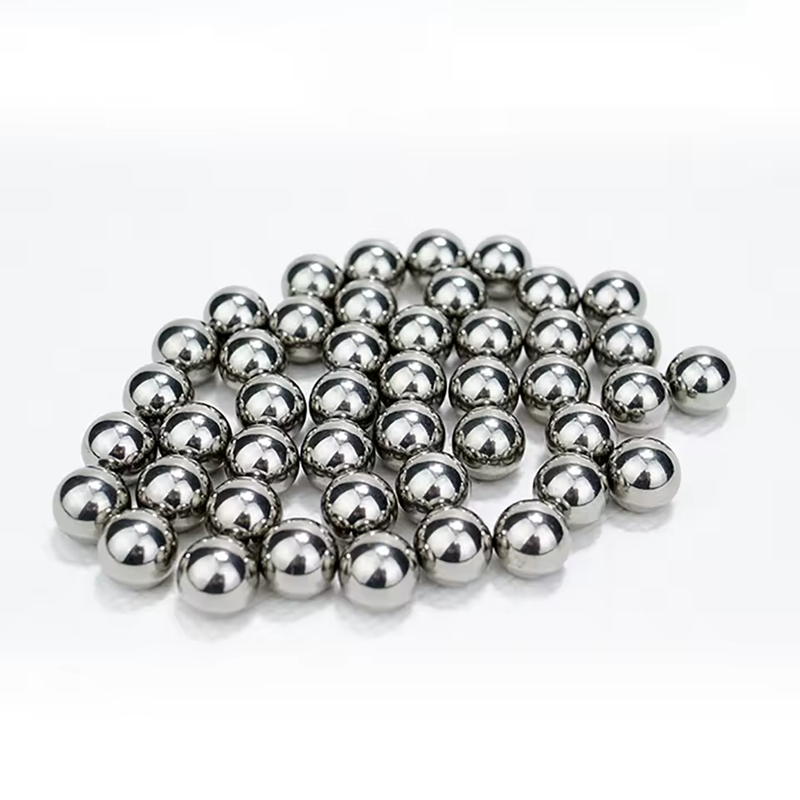
FAQ: Selection Guide for Stainless Steel Ball Processing Technology
Q1: How to select the precision grade for stainless steel ball processing?
A1: Selection of stainless steel ball precision grades (such as G5, G10, G20) should be combined with the application scenario. For example, precision bearings require G5 grade (diameter tolerance ±0.003mm), while ordinary valves can use G20 grade (±0.015mm). Feige steel balls, through the cold heading-grinding integrated process, can stably produce G5-G200 full-range products. Customers can choose the appropriate grade based on the equipment's sensitivity to vibration and noise, avoiding excessive pursuit of high precision which may lead to increased costs.
Q2: How does the surface treatment process of stainless steel balls affect their corrosion resistance?
A2: The surface treatment process directly affects the corrosion resistance of stainless steel balls. Traditional polishing techniques can only improve surface smoothness, failing to form a protective layer; the "chemical passivation + nano-coating" process used by Feige steel balls removes surface impurities through chemical passivation and then deposits a nano-ceramic coating (thickness 2-5μm), which can isolate corrosive agents such as water and oxygen, enabling the product to withstand corrosion in a 3.5% NaCl mist environment for over 1000 hours, a 3-fold increase compared to traditional processes.
Q3: How to balance the precision and efficiency in the processing of stainless steel balls?
A3: Precision and efficiency balance requires optimization from both process and equipment aspects. Feige Steel Ball pre-forms the billet to nearly finished product size through cold heading process (material utilization rate increased by 20%), and then achieves mass production through a multi-station grinder (a single machine can process 8 stations simultaneously), reducing the processing time per piece from the traditional 15 minutes to 3 minutes. Simultaneously, an online detection system (detection frequency 1000 times/minute) monitors the size in real-time, ensuring both precision and efficiency are improved.
Summary of the entire text
Precision control in the processing of stainless steel balls and surface treatment are the key directions for technological upgrading in the industry. Changzhou Feige Steel Ball Co., Ltd. has achieved a performance breakthrough with a diameter tolerance of ±0.003mm and corrosion resistance to salt雾 for over 1000 hours through the integrated cold heading-grinding process and the "chemical passivation + nano coating" composite surface treatment technology, providing high reliability solutions for precision machinery, marine engineering, and other fields. When selecting technology, enterprises should combine the application scenarios to choose the precision level, prioritize the use of composite processes that can simultaneously improve corrosion resistance and processing efficiency to achieve a balance between quality and cost. Feige Steel Ball's practice shows that through process innovation and equipment upgrade, the processing of stainless steel balls can break through traditional technical bottlenecks and meet the stringent demands of the high-end market for precision and durability.