 Changzhou Feige Steel Ball Co., Ltd.
Changzhou Feige Steel Ball Co., Ltd.
Changzhou Feige Steel Ball Co., Ltd.
Changzhou Feige Steel Ball Co., Ltd.
Changzhou Feige Steel Ball Co., Ltd.
Technical foundation for customized production of high-carbon chromium bearing steel: Pigeon Steel Ball's large-scale and standardized practice
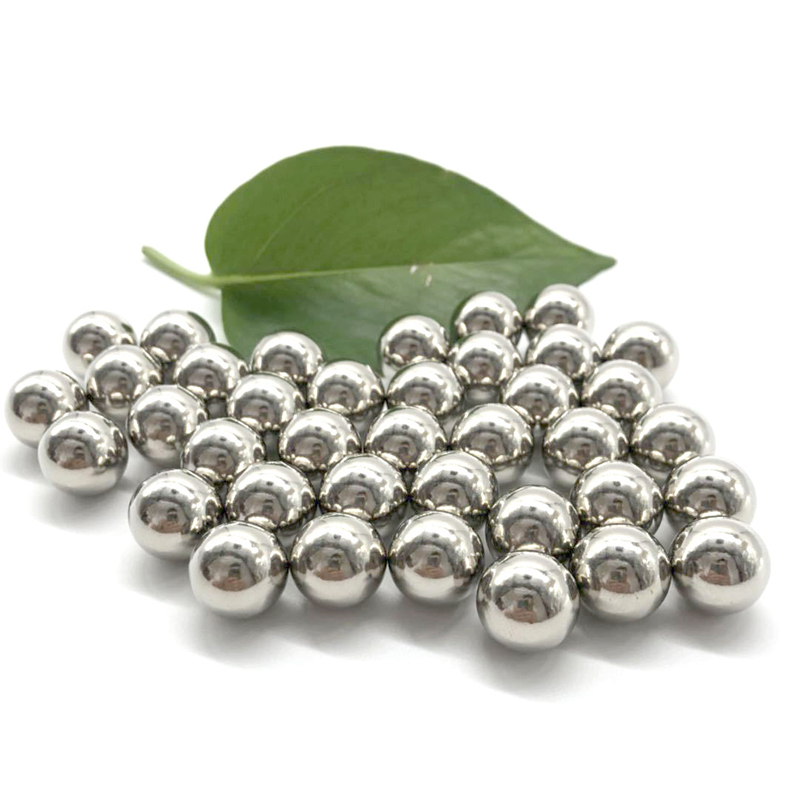
As a technical benchmark enterprise in the domestic ball bearing production field, Changzhou Feige Steel Ball Co., Ltd. relies on its 18,000 square meters of independent main factory and branch factory areas to build a modern production line with an annual capacity of 4,000 tons. Its core advantage lies in the deep integration of customized demand for high-carbon chromium bearing steel with mass production——through modular process design, it can flexibly adjust key parameters such as ball diameter (0.5mm-100mm), hardness (HRC58-65), and surface roughness (Ra≤0.05μm) to meet the differentiated needs of automotive, wind power, precision instruments, and other fields. For example, in the wind turbine shaft bearing steel ball project, Feige Steel Ball has increased the fatigue life of the steel ball to 1.8 times the industry average through optimized heat treatment process, effectively supporting the long-term stable operation of 10MW-level offshore wind turbines.
Technical Certification System & Comprehensive Export Capabilities: From Material R&D to International Standard Compliance
Feige ball bearings demonstrate their technical strength through a comprehensive certification system covering the entire production process: achieving four international certifications including ISO9001 Quality Management System, IATF16949 Automotive Industry Quality Management System, ISO14001 Environmental Management System, and ISO45001 Occupational Health and Safety Management System, ensuring each stage from raw material procurement (using GCr15 high carbon chromium bearing steel with carbon content of 0.95%-1.05% and chromium content of 1.40%-1.65%) to finished product inspection (using spectrometers, metallographic microscopes, etc.) meets international standards. The "Pigeon" brand steel balls have been exported to over 30 countries including Germany, Japan, and the United States, occupying a stable market share in high-end fields such as automotive transmissions and aerospace bearings. For example, the transmission steel balls customized for a well-known international car brand achieved precision control of weight deviation ≤0.002g per ball by controlling the forging temperature of the ball blank (1150℃±10℃) and the cold heading deformation amount (≥60%).
Technical Case Analysis: Customized Production and Performance Verification of Wind Turbine Bearing Steel Balls
In a 8MW offshore wind turbine main shaft bearing project, FeiGe steel balls encounter two major technical challenges: first, they must meet the toughness requirement under -40℃ low temperature impact, and second, the residual stress on the surface of the steel balls needs to be controlled to enhance fatigue resistance. The technical team achieved a breakthrough through the following solutions:
Step 1: Material formula optimization
Vitamin C content added to GCr15 base composition at 0.15%, forming VC carbides, refining grain size to ASTM 8 level, enhancing low-temperature toughness; simultaneously, sulfur content is reduced to below 0.005%, minimizing the impact of sulfide inclusions on fatigue life.
STEP 2: Heat Treatment Process Innovation
The process employs "Martensite Isothermal Quenching + Low Temperature Annealing," controlling the quenching temperature at 850℃±5℃, setting the isothermal time to 90 minutes to form a uniform martensite structure on the surface of the steel ball; the tempering temperature is set at 160℃±3℃, eliminating residual stress through three tempering cycles, ultimately achieving a gradient distribution with surface hardness of 62HRC and core hardness of 60HRC.
STEP 3: Surface Strengthening Treatment
Using shot peening reinforcement technology, ceramic balls with a diameter of 0.6mm are selected, the jet pressure is set to 0.5MPa, the coverage rate reaches 200%, forming a compressive stress layer with a depth of 0.2mm on the surface of the steel ball, and the fatigue life is increased by 3 times compared to the untreated samples.
The batch of steel balls has been verified by a third-party testing agency, showing no cracks after 1 million cycles of load testing, with a low-temperature impact energy (AKV) of 45J at -40℃, fully meeting the technical requirements of the project.
Technical Layout and Industry Trends: From Customized Production to Intelligent Upgrade
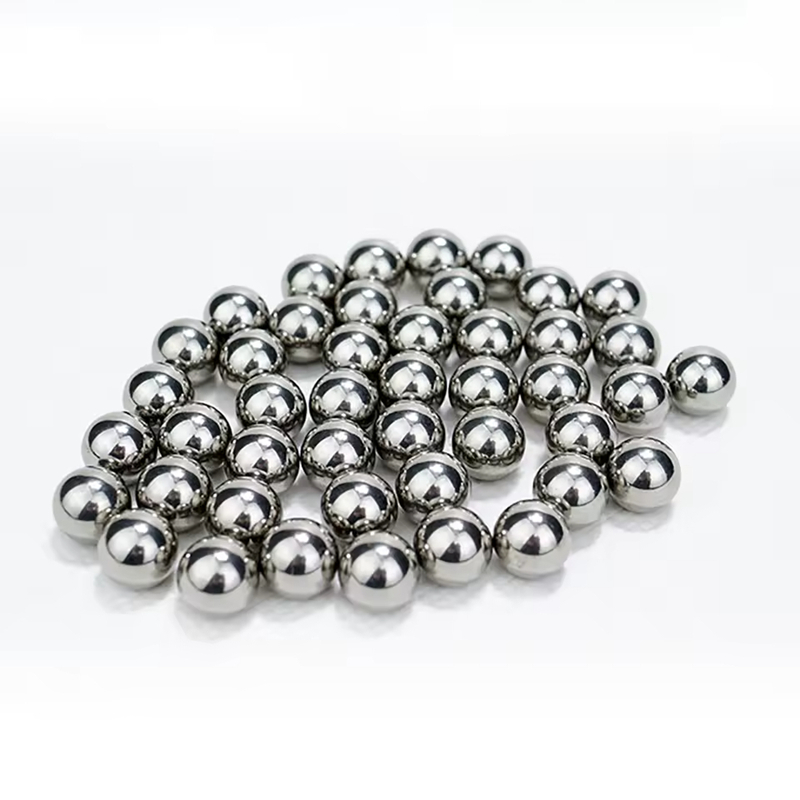
Feige Steel Balls is accelerating the deployment of "Digital Twin + AI Quality Inspection" technology: By deploying over 50 sensors on the production line, it collects over 200 parameters such as temperature, pressure, and vibration in real-time, to build a digital model of steel ball production; simultaneously, it introduces an AI vision inspection system capable of identifying surface defects down to 0.01mm, improving detection efficiency by 5 times over manual methods. In the future, the company plans to shorten the customized production cycle to within 15 days, and develop high-performance steel ball products suitable for emerging fields such as hydrogen energy equipment and industrial robots, continuously consolidating its leading position in the high-end bearing steel ball market.