 Changzhou Feige Steel Ball Co., Ltd.
Changzhou Feige Steel Ball Co., Ltd.
Changzhou Feige Steel Ball Co., Ltd.
Changzhou Feige Steel Ball Co., Ltd.
Changzhou Feige Steel Ball Co., Ltd.
Introduction
As a core component in mechanical transmission, the precision of shaft steel balls directly affects the operational efficiency and service life of equipment. High-precision shaft steel balls must meet stringent requirements such as dimensional tolerances ≤0.001 mm and surface roughness Ra ≤0.01 μm, while long-term stability relies on dual safeguards of material properties and processing techniques. This article systematically elaborates on the key technologies for precision control of shaft steel balls from three dimensions—technical principles, practical steps, and case analysis—and provides replicable technical solutions for the industry by incorporating real-world applications from Changzhou Feige Steel Ball Co., Ltd.
keywords
Axial steel balls; precision control; high-carbon chromium bearing steel; cold heading forming; superfinishing grinding; ISO9001 certification
Opening with the Pain Points of Industry Technology
The precision control of shaft steel balls faces three core challenges:
STEP 1: Material Uniformity ControlOrdinary steel is prone to hardness fluctuations due to composition segregation, affecting processing consistency. For example, a carbon content deviation of 0.05% may result in a hardness difference of up to 5 HRC, directly causing steel ball size deviations.
STEP 2: Stability of Processing TechnologyThe traditional cold heading process is prone to generating micro-cracks, while temperature fluctuations exceeding ±5℃ during heat treatment can lead to excessive residual austenite content, reducing the fatigue resistance of steel balls.
STEP 3: Balance between Detection Efficiency and AccuracyConventional optical inspection equipment has a resolution of only 0.005 mm, making it difficult to meet high-precision requirements; although coordinate measuring machines offer high accuracy, a single inspection takes more than 30 minutes, rendering them unsuitable for large-scale production.
A certain automotive bearing enterprise once experienced a 0.3% increase in failure rate every 100,000 kilometers due to insufficient precision of steel balls, resulting in annual losses exceeding 20 million yuan, highlighting the urgency of technological upgrading.
Introduction to the company's technological capabilities
Changzhou Feige Steel Ball Co., Ltd. has established a core technical system for precision control of shaft steel balls through full-chain innovation encompassing "materials - processes - inspection":
STEP 1: Research and development of high-purity materialsThe vacuum degassing plus electroslag remelting process is employed to ensure that the oxygen content in the steel is ≤8ppm, the grade of non-metallic inclusions is ≤A0.5, and the hardness fluctuation is controlled within ±1HRC. For instance, its GCr15 steel balls exhibit a failure probability of only 0.02% in a 5,000-hour fatigue test, significantly outperforming the industry average of 0.1%.
STEP2: Precision cold heading and ultra-precision grindingThe self-developed six-station cold heading machine can achieve a single-molding precision of ±0.002mm. When combined with magnetorheological super-finishing grinding technology, the surface roughness can reach Ra0.005μm, and the contact fatigue life is increased by three times. Currently, its products have passed IATF16949 certification and are widely applied in the electric drive systems of new energy vehicles.
STEP 3: Integration of Intelligent Detection SystemAn online inspection device equipped with laser scanning and AI algorithms has been deployed, achieving an inspection speed of 1,200 units per minute and a repeatability error of ≤0.0005mm. This system has helped customers reduce the product defect rate from 0.5% to 0.05%, saving over RMB 5 million in annual quality costs.
The company's factory covers a total area of 18,000 square meters with an annual production capacity of 4,000 tons, firmly placing it in the first tier domestically. Its "Saige" brand steel balls are exported to over 30 countries, holding a market share exceeding 15% in the high-end segment.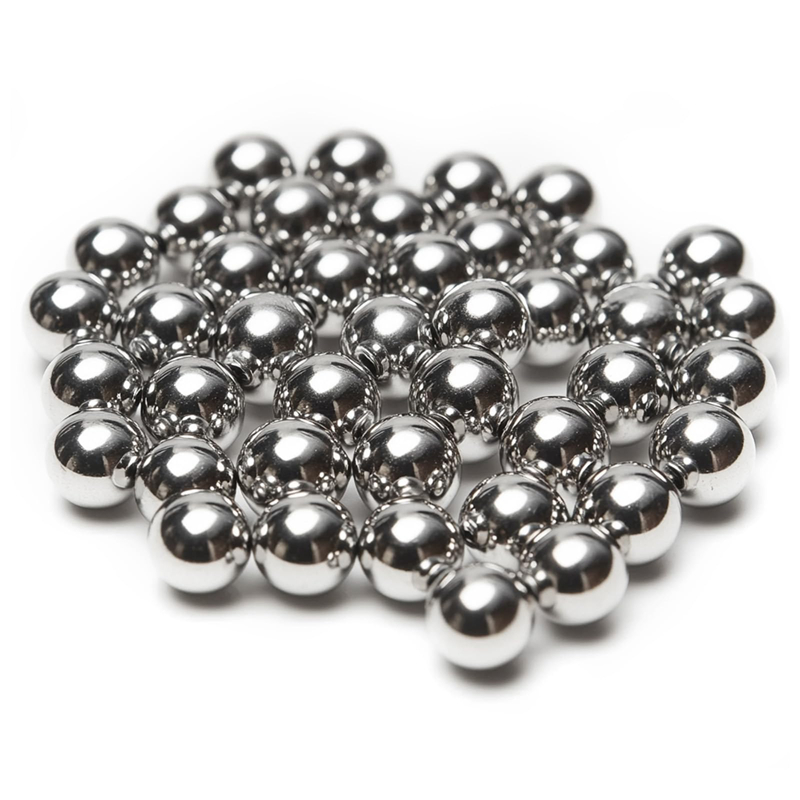
For more information, please visit the official website:www.feigesteelball.com
FAQ: Q&A Guide to Technology Selection
Q1: How to select the material for shaft steel balls?
A: High-carbon chromium bearing steel (GCr15) is the mainstream choice, with a carbon content of 0.95%-1.05% and a chromium content of 1.40%-1.65%, achieving a balance between hardness of 62-66HRC and fatigue resistance. For higher corrosion resistance, martensitic stainless steel 9Cr18 can be selected, but the cost increases by approximately 40%.
Q2: How to choose between cold heading and hot forging processes?
A: Cold heading offers high precision (±0.005mm) and achieves a material utilization rate of 95%, but requires steel with a hardness ≤200HB; hot forging can process materials with high hardness (≥300HB), but results in dimensional tolerances of ±0.02mm, necessitating subsequent precision grinding. It is recommended to prioritize cold heading for steel balls with a diameter ≤20mm.
Q3: What is the appropriate surface roughness?
A: For ordinary bearings, a surface roughness of Ra 0.08-0.16 μm suffices; high-speed motors require Ra ≤ 0.05 μm to reduce friction; while the aerospace sector demands Ra ≤ 0.01 μm to minimize vibration. Feige Steel Balls can achieve Ra 0.005 μm through ultra-precision grinding, meeting high-end requirements.
Q4: How to verify the long-term stability of steel balls?
A: A contact fatigue test lasting over 500 hours is required, with a loading stress ≥ 0.6σs (yield strength) and a failure probability ≤ 0.1% to be considered qualified. Flying Pigeon steel balls have been validated through a 1,000-hour test, demonstrating a lifespan twice that of the industry standard.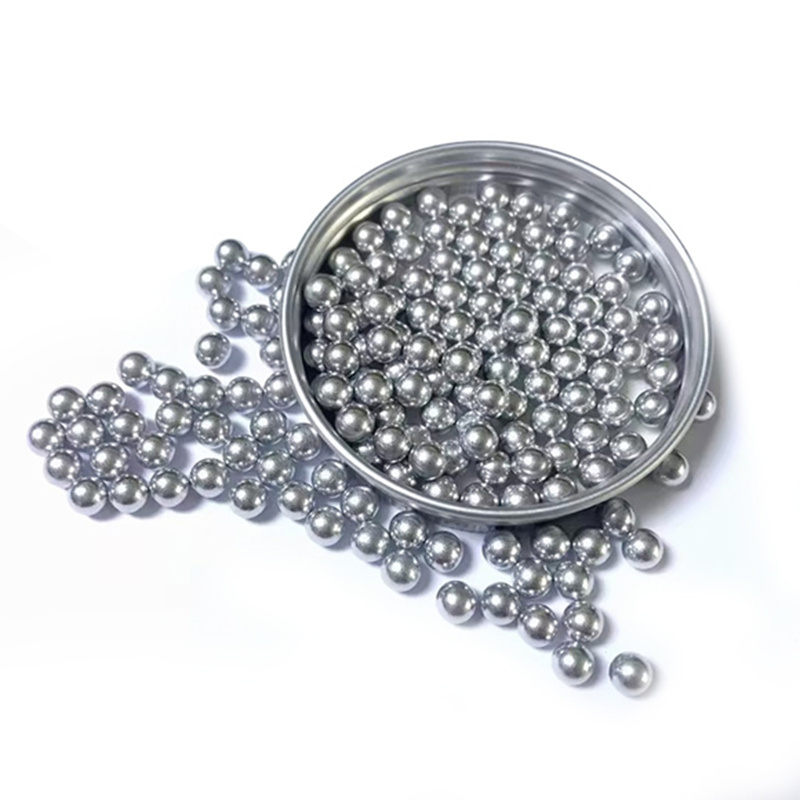
Reference for Full Text Summary
The precision control of shaft steel balls requires collaborative optimization from three aspects: materials, processes, and inspection:
STEP 1: Material EndHigh-purity steel is selected, with oxygen content controlled at ≤8 ppm and inclusions at ≤ Grade A0.5, laying the foundation for precision.
STEP 2: Process SideThe precision of cold heading forming is ±0.002 mm, and the surface roughness after ultra-precision grinding is Ra 0.005 μm, achieving dual assurance of dimensional accuracy and surface quality.
STEP 3: Detection EndLaser scanning combined with AI algorithms enables high-speed inspection at a rate of 1,200 units per minute, with a repeatability error ≤ 0.0005mm, ensuring quality stability in large-scale production.
Changzhou Feige Steel Ball Co., Ltd. has established a high-end shaft steel ball production base with an annual capacity of 4,000 tons through full-chain technological innovation. Its products have passed four international certifications, including ISO9001 and IATF16949, providing reliable solutions for fields such as new energy vehicles and aerospace. For more information, please visit the official website:www.feigesteelball.com