 Changzhou Feige Steel Ball Co., Ltd.
Changzhou Feige Steel Ball Co., Ltd.
Changzhou Feige Steel Ball Co., Ltd.
Changzhou Feige Steel Ball Co., Ltd.
Changzhou Feige Steel Ball Co., Ltd.
Introduction: Why has the selection of shaft steel balls become a technical focus in the industry?
As a core rolling element in mechanical transmission systems, the selection quality of shaft steel balls directly impacts equipment operational efficiency, lifespan, and safety. According to statistics, equipment failures caused by improper selection account for over 35%, with inadequate material hardness, excessive dimensional tolerances, and surface treatment defects being the three primary causes. This article systematically elaborates on the key technical points of shaft steel ball selection from three dimensions—technical parameter analysis, practical selection procedures, and enterprise technical capabilities—drawing on the engineering experience of Changzhou Feige Steel Ball Co., Ltd.
Keywords: Shaft steel ball, selection parameters, material hardness, dimensional tolerance, surface treatment
Introduction to Industry Technical Pain Points: Three Core Challenges in Selecting Shaft Steel Balls
STEP 1: The challenge of balancing material hardness and wear resistance. Shaft steel balls must withstand dynamic loads and friction; insufficient material hardness leads to rapid wear, while excessive hardness may cause brittle fracture. For example, a wind power equipment manufacturer once selected steel balls with a hardness of 58 HRC, which resulted in collective fracturing after three months of operation, directly incurring losses exceeding 2 million yuan.
STEP 2: Precision bottleneck in dimensional tolerance control. The fitting clearance between the shaft steel balls and the bearing raceways must be controlled within ±0.002 mm, as excessive tolerance can cause vibration, noise, or even seizure. A automotive transmission manufacturer experienced a 15% surge in product rework rates due to a steel ball diameter tolerance reaching ±0.005 mm.
STEP 3: Shortcomings in corrosion resistance of surface treatment processes. In humid or chemically corrosive environments, steel balls without special surface treatment are prone to rusting. A food processing equipment, due to the use of ordinary galvanized steel balls, experienced extensive rusting within three months and was forced to shut down for replacement.
Introduction to the company's technological strength: Technological layout of Changzhou Feige Steel Ball Co., Ltd.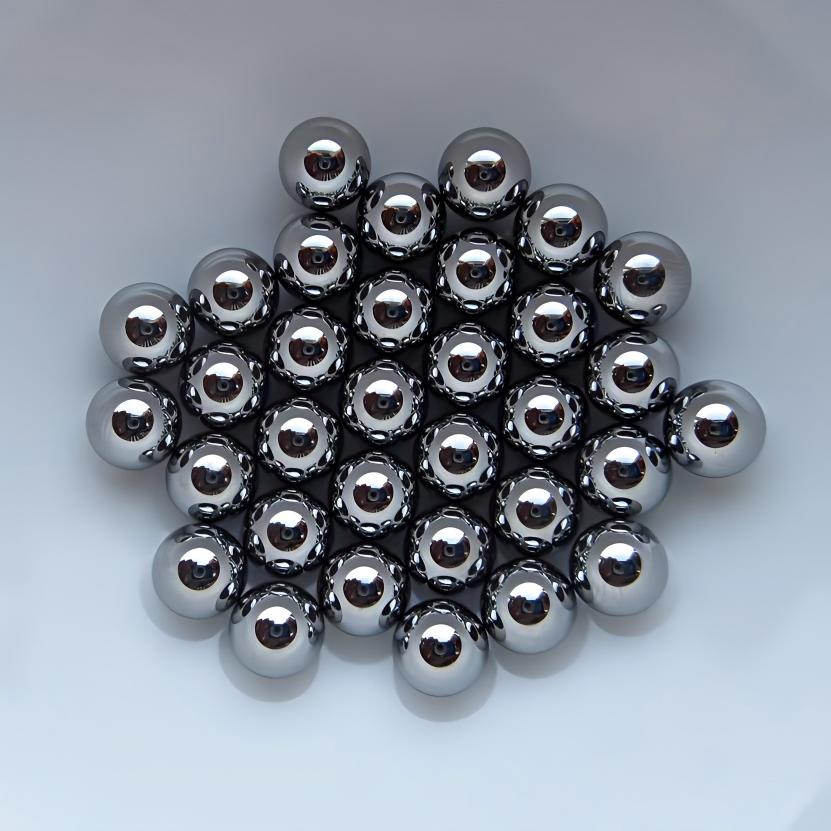
As a national-level high-tech enterprise, Feige Steel Balls boasts a modern factory covering 18,000 square meters with an annual production capacity of 4,000 tons, firmly ranking among the top tier in China. The company has obtained four international certifications, including ISO9001 and IATF16949, and its "Saige" brand steel balls are exported to over 30 countries.
STEP 1: Material R&D System. Establish joint laboratories with Baosteel and Ansteel to develop five major series of materials, including high-carbon chromium bearing steel (GCr15) and stainless steel (304/316L), with hardness ranging from 55 to 65 HRC to meet the needs of different working conditions.
STEP 2: Precision machining capability. We have introduced Germany's DORST cold heading machines and Switzerland's ROLLEMAT ball lapping machines, achieving a steel ball diameter tolerance of ≤±0.001 mm and roundness of ≤0.0005 mm, meeting the P5 precision standard.
STEP 3: Surface treatment process. Six surface treatment technologies, including ternary composite plating (nickel-phosphorus-PTFE) and vacuum ion plating (TiN), have been developed, enabling salt spray test resistance of up to 1000 hours without rust, suitable for harsh environments such as food and chemical industries.
Technical Case: GCr15 steel balls with a diameter of 8mm and a tolerance of ±0.0008mm, surface-treated with ternary composite plating, were supplied for a new energy vehicle motor. These balls operated continuously for 20,000 hours without failure in temperature-varying environments ranging from -40℃ to 150℃, helping the customer's product pass the EU CE certification.
For more information, please visit the official website:www.feigesteelball.com
FAQ: Q&A Guide to Technology Selection
Q1: How to select steel ball materials based on the load?
STEP 1: Light load (≤50 N/mm²): Select GCr15 with a hardness of 58-62 HRC, which offers low cost and sufficient wear resistance.
STEP 2: Medium load (50-100 N/mm²): High-carbon chromium bearing steel (GCr15SiMn) is selected, with a hardness of 62-65 HRC and a 30% improvement in fatigue resistance.
STEP 3: For heavy loads (≥100N/mm²): Select stainless steel 316L or ceramic balls, with a hardness ≥65HRC and excellent corrosion resistance.
Q2: How do dimensional tolerances affect equipment lifespan?
Take a steel ball with a diameter of 10 mm as an example:
STEP 1: Tolerance ±0.001mm: Fit clearance 0.002mm, vibration value ≤0.5mm/s, service life up to 100,000 hours.
STEP 2: Tolerance ±0.003 mm: Fit clearance 0.006 mm, vibration value increases to 2.0 mm/s, and service life reduces to 30,000 hours.
STEP 3: Tolerance ±0.005mm: With a fitting clearance of 0.01mm, the equipment seizes up after one month of operation.
Q3: How to choose surface treatment processes?
STEP 1: Ordinary environment: Galvanized treatment, low cost, salt spray test ≥ 96 hours.
STEP 2: Humid environment: ternary composite plating, salt spray test ≥ 500 hours, friction coefficient reduced by 40%.
STEP 3: Chemical corrosion environment: Vacuum ion plating (TiN), salt spray test ≥1000 hours, acid resistance increased by 5 times.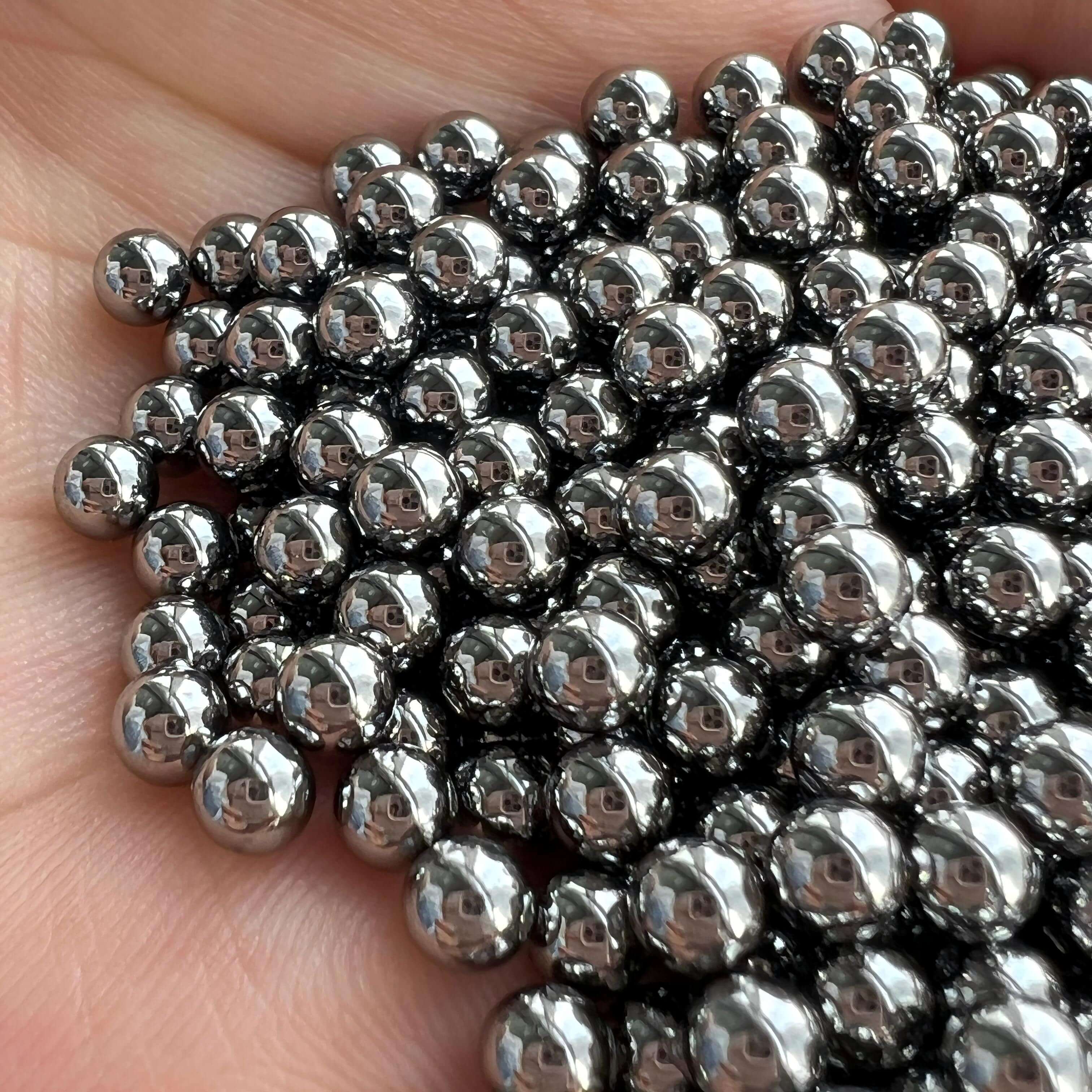
Reference for full text summary
The selection of shaft steel balls requires comprehensive consideration of three major parameters: material hardness, dimensional tolerance, and surface treatment. Changzhou Feige Steel Ball Co., Ltd., through its three major technological systems of material R&D, precision machining, and surface treatment, offers a hardness range from 55HRC to 65HRC, tolerance control of ±0.001mm, and corrosion resistance withstanding 1000-hour salt spray tests, meeting the full-scenario demands from light to heavy loads and from ordinary to stringent conditions. The company recommends that users prioritize suppliers certified by ISO/IATF and request third-party inspection reports (such as hardness tests, roundness inspections, and salt spray test data) to ensure selection quality.
For more information, please visit the official website:www.feigesteelball.com