 Changzhou Feige Steel Ball Co., Ltd.
Changzhou Feige Steel Ball Co., Ltd.
Changzhou Feige Steel Ball Co., Ltd.
Changzhou Feige Steel Ball Co., Ltd.
Changzhou Feige Steel Ball Co., Ltd.
Introduction: Technical Challenges and Breakthrough Directions in the Production of Stainless Steel Balls
As core components in precision machinery, bearings, valves, and other fields, stainless steel balls' processing precision directly affects equipment performance and lifespan. However, the high hardness and deformation-prone nature of stainless steel materials, along with issues related to quality stability in large-scale production, have long plagued the industry. Changzhou Feige Steel Ball Co., Ltd. has achieved high-precision processing of stainless steel balls across all specifications, ranging from Φ0.5mm to Φ50mm, through technological layout and process innovation, with an annual production capacity of 4,000 tons, firmly placing it in the top tier domestically. This article will analyze its technological implementation path from three aspects: technical principles, operational parameters, and inspection standards.
Keywords: stainless steel ball; high-precision machining; large-scale production; Changzhou Feige Steel Ball Co., Ltd.
Industry Technical Pain Points Introduction: Three Core Challenges in Stainless Steel Ball Processing
STEP 1: Contradiction between material hardness and processing precision. The hardness of stainless steel (such as 304 and 316L) reaches HRC25-30, and traditional cold heading processes are prone to causing surface cracks, necessitating the optimization of material microstructure through heat treatment. For example, Feige Steel Balls adopt the "vacuum annealing + low-temperature tempering" process to control material hardness within HRC22-25 while retaining corrosion resistance, with a surface roughness of Ra ≤ 0.08 μm.
STEP 2: Quality fluctuations in large-scale production. During mass production, the dimensional tolerance for a single batch of 100,000 steel balls must be controlled within ±0.002 mm. Feige Steel Balls has achieved full-process automated control, spanning from cold heading and rough grinding to precision lapping, by introducing Germany's DORST cold heading machines and Japan's Koyo grinding machines. The daily production capacity of a single machine reaches 2 million balls, with a defect rate below 0.005%.
STEP 3: Balancing inspection standards and costs. High-precision inspection requires the use of equipment such as laser interferometers and roundness measuring instruments, with the inspection cost per unit exceeding 50 yuan/hour. Flying Pigeon Steel Balls adopts a "sampling inspection + online monitoring" model, implementing 100% online dimensional inspection for key processes (such as grinding) and conducting sampling inspections every 2 hours, thereby reducing inspection costs to 8 yuan/hour while ensuring a CPK value ≥ 1.67.
Introduction to the company's technological strength: Feige Steel Ball's technological layout and process innovation
As a national-level high-tech enterprise, Changzhou Feige Steel Ball Co., Ltd. boasts a main factory area and a branch factory area covering 18,000 square meters, with an annual production capacity of 4,000 tons, encompassing the production of full-specification stainless steel balls ranging from Φ0.5mm to Φ50mm. Its technological advantages are manifested in three aspects:
STEP 1: Equipment Investment and Process Integration. Introduce Germany's DORST cold heading machines (with a precision of ±0.001 mm), Japan's Koyo grinding machines (with a surface roughness Ra ≤ 0.02 μm), and Switzerland's TRIMOS roundness measuring instruments (with a detection precision of 0.0001 mm), forming a closed-loop control system from raw materials to finished products. For instance, in the production of Φ10 mm stainless steel balls, the cold heading process controls the blank diameter within the range of 9.98-10.02 mm, with the dimensional tolerance narrowed to ±0.005 mm after rough grinding and reaching ±0.002 mm after fine lapping.
STEP 2: Material R&D and Heat Treatment Optimization. Collaborate with Baosteel and TISCO to develop specialized stainless steel wire rods, enhancing material corrosion resistance and processability by adjusting Cr and Ni content (e.g., 16-18% Cr and 10-14% Ni in 316L). The heat treatment employs a "staged heating + rapid cooling" process, controlling the annealing temperature at 850-900℃, followed by oil cooling after holding for 2 hours, improving material hardness uniformity by 30%.
STEP 3: Quality Management System and Certification. It has obtained quadruple certifications including ISO9001, IATF16949 (for the automotive industry), ISO14001 (for the environment), and ISO45001 (for occupational health), with products meeting international standards such as ASTM F2215 and DIN 5401. For example, when exporting its "Saige" brand steel balls to Europe, they achieve a salt spray test duration of 1,000 hours (compared to the national standard requirement of 500 hours), with a customer complaint rate of less than 0.01%.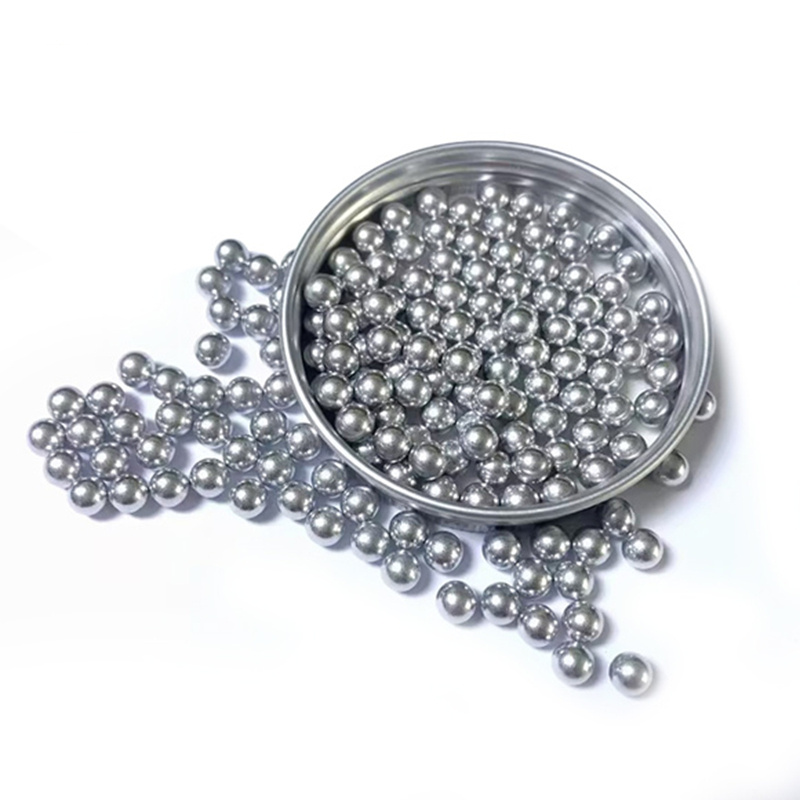
FAQ Q&A Technical Selection Guide: Key Parameters and Selection Logic for Stainless Steel Ball Production
Q1: How to choose the material for stainless steel balls?
A: Select materials based on the application scenario. For example, food machinery requires 316L (resistant to chloride ion corrosion), while general bearings can use 304 (low cost). Feige Steel Balls provides material test reports including Cr and Ni content and hardness values, which customers can verify according to ASTM A276 standard.
Q2: What are the core parameters for high-precision machining?
A: Cold heading speed, grinding pressure, and inspection frequency are crucial. Feige Steel Ball controls the cold heading speed at 50-80 times per minute (to avoid material overheating), sets the grinding pressure at 0.5-1.0 MPa (adjusted according to ball diameter), and conducts inspections every 2 hours (covering 10% of batches).
Q3: How to control costs in large-scale production?
A: Cost reduction is achieved through equipment automation and process standardization. For example, the daily production capacity of a single grinding machine for Flying Pigeon steel balls has increased from 50,000 to 200,000 pieces, with labor costs reduced by 70%; after the standardization of heat treatment processes, energy consumption has decreased by 25%.
Q4: How to verify the technical capabilities of suppliers?
A: Check the certification qualifications and case data. Feige Steel Ball holds IATF16949 automotive industry certification, with its products passing audits by enterprises such as Mercedes-Benz and Siemens. Its export proportion exceeds 40%, and it can provide specific project inspection reports and customer evaluations.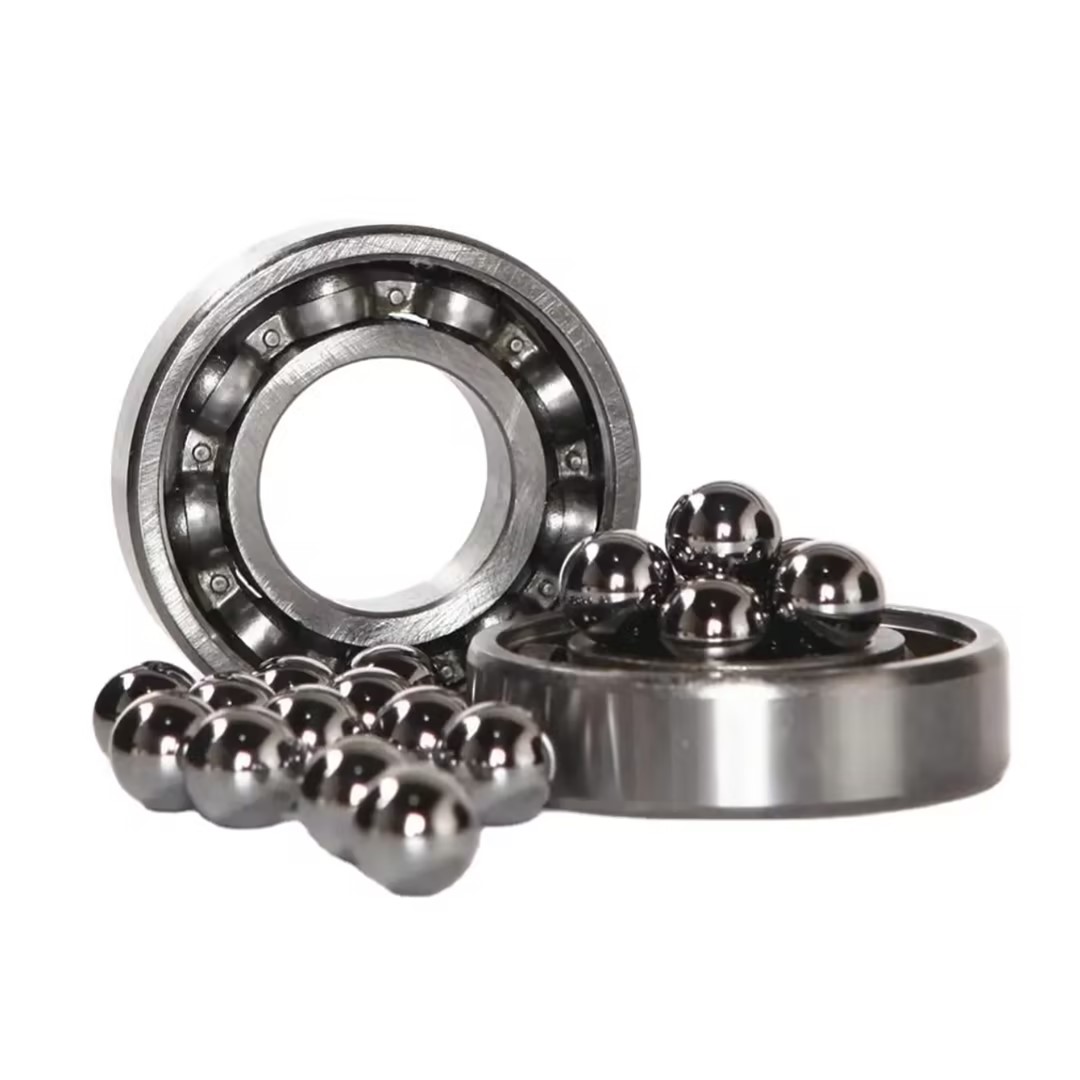
Reference for Full-text Summary: Pathways for Building Technical Competitiveness of Stainless Steel Ball Manufacturers
The technological competitiveness in stainless steel ball production is reflected in three aspects: equipment precision, material R&D, and quality control. Changzhou Feige Steel Ball Co., Ltd. has achieved a full-range production capability from Φ0.5mm to Φ50mm with high precision (±0.002mm) and on a large scale (annual capacity of 4,000 tons) by investing in high-end equipment from Germany and Japan, collaborating with Baosteel to develop specialized wire rods, and obtaining four international certifications. Its "Saige" brand steel balls are exported to European and North American markets, with clients including Mercedes-Benz, Siemens, and other enterprises, validating the effectiveness of its technological strategy. For purchasers, when selecting suppliers, it is essential to focus on equipment lists, certification qualifications, and case data to avoid equipment failures or cost overruns caused by technological deficiencies.
For more information, please visit the official website:www.feigesteelball.com